Garlic oil is not simply garlic put through a still. There is a chemical step in between, it takes about an hour, and skipping it is why cheap garlic oil is thin.
Intact garlic contains almost none of what garlic oil is made of. The oil's constituents do not exist until the clove is broken.
A whole clove keeps alliin in one compartment and the enzyme alliinase in another. Crushing brings the two together and allicin forms, which is the compound responsible for the smell of cut garlic. Allicin itself never reaches the bottle: it is unstable, and under heat it decomposes into the diallyl mono-, di- and trisulphides that garlic oil actually consists of.
So the sequence matters more than the equipment. We crush, then rest the material at ambient temperature for roughly one to two hours while the conversion runs, and distil immediately afterwards. Charge the still too early and you are distilling before the chemistry has happened; leave it too long and allicin degrades on its own account and you lose the same material a second way.
No medical claims are made here, and garlic attracts more of them than almost any other botanical. We are describing an aromatic concentrate, nothing more.
The practical warning is about strength and persistence. This is one of the most concentrated botanical extracts in the world, it is measured in traces rather than drops, and it lingers: on skin, on hands, on cloth and in a room, for far longer than people expect. Work with it somewhere ventilated and keep it away from anything that will hold the smell.
It is sold for culinary, garden and specialty formulation use in trace amounts, and it is not a perfumery material by any stretch. Dilute heavily for any skin contact and patch test first; undiluted garlic oil can irritate skin readily.
If a lot's sulphide profile suggests the conversion did not run properly, it does not get bottled and we wait for the next crush.
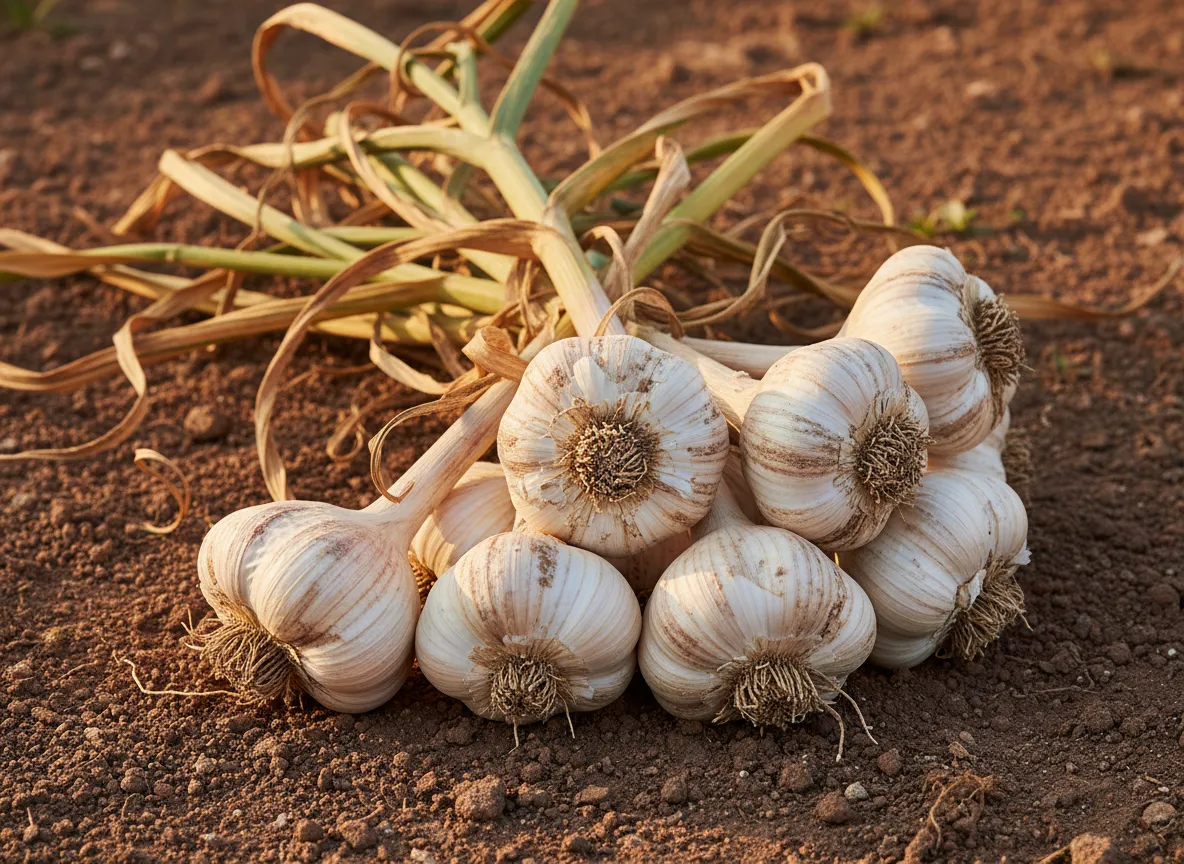
Garlic is lifted when the lower leaves have browned but the bulb wrappers are still whole. Wait longer and the wrappers split, the cloves start separating, and the bulb no longer stores.
It is then cured before it goes into storage, which is what lets a crop hold its character rather than sprouting or going soft.
Cured whole bulbs are how the material waits. Nothing is crushed until the day it is going into the still, for the reason set out above.
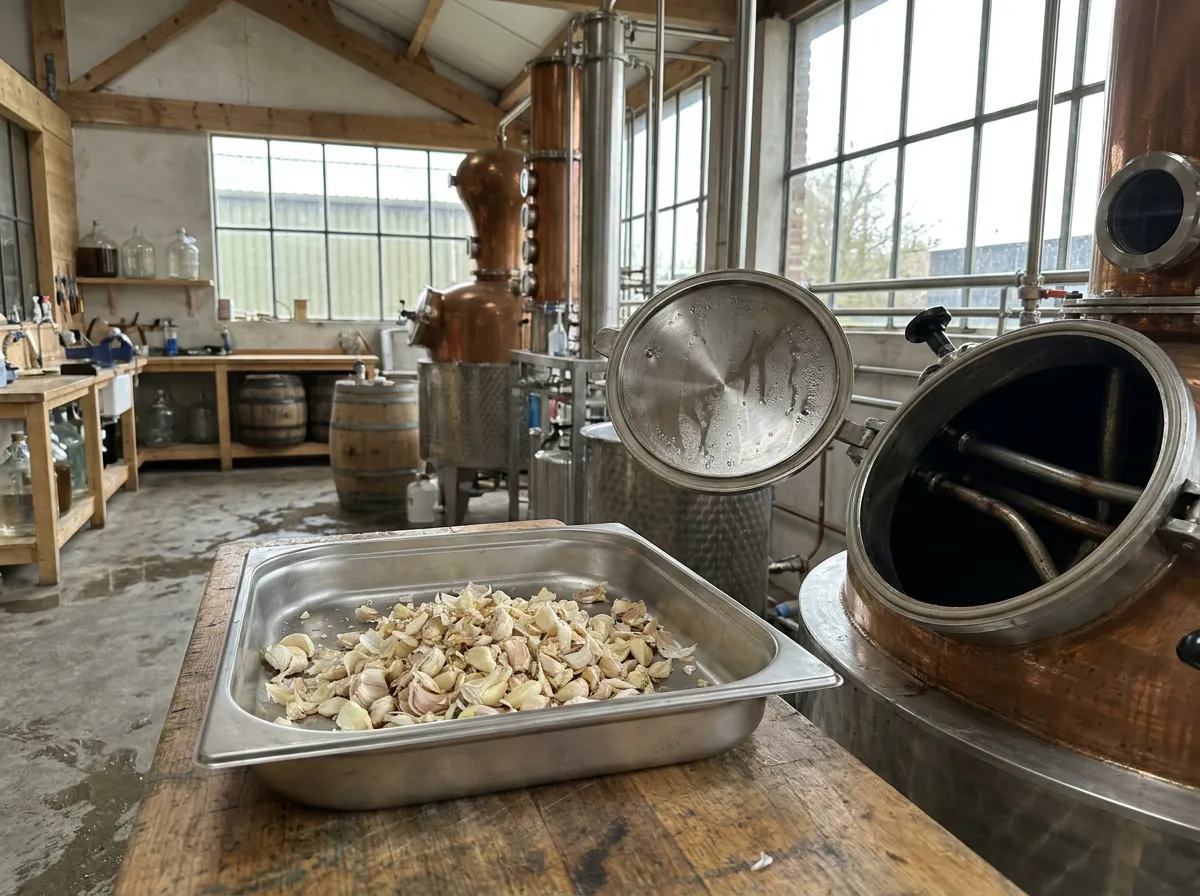
Crushing happens here, and the rest is timed rather than approximate. It is the least glamorous hour in this building and it decides both the yield and the profile.
Distillation follows directly. What separates is a small quantity of intensely pungent oil, and the concentration is genuinely startling: a single drop carries the character of many cloves, which is why it is always measured in traces.
Every lot then goes to an independent laboratory before it is bottled, and the bottle carries both dates and a lot number in amber glass, with nothing added.
An independent laboratory analyses each lot, and with garlic the profile records whether the rest was actually held.
The principal constituent of genuine garlic oil, and the clearest sign the enzymatic conversion ran properly.
The rest of the sulphide family. Their balance shifts if the material was charged too early or held too long.
Confirms undiluted Allium sativum distillate, since garlic oil is frequently sold pre-diluted in a carrier without saying so.
Give us the lot number and we will send the sulphide profile, or reach us on the contact page.
Distillation date, bottling date and lot number on every bottle we send out.
Amber in every size, and a cap worth closing firmly.
Undiluted Allium sativum distillate, not the carrier-diluted version usually sold as garlic oil.
Cured whole bulbs crushed on the day, rested for the hour the chemistry needs, distilled immediately, with the sulphide profile measured per lot.
Start with one drop. Truly one.
Shop Garlic Oil