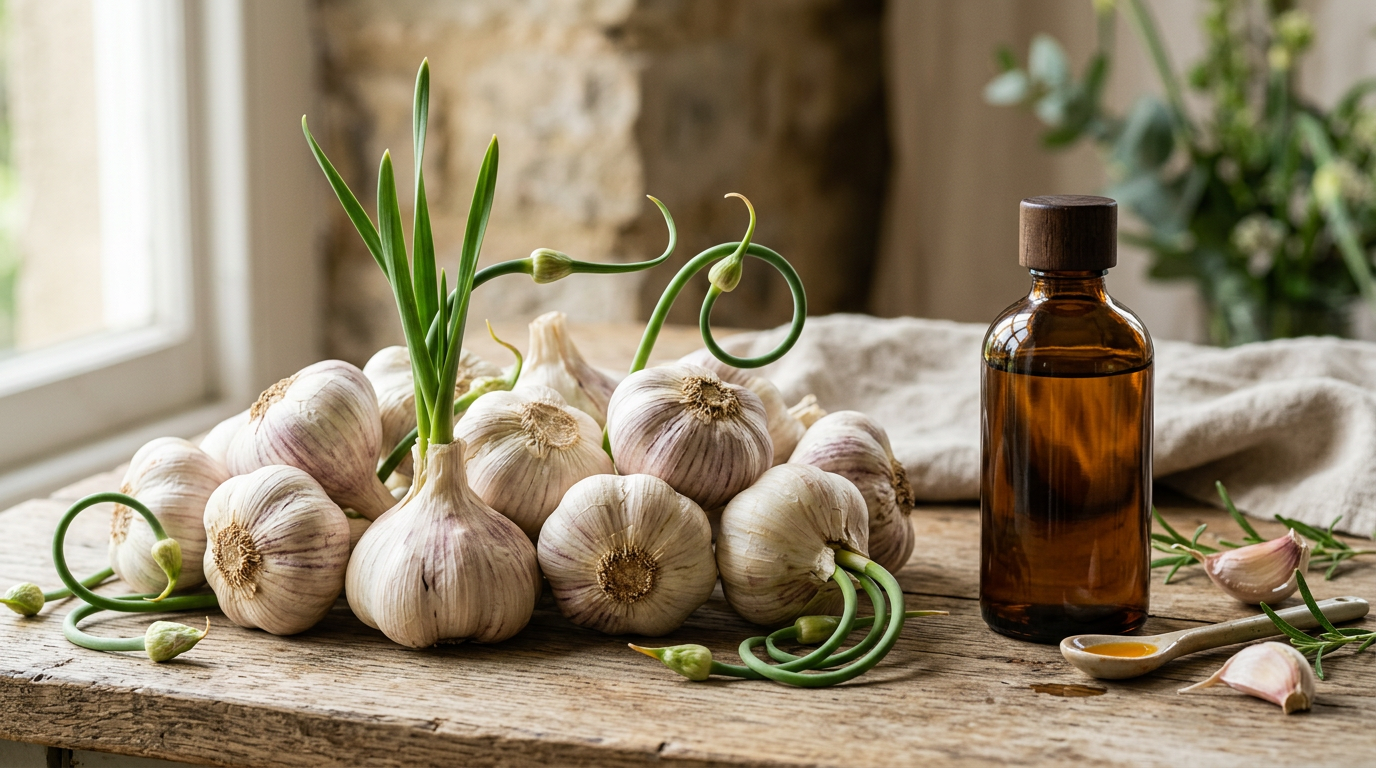
A Buyer's Guide to Garlic Essential Oil for Candle and Soap Studios
Garlic essential oil has a small but loyal following among candle and soap studios building novelty, herbal, or kitchen-themed lines. It is pungent, sulfur-forward, and unlike almost anything else on a fragrance shelf, which is exactly why some makers reach for it. But buying garlic essential oil for candle making or soap making is not the same as buying a standard floral or citrus oil. The chemistry is different, the safety data sheet reads differently, and the supplier vetting takes more care. This guide walks through what to look for, what the spec sheet actually means, and how to avoid paying premium prices for a diluted or mislabeled product.
Everything here is about sourcing, quality, and craft performance. None of it is medical guidance, and garlic essential oil sold for candle and soap work should never be positioned as one. If you are formulating for topical use, always patch test and consult a qualified healthcare provider about any individual sensitivities before scaling a batch.
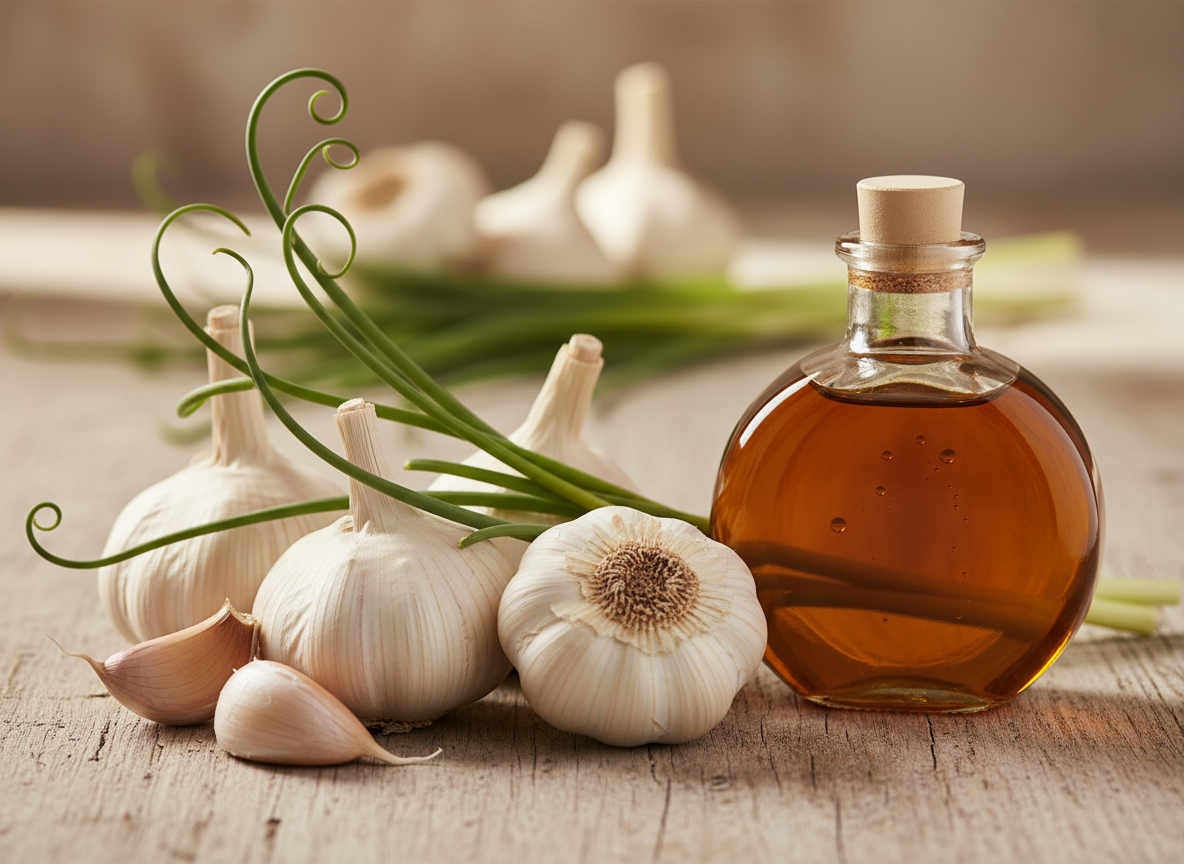
What to Look for: Quality Indicators That Actually Matter
Garlic essential oil is steam distilled from crushed garlic bulbs, and the yield is low relative to the raw material, which is part of why pricing varies so widely between suppliers. Before you commit to a gallon order or even a four-ounce sample, check for these markers.
Extraction Method on the Label
Steam distillation is the standard for essential oil sold as garlic essential oil. Some suppliers sell a CO2 extract or an oleoresin instead, which is a different product with a different viscosity, color, and concentration. Neither is wrong, but they are not interchangeable in a formula, and a supplier who does not specify the method is one you should ask directly.
Third-Party Lab Documentation
A gas chromatography, mass spectrometry (GC-MS) report is the closest thing this category has to a receipt. It shows the actual chemical constituents in the batch you are buying, not a generic average. Reputable garlic oil soap making suppliers post a current GC-MS report or send one on request, tied to the specific lot number on your bottle. If a supplier cannot produce one, treat the listing as unverified.
Origin and Sourcing Transparency
Garlic grown and distilled in different regions produces oil with noticeably different intensity and sulfur compound ratios. A supplier who names the growing region and distillation facility is giving you something you can evaluate. A listing that just says "pure essential oil" with no origin is giving you nothing to verify.
Batch Consistency
Ask how the supplier handles lot-to-lot variation. Agricultural extracts shift somewhat season to season, and a studio running a repeatable product line needs a supplier who blends or tests to keep scent intensity within a tight range, or at minimum tells you when a new lot differs from the last one.
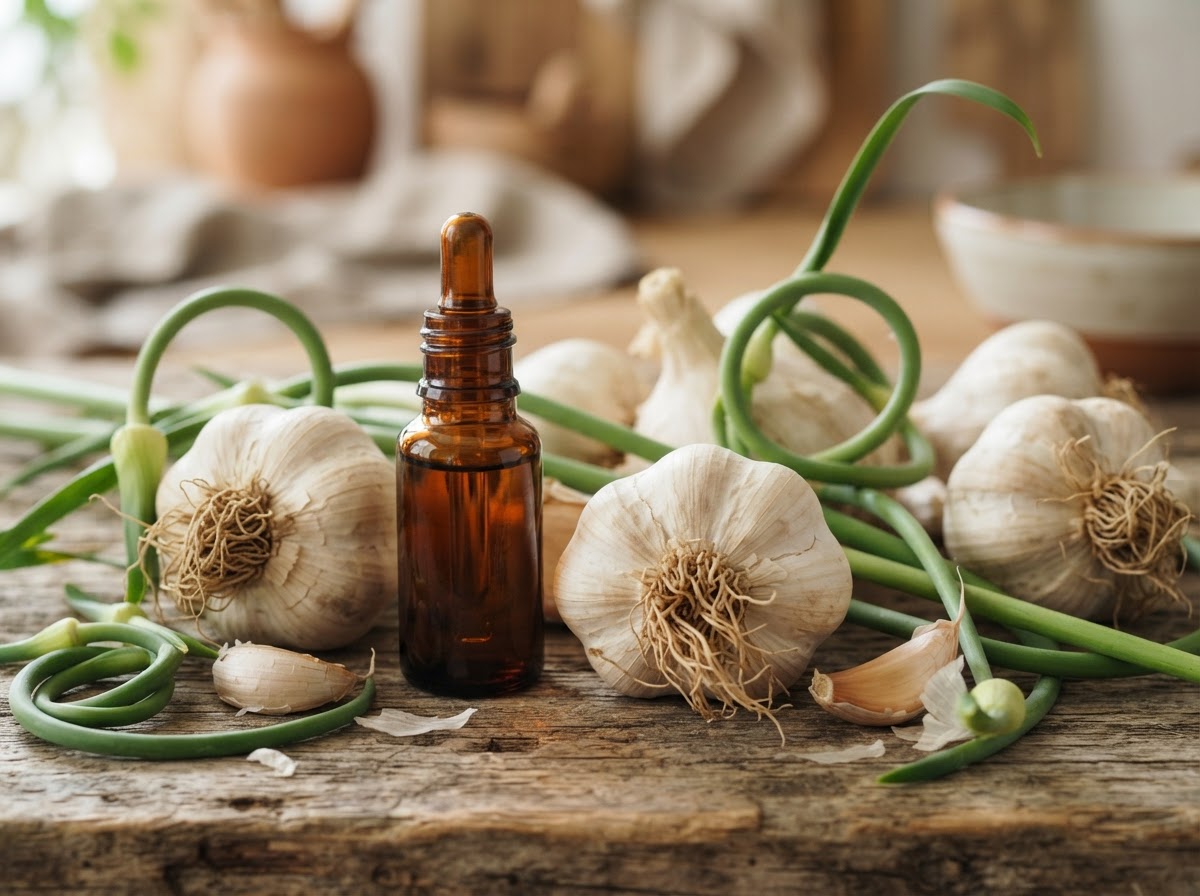
Reading the Spec Sheet: Flash Point and Why It Matters
The garlic essential oil flash point is the temperature at which the oil's vapors can ignite when exposed to an open flame. For candle makers, this number is not a footnote. It determines the safe temperature range for adding fragrance oil to melted wax, because adding above the flash point burns off volatile compounds before the wax ever sets, which quietly ruins hot throw and wastes the oil you paid for.
Most garlic essential oil sold for craft use lists a flash point in the general range you would expect from a sulfur-compound-heavy essential oil, typically well under 200°F, though the exact figure varies by supplier and batch. Always pull the number from the specific product's safety data sheet rather than assuming it matches a generic garlic oil figure you saw elsewhere.
A practical rule for the pour: let your wax cool to roughly 10 to 15 degrees above the oil's stated flash point before adding it, then stir gently and pour promptly. This protects scent throw without holding the wax so hot that the fragrance degrades on contact.
For soap studios working cold process, flash point is less of a live safety issue during the pour, but it still matters for storage. Keep any high-sulfur essential oil away from open flame, direct sun, and heat sources in the workshop, and store it in the amber or cobalt glass most suppliers ship it in rather than transferring it to clear plastic.
Key Features to Compare Before You Buy
Once you have confirmed a supplier's documentation is legitimate, the real comparison shopping starts. Here is what separates a workable garlic essential oil from one that will frustrate a production run.
| Feature | Why It Matters | What to Check |
|---|---|---|
| Concentration / dilution | Some "garlic essential oil" listings are pre-diluted in a carrier oil, which changes how much you need per pound of wax or soap base | Ask directly: is this 100 percent essential oil or a diluted blend? |
| Flash point | Determines safe wax-addition temperature and affects scent retention | Look for a stated number on the SDS, not a marketing page |
| Color and clarity | Affects whether it will tint a light-colored soap or candle | Request a photo of the actual bottle, not a stock image |
| Bottle size options | Studios scaling from sample batches to full production need a supplier who sells at multiple volumes | Confirm pricing breaks at 4 oz, 1 lb, and bulk tiers |
| Packaging material | Essential oils degrade faster in clear plastic and are exposed to UV light | Amber or cobalt glass, or UV-blocking bottles for bulk |
| Lot number traceability | Lets you match a specific bottle to its GC-MS report | Confirm the lot number is printed on the label, not just the invoice |
| Shelf life / best-by date | Sulfur compounds in garlic oil can shift over time | Ask for a recommended use-by window, typically one to two years unopened |
Top Picks at Different Price Points
Pricing for garlic essential oil spans a wide range, and the price alone tells you almost nothing about quality without documentation to back it up. Here is roughly what to expect at each tier.
Budget Tier ($8 to $15 per ounce)
Entry-level listings, often from general craft-supply marketplaces rather than dedicated essential oil suppliers. Useful for a first test batch to see whether garlic works in your formula at all. Documentation is inconsistent at this tier, so treat any batch you buy here as untested until you request or run your own verification. Do not commit to a full production run on a budget-tier bottle without a GC-MS report in hand.
Mid-Range ($16 to $30 per ounce)
This is where most working candle and soap studios land for regular reorders. Suppliers at this tier typically provide a safety data sheet on request, state the extraction method, and can tell you the country or region of origin. Ask whether GC-MS testing is done per lot or per season. Per-lot testing costs more but gives you a tighter guarantee.
Premium / Lab-Documented Tier ($30+ per ounce, often sold by the drop for small-batch work)
Suppliers positioned like Garlic Essential Oil (Potency by the Drop) sit here: current GC-MS reports published per batch, sourcing details available on the product page, and pricing structured so studios can buy small trial quantities before scaling to bulk. For a studio building a product line meant to last, the documentation at this tier is usually worth the premium, since it removes the guesswork on flash point, concentration, and consistency that budget suppliers leave you to sort out yourself.
Red Flags to Avoid
A few warning signs show up repeatedly in this category, and any one of them is reason to keep shopping.
- No lab documentation, ever. If a supplier cannot produce a GC-MS report or safety data sheet after you ask twice, assume they do not have current testing.
- Pricing that is dramatically below the mid-range tier. Steam-distilled garlic oil is genuinely expensive to produce because of low yield. A price far under market usually means dilution, adulteration, or old stock being cleared out.
- Vague labeling like "garlic fragrance oil" sold as "essential oil." Fragrance oils are synthetic and are a different product category. Read the label carefully; the words are sometimes used interchangeably by suppliers who should know better.
- No lot or batch number on the bottle. Without one, a GC-MS report the supplier shows you cannot be tied to the actual product in your hand.
- Overstated claims on the listing page. A cosmetic or fragrance ingredient should be marketed on scent, sourcing, and quality, not on sweeping wellness promises. If a listing leans hard on what the oil supposedly does for the body, that is a marketing red flag independent of the oil's actual quality.
- Clear plastic bottles for anything beyond a small sample. It is a sign the supplier is not thinking about shelf stability, and it is a preview of how they handle other storage and shipping details.
Where Candle and Soap Studios Actually Source Garlic Oil
There are three realistic channels for buying garlic oil for a craft studio, and each fits a different stage of your business.
Direct From a Dedicated Essential Oil Supplier
This is the best option once you are past the experimentation stage. A supplier that specializes in essential oils, rather than a general craft marketplace, is more likely to have current lab documentation, consistent sourcing, and staff who can answer a technical question about flash point or dilution ratios without forwarding you to a generic FAQ.
Wholesale and Bulk Ingredient Distributors
Once a formula is locked and you are ordering by the pound rather than the ounce, wholesale distributors that serve the soap and candle trade specifically can offer better per-unit pricing. Confirm they still provide lot-specific documentation at bulk volumes; some distributors get looser about paperwork the bigger the order gets, which is backwards from what you want.
General Marketplaces (Proceed Carefully)
Large online marketplaces carry garlic essential oil from dozens of unrelated sellers under similar-looking listings, and quality varies enormously between them even at similar prices. If you buy here, order the smallest available quantity first, request any documentation the listing does not already show, and do not scale up until you have verified the batch yourself or through the supplier's own testing.
A Quick Buying Checklist
- Extraction method stated clearly (steam distilled, not CO2 or oleoresin, unless that is specifically what you want)
- Current GC-MS report available, tied to a lot number printed on the bottle
- Flash point listed on the safety data sheet, not just a marketing page
- Origin and sourcing region named
- Packaging in amber or cobalt glass
- Pricing that matches the mid-range or premium tier for the quantity ordered
- A small trial order placed before committing to bulk, regardless of how established the supplier looks
Garlic essential oil is a niche ingredient, and the studios that get the most out of it treat sourcing the way they would any other production input: verify before you scale, keep the paperwork with the batch, and store it with the same care you would give any other essential oil in the workshop. If you are working the oil into a soap formula meant for skin contact, patch test each new batch and talk to a qualified healthcare provider about any individual sensitivities before a full production run.