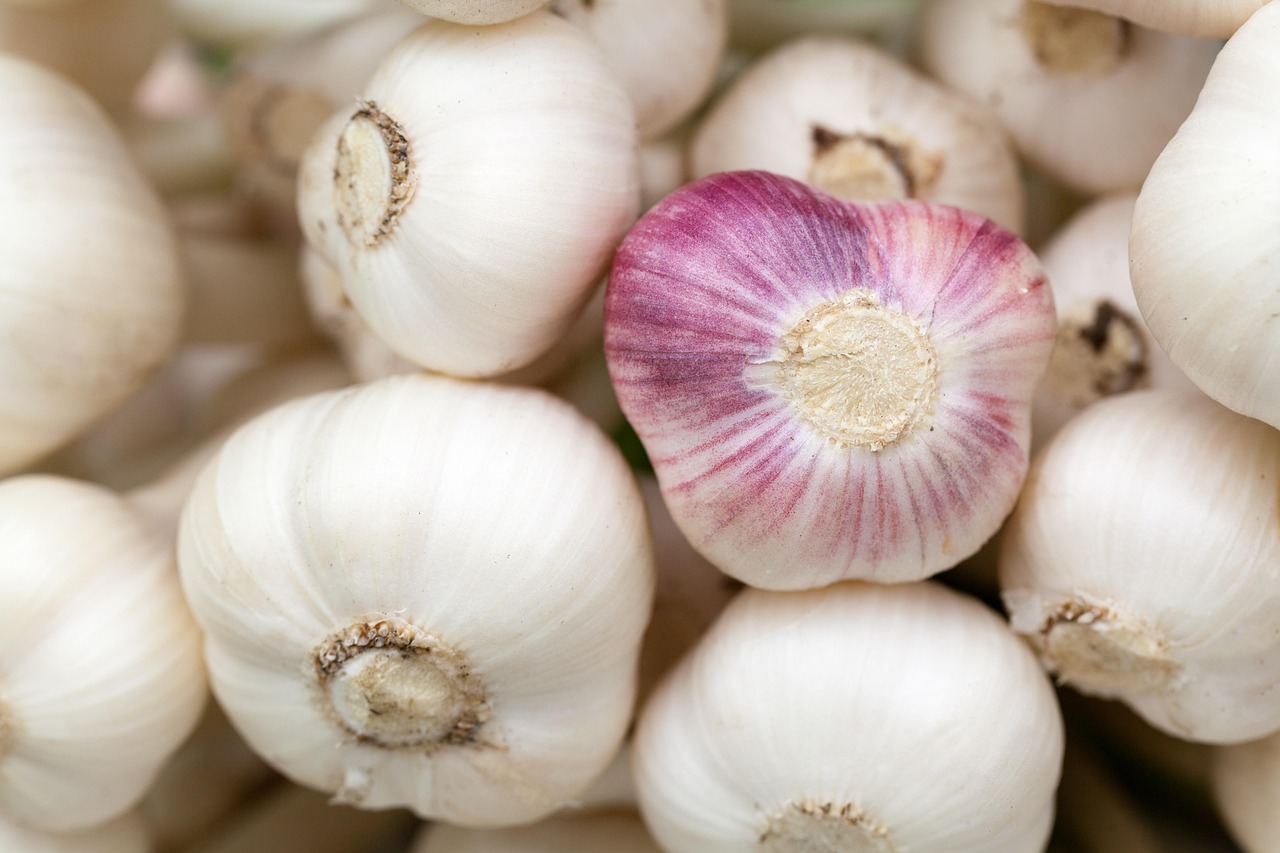
A Short History of Garlic: The Bulb That Traveled the World
Few plants have shadowed human civilization quite so persistently as garlic. It appears in the burial chambers of pharaohs, in the field rations of Roman legions, in medieval herbals, and in the kitchen gardens of nearly every culture that has ever grown food in soil. The Allium sativum history stretches back at least five thousand years of documented use, and the plant itself is considerably older than that. Understanding where garlic came from, and how it moved across the world, gives real context to the concentrated aromatic oil we extract from it today.

Origins: A Plant Without a Wild Home
Botanists place the likely origin of cultivated garlic in Central Asia, somewhere in the region that now spans western China, Kazakhstan, and Kyrgyzstan. What makes this origin story unusual is that Allium sativum as we know it does not reproduce sexually in the wild. It is, in the truest sense, a human creation. Thousands of years of selective cultivation produced a plant so thoroughly domesticated that it lost the ability to set viable seed in most growing conditions. Every garlic bulb planted today is a clone of its parent.
Its wild ancestor is generally considered to be Allium longicuspis, a species still found growing in Central Asia. The transition from wild relative to cultivated crop likely happened gradually, as nomadic and early agricultural peoples noticed the plant's pungency, its keeping qualities, and its usefulness as a flavoring and a preservative for food.
Ancient Records: Egypt, Mesopotamia, and the Silk Road
Some of the earliest written references to garlic come from ancient Egypt. The Ebers Papyrus, a medical text dated to approximately 1550 BCE, lists garlic among its documented plant materials. Workers constructing the pyramids at Giza were reportedly given garlic as part of their daily sustenance, a detail recorded by Herodotus centuries later. Whether or not Herodotus was entirely accurate is a matter of scholarly debate, but the archaeological evidence of garlic in Egyptian contexts is well-established.
Mesopotamian clay tablets from roughly the same era reference garlic in lists of cultivated plants. Indian Sanskrit texts mention it even earlier. Garlic folklore in these traditions frequently positioned the bulb at the intersection of the practical and the sacred, a plant that fed workers and also carried symbolic weight in ritual contexts.
From Central Asia and the ancient Middle East, garlic moved along the Silk Road in both directions. Traders heading toward China introduced cultivated varieties that eventually became deeply embedded in East Asian culinary tradition. Caravans heading west brought it into the Mediterranean basin, where Greek and Roman agricultural writers documented it with varying degrees of enthusiasm.

The Mediterranean World: Soldiers, Farmers, and Philosophers
Ancient Greek attitudes toward garlic were notably divided by class. Aristotle and other writers noted that while garlic was essential food for laborers and soldiers, it was considered too pungent for the refined company of the upper classes. Those who ate garlic before visiting the Temple of Cybele were, according to some accounts, turned away at the door. The smell marked you as a person of the working world.
Roman soldiers had no such hesitations. Garlic was standard fare in military rations, and Roman agricultural writers including Pliny the Elder and Columella described its cultivation in practical detail. Pliny's Naturalis Historia devotes considerable attention to garlic, listing numerous traditional folk uses that had accumulated across centuries of observation. These were not scientific evaluations by modern standards, but they represent a serious attempt to document what farmers and practitioners had noticed over generations.
As the Roman Empire expanded, it carried garlic with it. Cultivation spread through what is now France, Spain, Germany, and Britain. By the early medieval period, garlic was growing in monastery gardens across Europe, tended by monks who inherited both Roman agricultural knowledge and older folk traditions about the plant's usefulness.
Medieval Europe and the Weight of Garlic Folklore
Garlic folklore in medieval Europe accumulated quickly. The bulb became associated with protection, a plant believed to ward off malevolent forces. This tradition appears across cultures with enough consistency to suggest it emerged independently in multiple places, probably connected to garlic's dramatically pungent volatile compounds, which are detectable at extremely low concentrations. Whatever the mechanism, the protective symbolism of garlic became embedded in European folk practice and eventually in the popular imagination in ways that still echo today.
Medieval herbals including those of Hildegard von Bingen and later Gerard's Herball documented garlic in careful if pre-scientific terms. These writers were observing real plant chemistry through the lens of humoral theory, and while their explanatory framework has not survived, many of their observations about garlic's sensory intensity and its effects on food preservation have proven to be pointing at genuine chemical phenomena.
The Chemistry Behind the History: What Makes Garlic, Garlic
The pungency that made garlic famous across five thousand years of human culture comes from a relatively small group of sulfur-containing compounds. Understanding them gives the history of garlic a sharper chemical edge.
Fresh garlic cloves contain a compound called alliin, which is largely odorless in its intact state. When the cell walls of a garlic clove are disrupted, an enzyme called alliinase converts alliin into allicin. Allicin is the compound responsible for garlic's characteristic sharp, immediate smell. It is highly volatile and unstable, which is why freshly crushed garlic smells different from garlic that has been sitting for an hour.
Allicin itself is not the end of the story. It breaks down rapidly into a cascade of secondary sulfur compounds including diallyl disulfide, diallyl trisulfide, ajoene, and various vinyl dithiins. The exact profile of these compounds in any given preparation of garlic depends heavily on how the garlic was processed, at what temperature, for how long, and whether water or oil was involved in the extraction.
Garlic essential oil, which is produced by steam distillation of the bulb, contains primarily these secondary sulfur compounds rather than allicin itself. Diallyl disulfide and diallyl trisulfide are typically the dominant components. This is an important distinction for anyone researching the complete guide to what garlic essential oil actually is, because much of the popular literature conflates fresh garlic, garlic powder, aged garlic extract, and garlic essential oil as if they were interchangeable. They are not. Each has a distinct chemical profile.
Research in food science and phytochemistry has produced a substantial body of observations about these sulfur compounds. Some research suggests that diallyl disulfide and related compounds interact with biological systems in ways that are still being mapped. These are framed as research observations, not established conclusions, and the work continues. For a grounded look at what the science does and does not support, the garlic oil FAQ covers the most common questions with appropriate nuance.
Garlic Moves to the Americas and Beyond
Spanish and Portuguese colonizers introduced garlic to the Americas in the sixteenth century. It adapted readily to the soils of Central and South America, and from there spread north. By the nineteenth century, significant garlic cultivation existed in California, which would eventually become one of the world's major garlic-producing regions. The Gilroy area in California's Santa Clara Valley became so associated with garlic production that it earned the informal designation of garlic capital of the world, a title contested but not entirely without basis.
Meanwhile, garlic remained a staple of East Asian, South Asian, and Middle Eastern cuisines throughout this period, continuing traditions that predated European colonial contact by millennia. The global spread of garlic ultimately tracked the movements of the people who valued it most.
Sourcing and Quality: What the History Teaches Modern Buyers
The long, multi-continental history of garlic cultivation has produced significant variation in the plant itself. There are now hundreds of garlic cultivars organized broadly into hardneck and softneck categories, with subspecies including Allium sativum var. ophioscorodon and Allium sativum var. sativum. For aromatic purposes, cultivar selection, soil conditions, and growing climate all influence the concentration and profile of sulfur compounds in the harvested bulb.
When evaluating garlic essential oil for aromatic use, quality indicators worth looking for include a clear statement of botanical name (Allium sativum), the country of origin, the extraction method (steam distillation is standard for true essential oil), and batch-specific gas chromatography and mass spectrometry (GC/MS) documentation. GC/MS reports allow a buyer to verify the actual compound profile of the oil, which should reflect the characteristic sulfur compound signature described above.
Oils that lack these disclosures, or that are priced so low as to suggest adulteration, are worth approaching with skepticism. The garlic oil myths article addresses some of the common misconceptions around sourcing and quality that circulate in the natural products market.
Safety Profile and Responsible Use
Garlic essential oil is one of the more potent aromatic oils available, and its sulfur compounds require respect in use. A few important considerations apply to any aromatic or cosmetic application.
- Dilution is non-negotiable. Garlic essential oil should always be diluted in a carrier oil before any skin contact. Concentrations above one percent are generally considered high for skin use and may cause irritation in sensitive individuals. A patch test on a small area of skin before broader use is strongly recommended.
- Sensitivity varies widely. Some individuals are more reactive to sulfur compounds than others. Anyone with known sensitivities to allium plants should approach garlic essential oil with particular caution.
- Pregnancy and nursing. Use of concentrated garlic essential oil during pregnancy or while nursing should only proceed after consultation with a qualified healthcare provider. This applies to aromatic use as well as topical application.
- Medication interactions. Garlic compounds have been observed in research to interact with certain blood-thinning processes at the biochemical level. Anyone taking prescription medications of any kind should consult their healthcare provider before incorporating garlic essential oil into a regular routine.
- Children and pets. Concentrated essential oils in general require particular caution around children and animals. Garlic specifically is known to be harmful to cats and dogs even in culinary quantities. Keep essential oils stored securely away from pets.
These are not reasons to avoid garlic essential oil. They are reasons to use it thoughtfully, which is exactly what its long history suggests: this is a potent botanical that rewards careful, informed handling.
Five Thousand Years in a Single Drop
The Allium sativum history is a story about human movement, agricultural ingenuity, and the persistence of a plant that became so useful it accompanied civilization wherever it traveled. From Central Asian steppe to Egyptian burial site, from Roman field kitchen to California farmland, garlic has maintained its position by being genuinely worth the attention paid to it.
The essential oil distilled from that bulb concentrates the chemical complexity that made garlic worth carrying across the Silk Road in the first place. Its volatility, its sulfur-forward scent profile, and its long presence in aromatic and botanical traditions make it one of the more historically grounded offerings in the essential oil category. That context matters, both for appreciating what you are working with and for using it well.
Garlic is a plant that has never needed marketing. It made its case through five thousand years of practical use, and the chemistry has been there all along.