Why Garlic Oil Smells the Way It Does: Allicin and Sulfur Chemistry
Few aromas in the natural world are as immediately recognizable as garlic. Bold, pungent, and surprisingly complex, the garlic oil smell stops you in your tracks the moment you uncap the bottle. But what exactly creates that signature scent? The answer lies deep inside the chemistry of the bulb itself, in a cascade of sulfur-based reactions that begin the moment a garlic clove is cut, crushed, or pressed.
This deep dive unpacks the science behind garlic's volatile compounds, with a particular focus on allicin and the broader family of garlic sulfur compounds that give the oil its character. Whether you are a curious aromatics enthusiast or a formulator selecting ingredients, understanding this chemistry helps you make smarter, more informed choices about sourcing and use.
The Starting Point: What Is Garlic Essential Oil?
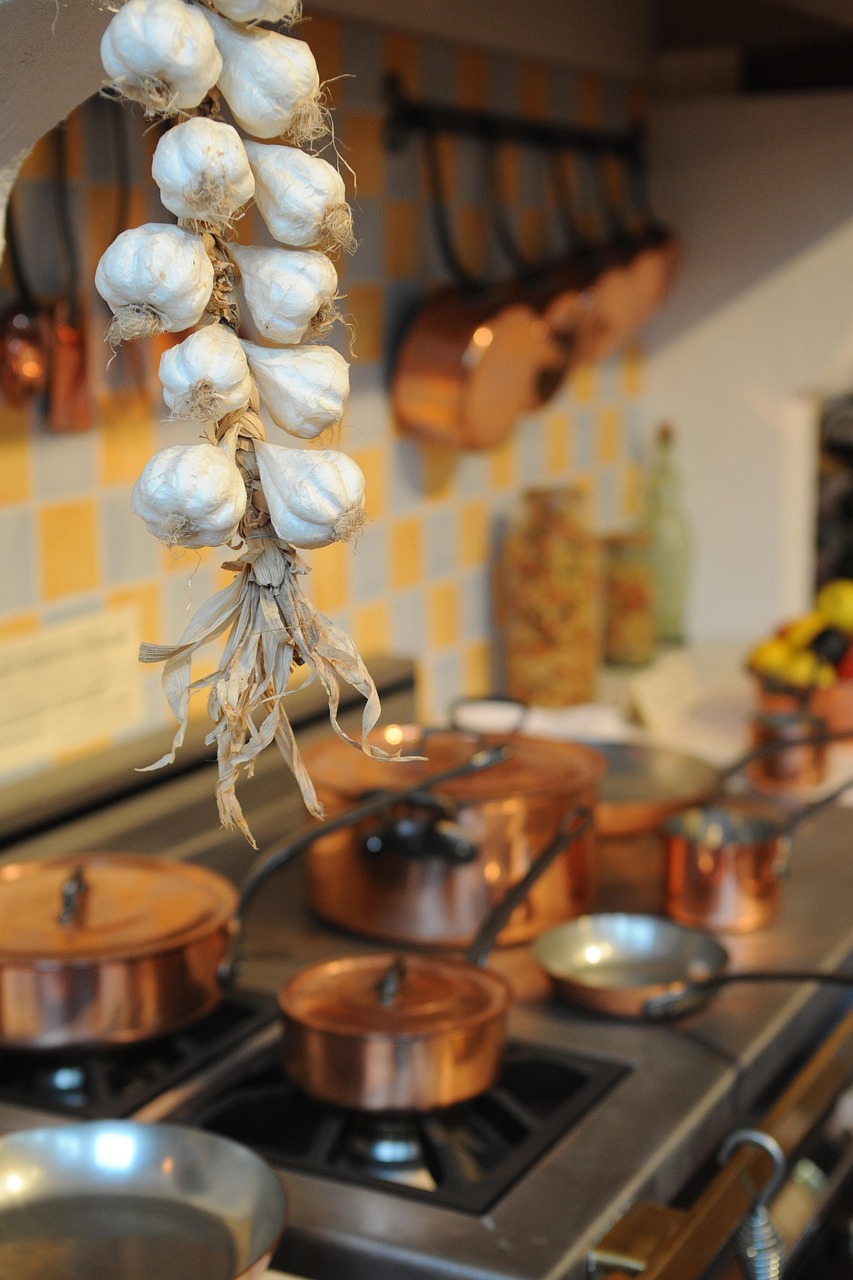
Before diving into the chemistry, it is worth grounding ourselves in what we mean by garlic oil. The term covers a few distinct products: steam-distilled essential oil, cold-pressed oil, and garlic-infused carrier oil. Each has a different chemical profile and intensity of aroma. Steam distillation, for example, captures a specific range of volatile sulfur compounds, while cold-pressing preserves a broader and sometimes more pungent spectrum.
For a thorough introduction to these distinctions, the complete guide to garlic essential oil is a useful starting point. Here, we will focus primarily on the chemistry common across garlic-derived oils, particularly the allicin pathway that drives so much of the aroma profile.
The Allicin Story: A Reaction, Not an Ingredient
Here is one of the most interesting things about garlic chemistry: allicin is not actually present in an intact, whole garlic bulb. It does not exist until the clove is damaged.
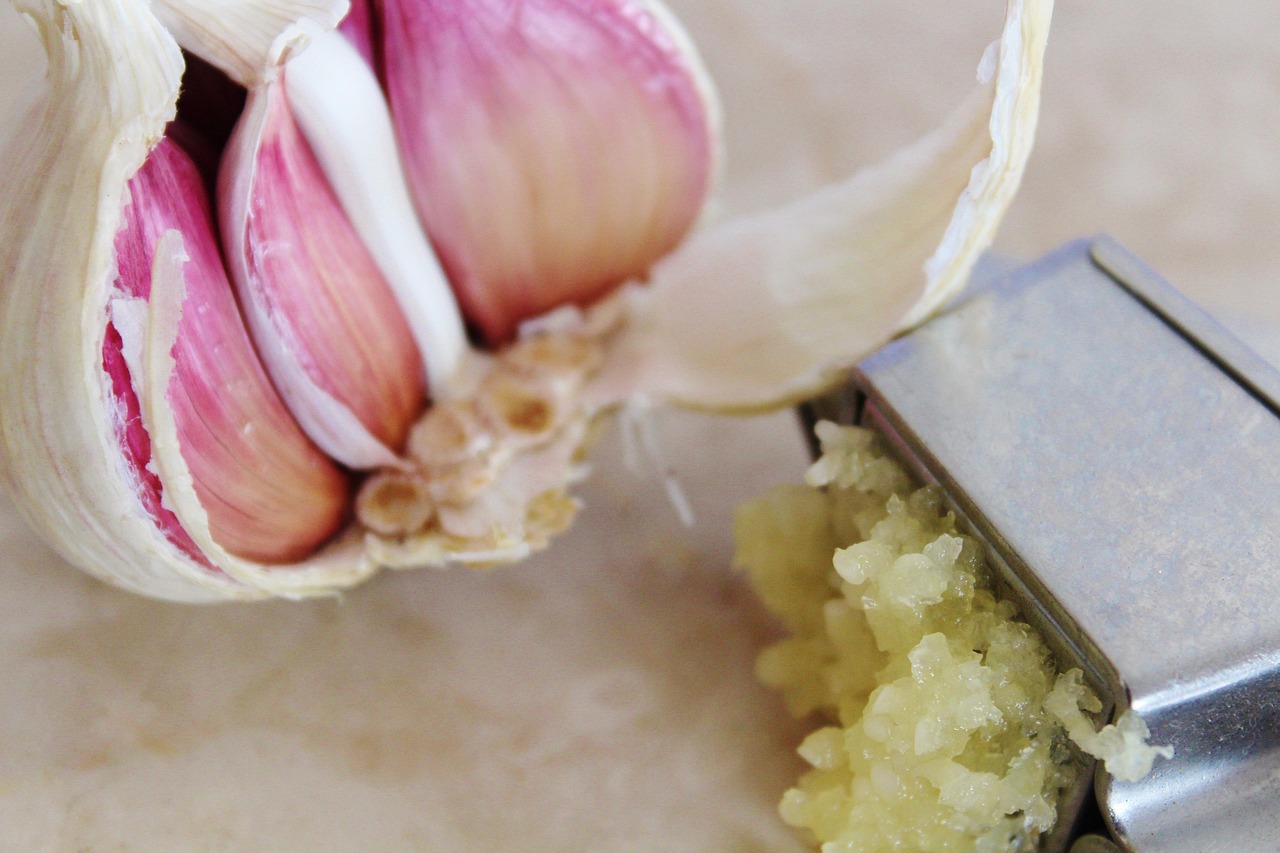
Inside an undisturbed garlic cell, two key players are stored separately. The first is a sulfur-containing compound called alliin (S-allyl-L-cysteine sulfoxide). The second is an enzyme called alliinase. These two compounds sit in different cellular compartments, kept apart by the cell's own architecture. The moment the cell wall is broken, whether by cutting, crushing, chewing, or mechanical pressing, alliinase is released and immediately contacts alliin. The enzymatic reaction is rapid. Within seconds, alliin is converted into allicin (allyl 2-propenethiosulfinate).
Allicin is the compound most people associate with the sharp, raw, almost biting quality of freshly crushed garlic. Research published in journals including the Journal of Agricultural and Food Chemistry has observed that allicin begins to degrade almost immediately after it forms, converting into a range of secondary sulfur compounds. It is, in a sense, both the beginning and a brief waypoint in a longer chemical journey.
Allicin's Downstream Compounds: Where the Complexity Comes From
Because allicin is inherently unstable, it does not survive long. What it produces as it breaks down is arguably more interesting from an aromatic standpoint. A range of volatile garlic sulfur compounds forms during this cascade, and each contributes differently to the overall scent profile.
| Compound | Also Known As | Aroma Character |
|---|---|---|
| Diallyl sulfide (DAS) | Allyl sulfide | Soft, cooked garlic note; less sharp |
| Diallyl disulfide (DADS) | Allyl disulfide | Classic raw garlic pungency; primary steam-distillate compound |
| Diallyl trisulfide (DATS) | Allyl trisulfide | Intensely sulfurous; contributes depth and persistence |
| Allyl mercaptan | 2-Propene-1-thiol | Sharp, garlic-breath associated note |
| Methyl allyl disulfide | Methyl allyl disulfide | Slightly onion-like, adds complexity |
Diallyl disulfide (DADS) tends to dominate in steam-distilled garlic essential oil and is frequently cited in research as the compound most responsible for what we recognize as the characteristic garlic oil smell. Studies have identified DADS as comprising anywhere from 40 to 60 percent of the total volatile fraction in distilled garlic oil, though this figure varies with cultivar, growing conditions, and processing method.
Diallyl trisulfide (DATS) is typically present in smaller concentrations but contributes disproportionately to the oil's persistence and depth. It is the compound that lingers. If you have ever noticed that garlic aroma seems to deepen and evolve over time in a blend or a room, DATS is a likely contributor.
Why Does Garlic Smell So Much Stronger Than Most Botanicals?
The intensity of garlic's aroma comes down to a few intersecting factors.
First, sulfur itself is extraordinarily volatile and detectable by the human nose at very low concentrations. Our olfactory system is exquisitely sensitive to sulfur-containing molecules. Some sulfur compounds can be detected at parts per billion or even parts per trillion. This is partly an evolutionary adaptation: sulfur odors in nature often signal decomposition or danger, so our noses learned to notice them early and clearly.
Second, garlic contains an unusually high concentration of organosulfur precursors relative to most aromatic plants. While lavender or rose produce their volatile compounds continuously as part of their normal biology, garlic stores its precursors in concentrated form and releases them explosively on damage. The result is an aromatic intensity that is front-loaded and dramatic.
Third, the chain-length variation across the diallyl sulfide family means the aroma is not a single note but a layered chord. Short-chain sulfides volatilize quickly for that immediate punch. Longer-chain polysulfides release more slowly, giving garlic its staying power in a blend or on a surface.
How Processing Shapes the Aroma Profile
The garlic oil smell you encounter in a bottle is not identical to the smell of fresh garlic, and that difference is intentional and chemically predictable.
Steam distillation exposes the crushed garlic material to heat and water vapor. This environment favors the volatilization of smaller, lighter sulfur molecules like diallyl sulfide while causing some larger, more complex compounds to degrade or remain behind in the spent plant material. The result is an oil that smells intensely garlicky but slightly cleaner and more uniform than raw crushed garlic.
Cold-pressed or solvent-extracted preparations may retain a broader range of compounds, including some that contribute to the more complex, almost savory-roasted quality you might associate with roasted garlic. These preparations are often used in culinary contexts rather than aromatic ones.
Aged or fermented garlic products undergo a different chemistry entirely, converting many of the reactive sulfur compounds into more stable, odorless or mildly scented molecules. This is why black garlic, for instance, has almost no sharp garlic aroma at all despite being derived from the same bulb.
What Research Has Observed About Garlic Sulfur Compounds
The research literature on garlic chemistry is substantial. Most of it focuses on the biological activity of isolated compounds under controlled laboratory conditions. It is important to read these findings carefully: observations made in a laboratory setting do not directly translate to conclusions about what a topically applied or diffused oil will do in a real-world context.
With that framing clearly in place, some observations from the research are worth noting for context.
- Research suggests that allicin is highly reactive with proteins and biological membranes, which is thought to explain why it degrades so quickly in biological environments.
- Some studies have observed that DADS and DATS interact with cellular signaling pathways in laboratory models, though researchers note that the concentrations required in vitro are often quite different from what would be present in a diluted topical or aromatic application.
- Research on the volatile compound profile of garlic oil has found meaningful variation between cultivars (such as hardneck versus softneck varieties) and between geographic growing regions, suggesting that sourcing matters significantly for anyone focused on a specific aromatic character.
- A 2016 review in Phytochemistry observed that the sulfur compound profile of steam-distilled garlic oil is consistently dominated by diallyl polysulfides but noted considerable batch-to-batch variation even within the same cultivar when growing or storage conditions differ.
None of these observations should be interpreted as claims about what garlic oil will do when you use it. They are windows into the chemistry that creates the aroma and character you experience when you open a bottle.
Safety Profile and Contraindications
Garlic oil is potent, and that potency deserves real respect. The same reactive sulfur chemistry that creates the vivid aroma also makes undiluted garlic oil potentially irritating to skin, mucous membranes, and eyes.
Important: Garlic essential oil should always be diluted before any topical application. A dilution of 0.5 to 1 percent in a carrier oil is a common starting point for most adults. Always perform a patch test on a small area of skin and wait 24 hours before broader use. Do not apply near the eyes or on sensitive skin areas without careful testing and appropriate dilution.
The following groups should consult a qualified healthcare provider before using garlic oil topically or aromatically:
- Individuals who are pregnant or nursing
- Children, for whom lower dilution ratios are generally recommended
- People with known sensitivities to alliums (garlic, onion, leek, chive)
- Anyone taking blood-thinning or other prescription medications, as aromatic plant compounds can sometimes interact with medications in ways that are not fully understood
Garlic oil is also not suitable for use near pets, particularly cats and dogs, as allium compounds are known to be problematic for many animals. Keep it stored securely away from animals.
Proper storage matters as much for safety as it does for quality. Garlic oil's sulfur compounds oxidize over time, and degraded oil can behave differently on skin than fresh oil. The guide to storing garlic oil safely covers refrigeration, shelf life, and signs that your oil has turned.
Sourcing and Quality Indicators
Because the garlic oil smell and compound profile vary so much based on sourcing decisions, it pays to be a discerning buyer. Here is what to look for.
Botanical Transparency
A quality supplier will list the botanical name (Allium sativum), the country of origin, and the part of the plant used (bulb). Garlic grown in different regions, particularly in parts of China, Spain, and Eastern Europe, can have meaningfully different sulfur compound concentrations. Suppliers who provide a certificate of analysis (COA) from third-party gas chromatography-mass spectrometry (GC-MS) testing allow you to see the actual compound profile rather than taking quality on faith.
Extraction Method
Steam distillation is the most common method for producing garlic essential oil, and it produces a relatively standardized compound profile. If a supplier does not clearly state the extraction method, that is a gap worth asking about.
Color and Clarity
High-quality steam-distilled garlic oil is typically pale yellow to nearly colorless. A deep amber or brownish color can suggest oxidation or adulteration, though some variation is normal. Cloudiness may indicate the presence of water or carrier oil, which would suggest the product is not a pure essential oil.
Aroma Intensity and Freshness
Fresh garlic oil should be sharply pungent without smelling rancid, musty, or flat. The typical garlic oil smell has a clean sulfurous sharpness at the top, followed by a deeper, more savory base note. If the top note is absent and only a flat base remains, the oil may be old or degraded.
Price as a Signal
Garlic requires significant raw material to produce a small volume of essential oil. Unusually low prices can sometimes indicate adulteration with synthetic diallyl disulfide (a commercially produced aroma chemical that mimics natural garlic oil but lacks the full compound complexity of a true distillate). This is not always the case, but it is a reasonable flag for further investigation.
For practical ideas on how to use garlic oil once you have sourced a quality product, the 15 ideas for the kitchen, garden, and workshop is a good next read.
A Compound Worth Understanding
Garlic's reputation as one of nature's most potent aromatics is not accidental. It is the direct result of a sophisticated, enzyme-driven chemical reaction that has evolved over millions of years in the plant's own biology. Allicin sits at the center of that story, but it is really just the beginning of a cascade that produces dozens of volatile garlic sulfur compounds, each contributing a slightly different note to the whole.
Understanding that chemistry does not diminish the pleasure of working with garlic oil. If anything, it deepens it. When you open a bottle and that sharp, layered, unmistakable garlic oil smell rises to meet you, you are encountering the result of a reaction that started the moment those cloves were crushed, and a lineage of plant chemistry far older than any bottle it comes in.