Garlic for Horses: What One Feeding Study Found
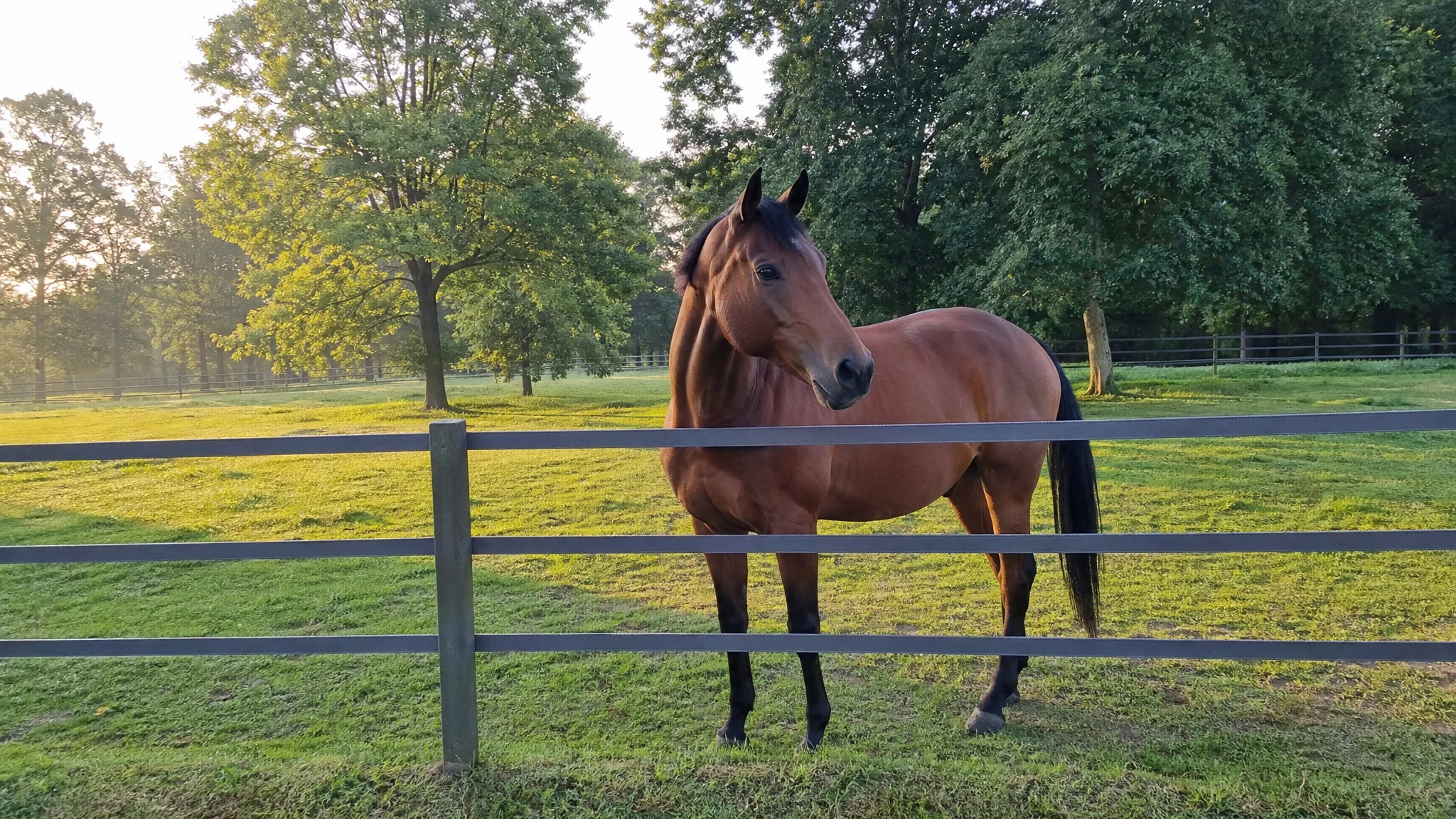
Horses do not need persuading to eat garlic. That is the surprising heart of the one controlled feeding study we know of: given freeze-dried garlic in molasses, horses ate it eagerly, and at higher doses their red blood cells paid for it. Garlic is a popular feed-room additive, so it is worth knowing what that study actually showed. Our garlic essential oil is an undiluted aromatic that is not for internal use, and we do not offer it for animals, feed or fly programs.
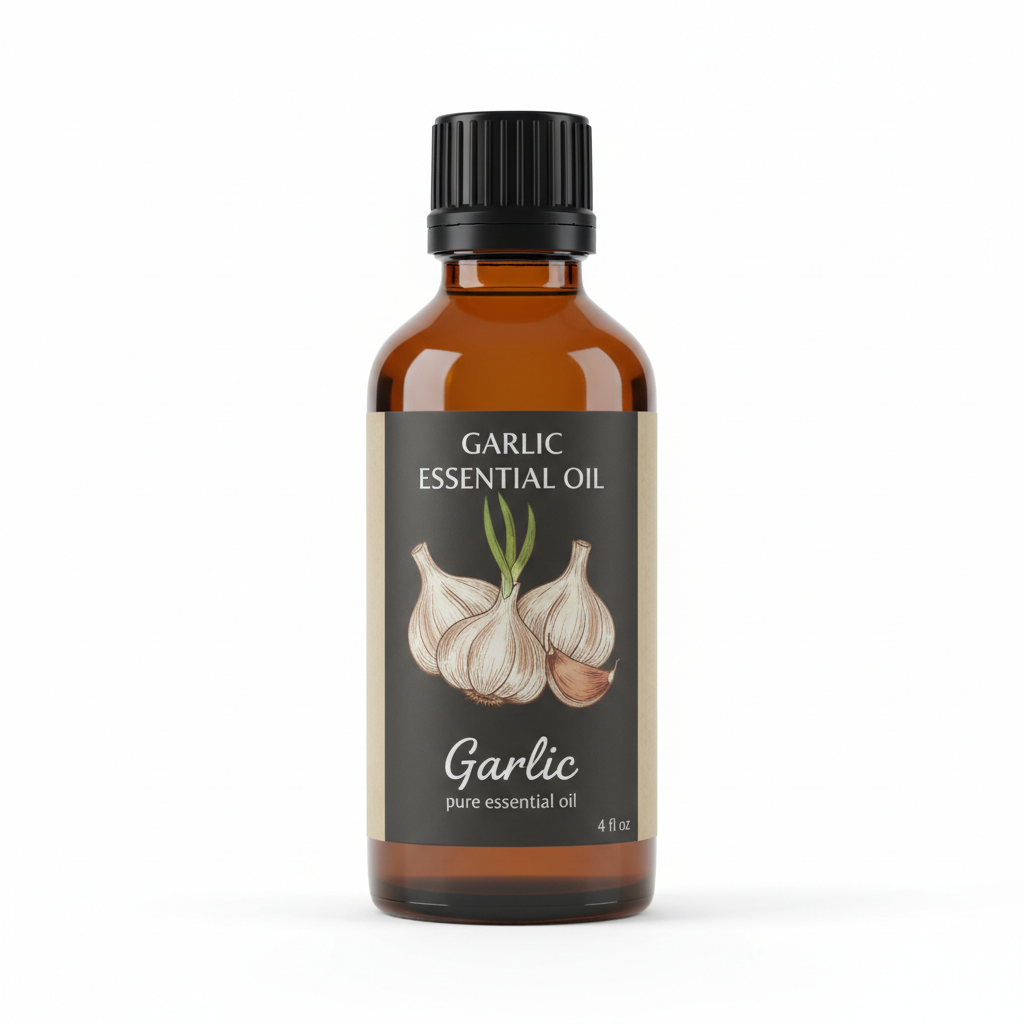
Garlic Essential Oil
Our own Garlic Essential Oil, in sizes from 0.5 oz to bulk.
From $10.99
Shop Now →What the study did
Researchers (Pearson et al., American Journal of Veterinary Research, 2005) worked with four healthy horses, two fed garlic and two kept as controls. The garlic horses got freeze-dried garlic in a molasses carrier, starting at 0.05 g per kg of body weight twice a day and rising over 41 days to the most they would voluntarily eat, 0.25 g per kg twice a day. Supplementation ran 71 days in total, with blood drawn weekly and five more weeks of follow-up.
Above a daily dose of roughly 0.2 g per kg, the garlic horses developed blood changes typical of Heinz body anemia, a condition where red cells are damaged by oxidation and removed early. Most values recovered within five weeks of stopping, though two of them were still elevated at the end of follow-up. The authors concluded that horses will voluntarily consume enough garlic to cause the condition, and that the safe dietary dose still needs to be worked out.
Putting numbers on a real horse
Take a 500 kg horse. Using the study's figures, 0.2 g per kg is about 100 g of freeze-dried garlic a day, and the highest voluntary intake, 0.25 g per kg twice a day, works out to about 125 g per feeding, or 250 g a day. Those are large quantities, nothing like a scoop in a bucket, which is why the sensible reading is that harm took a lot of garlic over weeks. It also means the study cannot tell anyone that a small daily scoop is fine, because nobody measured that. If a feed you use contains garlic, compare the grams per day on the label against these figures and talk to your veterinarian before changing anything. That is our arithmetic from the abstract, not a table in the paper, and with only four animals it is best treated as a flag, not a threshold.
Why garlic does this
The Merck Veterinary Manual describes the mechanism for Allium plants in general: sulfur-containing oxidants, released when the plant is chopped, cooked or chewed, are absorbed and damage red blood cells, leading to Heinz bodies and methemoglobin. It puts the rise in methemoglobin within 24 hours, peaking around 72 hours, with hemolysis typically 3 to 5 days after exposure, and notes that signs often appear only after substantial damage (Merck Veterinary Manual). It also says garlic is 3 to 5 times more toxic than onion. That entry does not mention horses, so it explains the how, not a horse dose. For horses by name, the ASPCA lists garlic as toxic to dogs, cats and horses, names N-propyl disulfide as the toxic principle, and lists vomiting, Heinz body anemia, blood in the urine, weakness, a fast heart rate and panting among the signs (ASPCA, garlic).
What about fly season?
Garlic is sold to horse owners mostly as a fly deterrent. A documented risk to red blood cells is a high price for a benefit that is mostly tradition, so our view is that an unproven benefit should not win that trade. If flies are the problem, your veterinarian or county extension office can point to options with documented results for your region. We make no repellent claim for our oil, and anyone mixing a homemade spray should read EPA and state rules first.
Where the essential oil fits
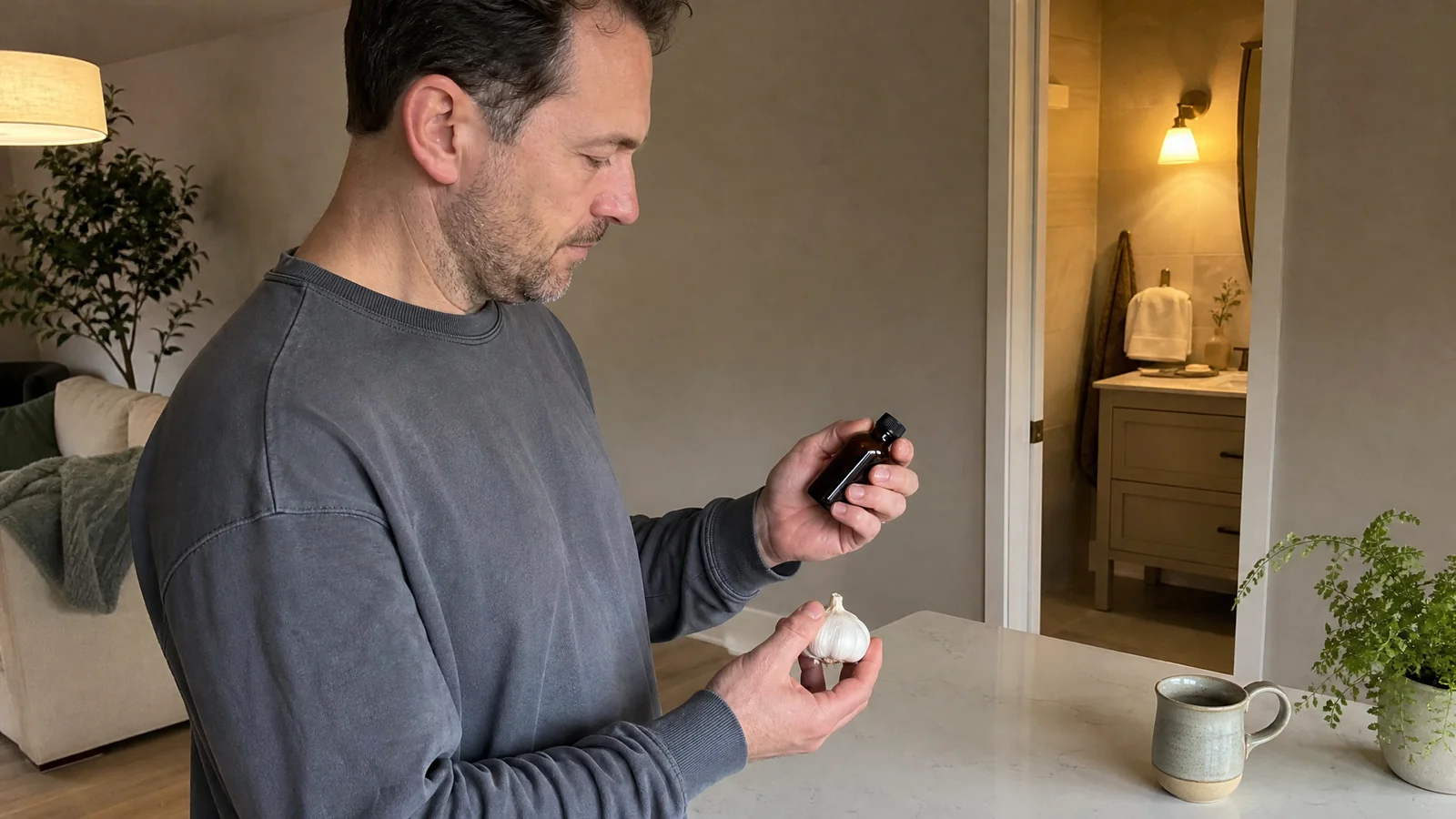
Every figure above is about freeze-dried or whole garlic. The oil is a different material, and it is concentrated. Our Certificate of Analysis for one batch gives a relative density of 1.075, so a 0.5 oz bottle of about 14.8 ml holds roughly 16 g of oil, though that weight cannot be converted into grams of garlic. Concentration is a reason for more care, so we would keep the bottle out of the stable and feed room. Our guide to garlic essential oil around dogs and cats covers household pets, and the livestock research roundup covers ruminants.
Reading a feed label with fresh eyes
If you look at a feed or supplement tub, garlic often sits in a list alongside several other ingredients, sometimes without an amount. A practical habit is to write down the product name, the scoop size and how many scoops go into the bucket each day, so you can work out the grams per day and show your veterinarian. It takes a minute, and it turns a vague worry into a number someone can discuss with you.
Our own bottle belongs on a high shelf in the house, tightly capped, well away from the stable and the feed room.
If a horse has eaten garlic
Call your veterinarian. Because the manual describes hemolysis arriving 3 to 5 days after exposure, a horse that looks normal on day one is not necessarily in the clear. The ASPCA lists its poison control line as (888) 426-4435 and notes that a consultation fee may apply. Have the product name, its form (powder, flakes or oil), the amount that might be missing and the time ready. For the wider picture on how we think about the oil's safety, see is garlic essential oil safe, and for how oil differs from extracts, garlic oil vs garlic extract.
Horse feeding decisions belong with an equine veterinarian, who can weigh a particular animal's diet, health and needs in a way no article can.
Garlic Essential Oil
Garlic Essential Oil from our own shop, in sizes from 0.5 oz to bulk.
From $10.99
Shop Now →Sources & Further Reading
- Pearson W, Boermans HJ, Bettger WJ, McBride BW, Lindinger MI, 2005. Association of maximum voluntary dietary intake of freeze-dried garlic with Heinz body anemia in horses. Am J Vet Res 66(3):457-465. pubmed.ncbi.nlm.nih.gov/15822591
- Merck Veterinary Manual. Garlic and Onion (Allium spp) Toxicosis in Animals. merckvetmanual.com
- ASPCA. Toxic and Non-Toxic Plants: Garlic. aspca.org/garlic