Garlic Oil vs. Aged Extract vs. Powder: What Differs
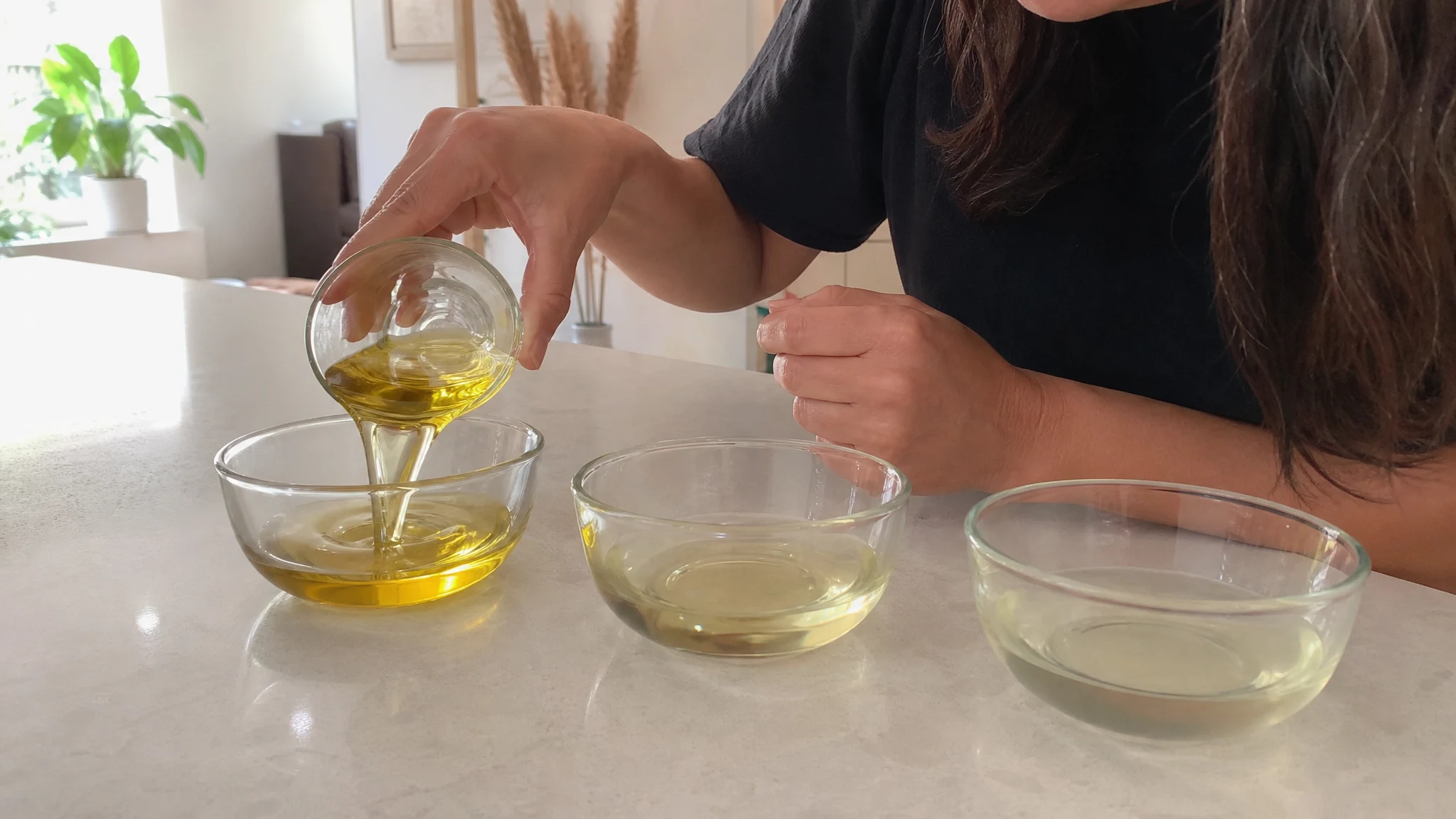
Garlic oil, aged garlic extract and garlic powder all come from the same bulb, and they could hardly be less alike. One is a distilled concentrate of volatile sulfur compounds, one keeps the amino acids and loses those volatiles, and one is dried garlic pressed into tablets. A result for any of them does not carry over to the others, which is worth remembering the next time a headline says "garlic."
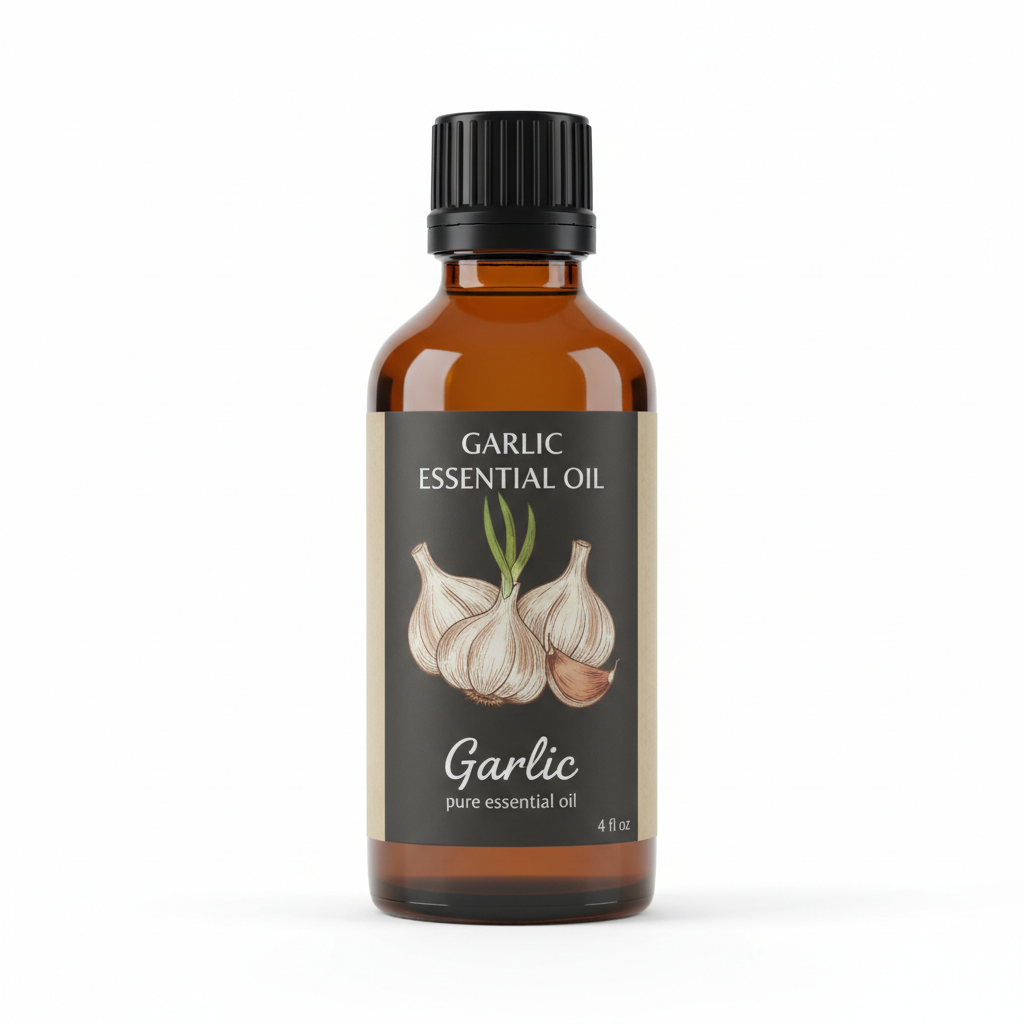
Garlic Essential Oil
Our own Garlic Essential Oil, in sizes from 0.5 oz to bulk.
From $10.99
Shop Now →One bulb, three routes
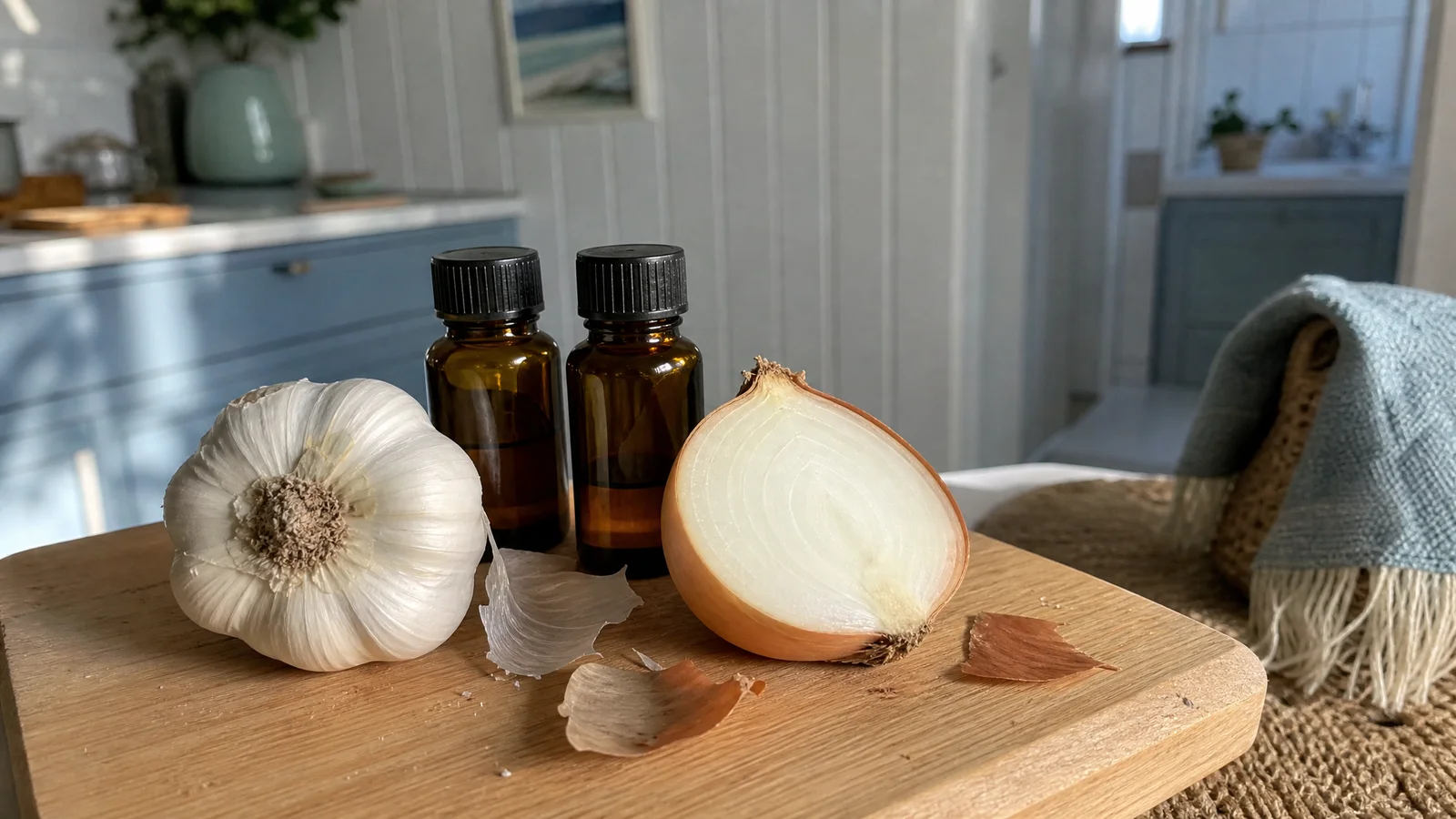
All three start the same way. Crushing a clove lets the enzyme alliinase act on alliin, and two molecules of the resulting allyl sulfenic acid join to form allicin, which a review of the chemistry describes as highly reactive and thermally unstable. Everything else is a different path from there.
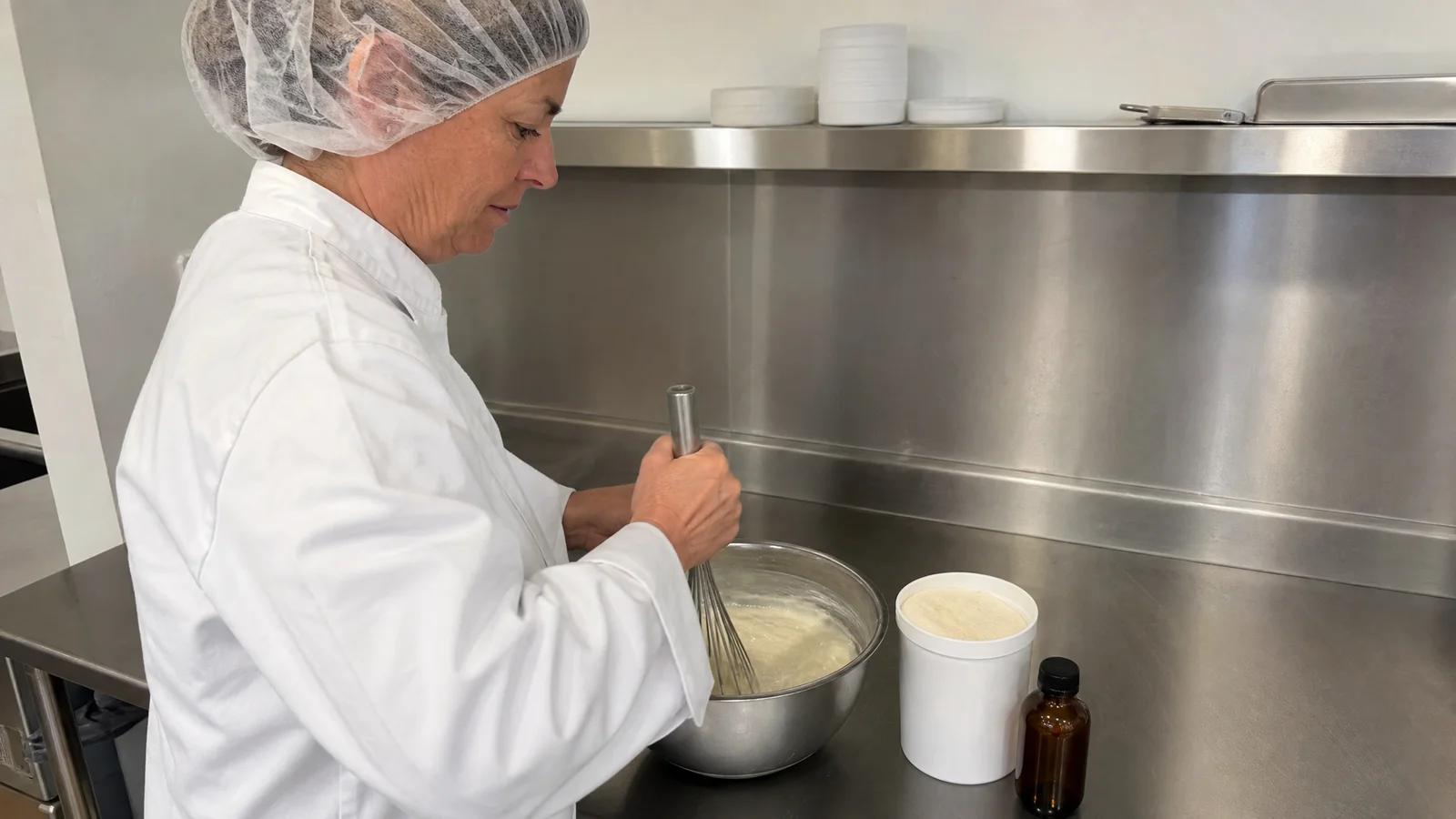
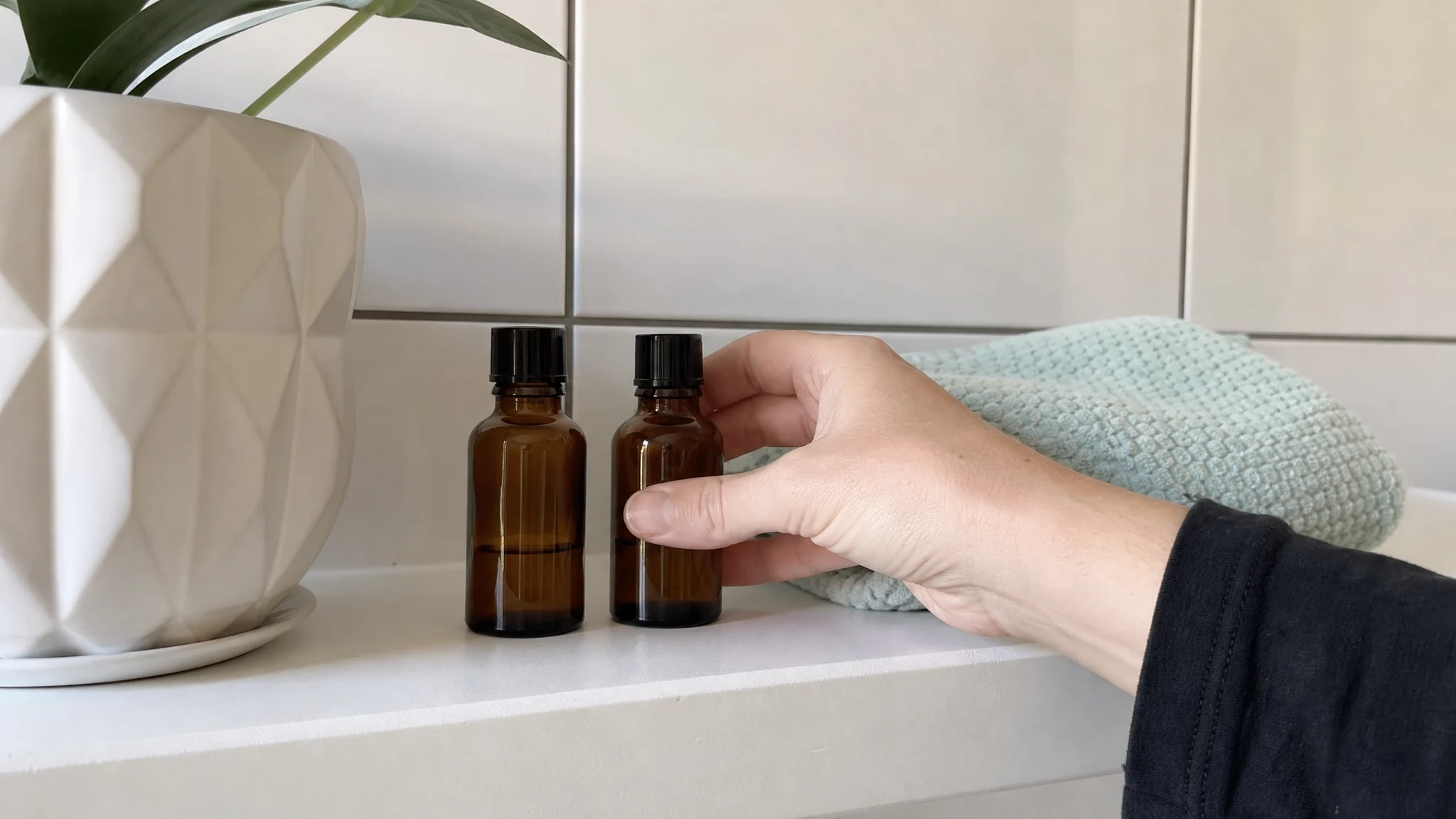
Steam-distilled oil. Steam carries over the volatile compounds, and allicin does not survive as such. In an analysis of an industrial steam-distilled garlic oil, diallyl disulfide was 27.9% and diallyl trisulfide 16.8%, and allicin was not detected. That is one sample from one producer, and not a description of ours. The Certificate of Analysis we publish for one batch lists density and refractive index only.
Aged garlic extract. Here garlic is aged in tanks for up to 20 months. S-allylcysteine rises from 0.2 mg/g of dry extract at the start to about 7.2 mg/g by month three, while thiosulfinates such as allicin disappear and the volatile allyl sulfides evaporate almost completely. This is the mirror image of the oil, which consists of exactly those volatile sulfides.
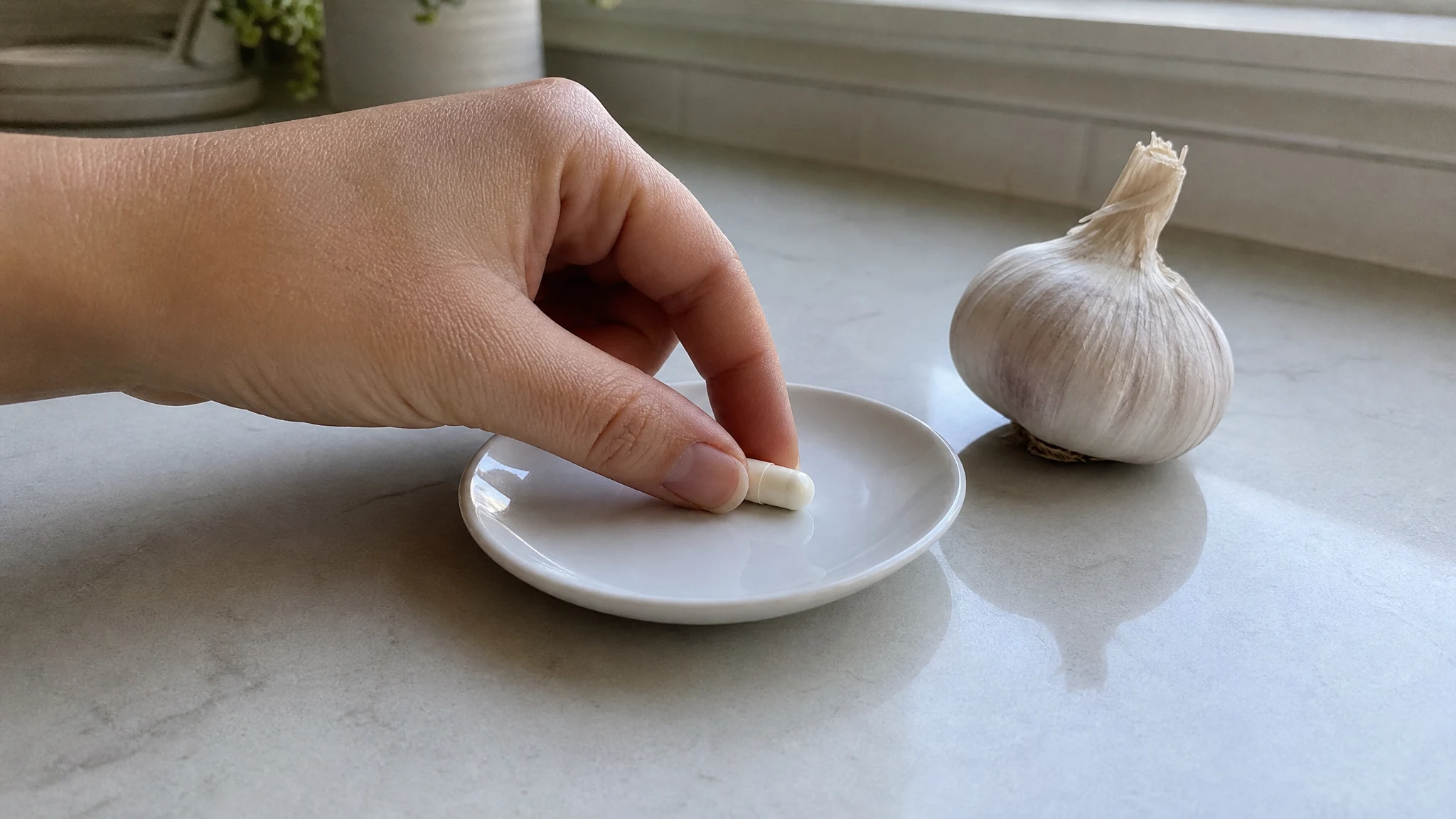
Garlic powder and capsules. Powders, capsules of oil and aged extracts are sold side by side, and the same review notes that each provides a different profile of organosulfur compounds.
A tea picture of the difference
Think of tea. Loose leaves, a bottled tea concentrate and a perfume built around the aroma of tea are all connected to the same plant, and nobody would expect them to behave the same way. Garlic is no different. The bulb is the starting point, and the route it takes afterward decides what you end up holding. That is a gentle way to remember that the word on the front of the package is only the beginning of the story.
Why the label matters more than the word "garlic"
Studies of supplements often group preparations under one name, so what a trial found for a tablet cannot tell you what a distilled aroma oil would do, and "garlic oil" in a supplement trial may mean a capsule product rather than an essential oil. Cell-culture findings are different again, since they describe a compound in a dish at concentrations that a person on a shelf never meets. We make no claim from any of it for our oil.
When you read any label or trial, four questions sort things quickly. Which preparation was used? At what dose, by weight of what? In how many people, for how long, against what? And was the outcome something a person would notice?
The loudest of the three
Of the three, the oil is the one you can find with your nose from across the room. Our product page describes the aroma as pungent, savory and sulfurous, with lasting depth, and you will notice it the moment you open the bottle. That loud, lingering character is what sets a distillate apart from the other two on the shelf, and it is why we always talk about it in drops.
If you are curious how they differ, the simplest experiment needs no chemistry. Read the ingredient line and the directions on each product, side by side, and notice how differently they are described. One talks about drops and ventilation. Another talks about servings. The way a product asks to be used usually tells you a lot about what it is.
Where our oil sits
Our garlic essential oil is an undiluted aroma and workshop material, and it is not for internal use. It is not a substitute for a supplement, and nothing we publish suggests it is. NCCIH's garlic page says only that fresh raw garlic may not be safe on skin and can cause severe irritation and chemical burns, and it does not discuss garlic essential oil. For questions about oral garlic, especially if you take medicines or are pregnant, the right people to ask are a physician or pharmacist.
If the oil itself is what interests you, the useful next comparisons are steam distillation versus CO2 extraction, and how essential oil differs from garlic infused oil. The safety overview covers handling.
A rule of thumb from a small shop
When you pick up any bottle, check the name, the ingredient line and the directions, in that order. If a seller cannot tell you which of the three materials they are selling, ask. We sell exactly one oil, and we would rather you chose the right thing somewhere else than the wrong thing from us.
Think of them as three different materials that happen to share a plant, and choose by what each one is actually made of.
Garlic Essential Oil
Garlic Essential Oil from our own shop, in sizes from 0.5 oz to bulk.
From $10.99
Shop Now →Sources & Further Reading
- Borlinghaus J et al., 2014. Allicin: Chemistry and Biological Properties. Molecules 19(8):12591-12618. pmc.ncbi.nlm.nih.gov/articles/PMC6271412
- Satyal P, Craft JD, Dosoky NS, Setzer WN, 2017. The Chemical Compositions of the Volatile Oils of Garlic and Wild Garlic. Foods 6(8):63. pmc.ncbi.nlm.nih.gov/articles/PMC5575638
- Colín-González AL et al., 2012. The Antioxidant Mechanisms Underlying the Aged Garlic Extract- and S-Allylcysteine-Induced Protection. Oxid Med Cell Longev 2012:907162. pmc.ncbi.nlm.nih.gov/articles/PMC3363007
- NCCIH, Feb 2025. Garlic. nccih.nih.gov/health/garlic