Garlic Oil for Cucumber Powdery Mildew: What One Trial Shows
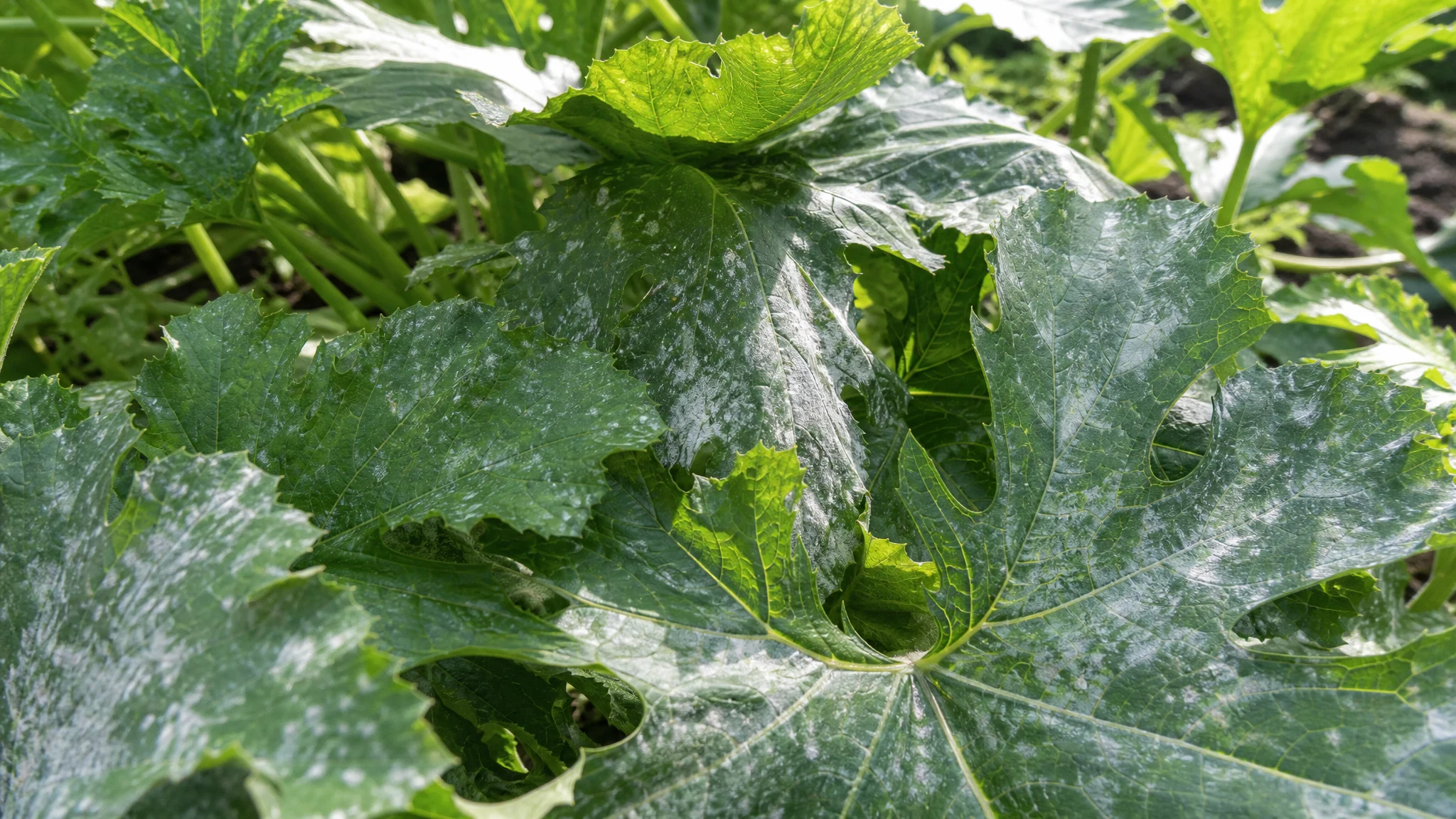
That dusty white coating on cucumber and squash leaves in late summer has a name, powdery mildew, and nearly every vegetable gardener meets it sooner or later. A 2026 greenhouse trial tried garlic oil against it on cucumbers and reported results that sit close to a synthetic fungicide. It is an interesting paper, and it is best read alongside what extension specialists advise for gardens.
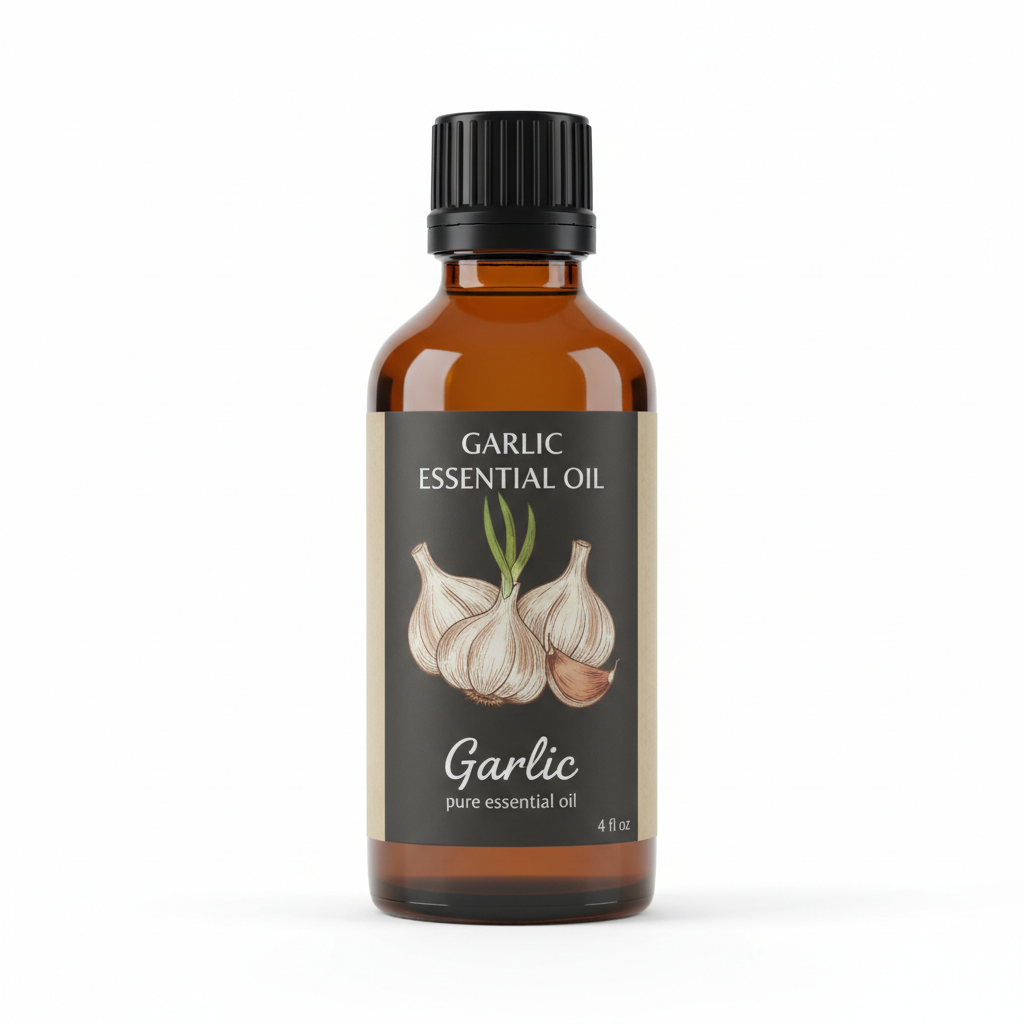
Garlic Essential Oil
Our own Garlic Essential Oil, in sizes from 0.5 oz to bulk.
From $10.99
Shop Now →The extension starting point
UC IPM's pest note on powdery mildew on vegetables (UC ANR Publication 7406, last updated November 2008) begins with a line worth remembering: "The best method of control is prevention." Its advice is to plant in sunny areas as much as possible, provide good air circulation, and avoid excess fertilizer. If you do use a least-toxic fungicide, timing is everything: it must go on no later than the first sign of disease, and protectant products go on before symptoms appear.
The note also carries sensible cautions for anyone spraying oil. Oils should never be applied when temperatures are above 90 F or to drought-stressed plants, and an oil spray should never go on within two weeks of a sulfur spray or plants may be injured. Garlic is not mentioned in the note. The date is a reminder that the pesticide details on it may be out of date, so check labels and your local extension office for current products.
What the cucumber trial did
Omar and colleagues (2026, Frontiers in Plant Science) grew Barracuda cucumbers in a greenhouse over two spring seasons, 2023 and 2024, with natural infection by Podosphaera xanthii. They compared garlic oil, cumin oil, ascorbic acid, a penconazole fungicide and untreated plants. The garlic oil was used at 3000 ppm, emulsified in water with Arabic gum, and applied three times at 10-day intervals.
Disease severity fell by 85.93% with garlic oil and 87.05% with the fungicide, a gap of about one percentage point that the authors describe as statistically comparable. On a second measure, the area under the disease progress curve, the fungicide did better, 84.88% against 71.21%.
The authors are candid about the limits: it was a greenhouse, they call for field-scale validation, and they note that essential oils often show lower persistence and more variable results outdoors. Two seasons in one greenhouse make it a promising lead, and a second trial would make it a method.
Spotting mildew early
Walk the cucumber bed in the morning, when the light is soft and you are unhurried. Look at the upper surface of the older leaves first, where the first pale, flour-like spots tend to appear, then turn a few leaves over and look beneath. Run your eye along the leaf edges and the shaded patches in the middle of the plant, where air moves least. Catching a few spots early makes every later decision easier, whatever you choose to do about them.
What 3000 ppm looks like
Here is the arithmetic, which is only unit conversion and not a recipe. 3000 ppm is 3 grams per litre, about 0.3%. The Certificate of Analysis we publish for one batch gives a relative density of 1.075, so 3 grams is a little under 3 ml, roughly 56 drops at the common convention of 20 drops per ml. Droppers vary, so weigh if you want to be precise.
The detail that matters most is the emulsifier. Oil floats on water, and the trial's gum is what kept it evenly dispersed in the sprayer. A spritz bottle of oil and water with no emulsifier would behave very differently from what the researchers used. We sell only the garlic oil, so the gum would come from a craft or supply shop.
A garden notebook helps here. Jot down the date, the weather, which plants you looked at and what you saw, and snap a photo of any leaf that worries you. A week later, those notes tell you whether things are spreading or holding steady, and they are exactly what a county extension office will ask about if you take a leaf in.
A sensible way to think about it
If mildew has already appeared, the extension order of work is a good one: improve air and light, remove the worst leaves, and choose a labeled product from a garden center, with a small-area test first. Labeled products come with temperature limits and directions, which is a real advantage. Curious gardeners who want to explore garlic anyway can treat it as a small experiment on a single plant with a neighbor left alone for comparison, and stop at any sign of leaf burn.
We offer our garlic oil as an undiluted aroma material, and we make no fungicide or pest claims for it. Under US pesticide law, a product with pest claims is a pesticide. EPA exempts minimum-risk products only when every one of six conditions is met, and the active ingredient must be on the list in 40 CFR 152.25(f), where garlic and garlic oil are separate entries. States may require their own registration, and anyone mixing a spray acts on their own responsibility. Our minimum-risk article goes through it.
A concentrated garden mix is also something to handle with care. Our guidance is 0.5% to 2% in a carrier for skin with a patch test first, as we describe in our article on skin irritation. If you like comparing plant oils for the garden, our garlic versus neem comparison is a good next read, and the aphid article covers the insect side.
Gardens reward patience and attention, and a few quiet minutes among the vines each morning is worth more than any bottle.
The cucumber trial is a nice reminder that garlic keeps surprising researchers. For the vegetable bed itself, though, sunshine, airflow and early action remain the dependable tools.
Garlic Essential Oil
Garlic Essential Oil from our own shop, in sizes from 0.5 oz to bulk.
From $10.99
Shop Now →Sources & Further Reading
- UC IPM, University of California. Pest Notes: Powdery Mildew on Vegetables (UC ANR Publication 7406, updated 11/2008). ipm.ucanr.edu/PMG/PESTNOTES/pn7406.html
- Omar HS et al., 2026. Agro-physiological responses and molecular docking evaluation of some essential oils and ascorbic acid as eco-friendly inhibitors of powdery mildew in cucumber plants. Frontiers in Plant Science 17:1786347. doi.org/10.3389/fpls.2026.1786347
- US EPA. Conditions for minimum risk pesticides. epa.gov/minimum-risk-pesticides
- US Government. 40 CFR 152.25. law.cornell.edu/cfr/text/40/152.25