Garlic Spray vs. Neem Oil: Why the Label Matters
Gardeners often ask us whether garlic spray can stand in for neem oil. They are both plant-derived and both turn up in organic gardening talk, but they sit in very different places once you look at how each is regulated and sold. Our garlic oil is an aroma material with no pest claims, and we do not sell neem, so this is simply a map of the differences to help you choose with open eyes.
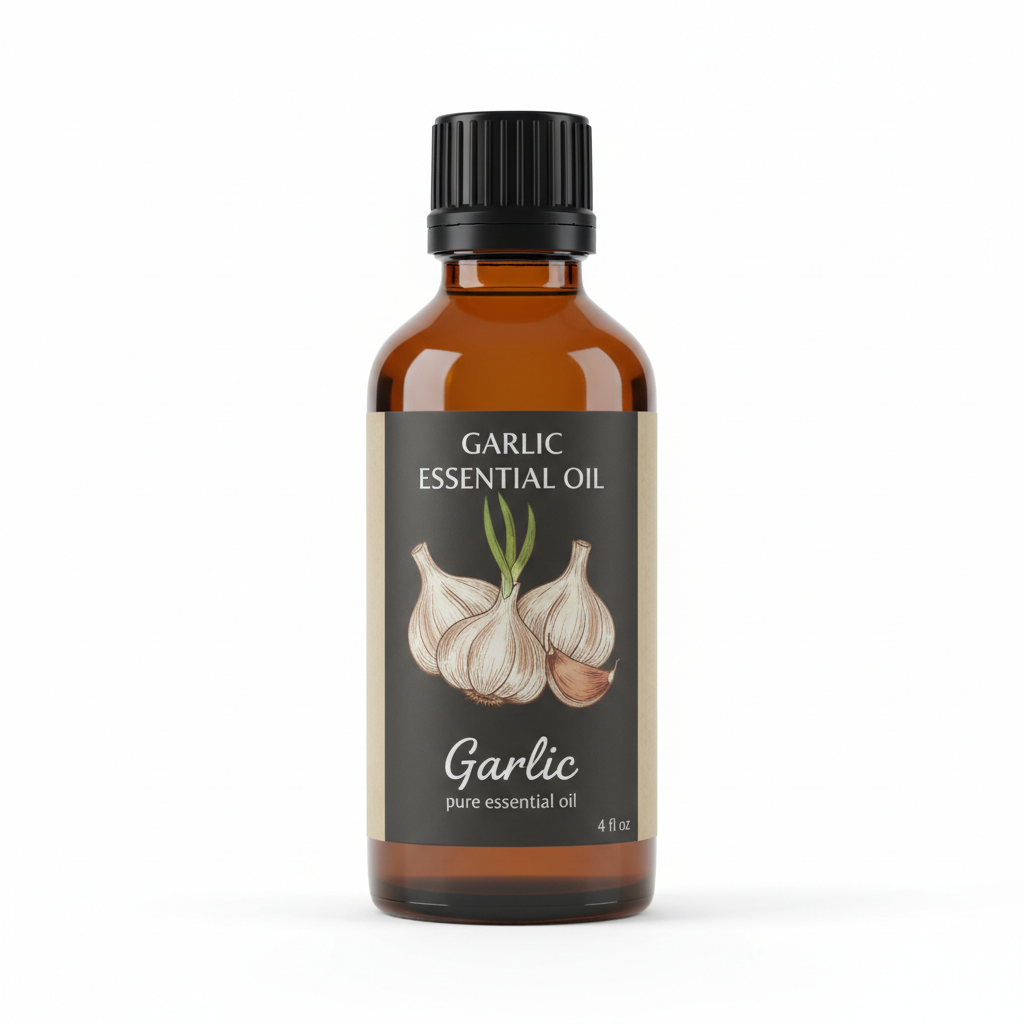
Garlic Essential Oil
Our own Garlic Essential Oil, in sizes from 0.5 oz to bulk.
From $10.99
Shop Now →It also helps to remember that gardening advice travels by word of mouth. A tip that worked for a neighbor on one plant in one season may not carry over to your roses, your tomatoes or your climate. A label is written for exactly that reason: it tells you where the product has been shown to belong.
Two names, loose meanings
Neem oil is a mixture. The National Pesticide Information Center explains that azadirachtin is its most active component for repelling and killing pests, and that neem oil and its purified components are used in over 100 pesticide products (NPIC neem oil fact sheet). Garlic is just as loose. Federal rules list "Garlic" and "Garlic oil" (CAS 8000-78-0) as separate entries (40 CFR 152.25), and a clove blended in water, a commercial extract and a distilled oil are three different preparations. "Garlic versus neem" is really a comparison between particular products.
What a label gives you
A registered neem product comes with a label, and under US pesticide law that label is the instruction for using that product: the plants it may go on, the rate, the timing. A homemade garlic spray comes with none of that. Garlic oil can be used in a minimum-risk product without registration, but only if every one of EPA's conditions is met, including approved inert ingredients and no health claims about people, and EPA does not review those products, and states may add their own rules (EPA, conditions for minimum risk pesticides). We explain the exemption in our minimum risk article.
So the useful question is not which one is "more natural." It is whether you want directions you can follow. If you do, a registered product from a garden center is the straightforward path. If you are curious about making your own garlic spray, read EPA and state rules first, and ask your county extension office, because the rate and the plants are yours to decide and nobody has set them for you. We do not recommend our oil for pest control and make no such claim for it.
A word on the smell
Whichever you reach for, the smell is part of the experience. Our garlic oil is pungent, savory and sulfurous, and it lingers on hands and cloth far longer than people expect. Anyone who works with it will notice that the aroma follows them from the bench to the sink, so pick your working spot with that in mind and wear gloves you do not mind throwing away.
Why neem is not simply the safe choice either
Neem does not get a pass just for being plant-derived. NPIC describes neem oil as slightly irritating to eyes and skin, and says azadirachtin can be very irritating to skin and stomach. It also reports that cats given neem oil for flea control in other countries sometimes became sluggish, trembled or convulsed; some died and most recovered within one to five days. NPIC reads the bee risk as low because insects generally have to eat treated plants to be harmed, and it calls neem oil practically non-toxic to bees. The common thread for any sprayed plant product is the same: read the label, keep it off flowers when pollinators are active, and keep pets away until it dries. Our look at garlic around insects is in the pollinator article and around pets in the pets article.
Reading a garden label like a pro
Before you spray anything, find four things on the label: the plants it may go on, the rate, the timing and any warnings. If one of them is missing, ask the garden center or your county extension office. A good habit is to snap a photo of the label on your phone so you can look it up later without hauling the bottle around.
How we would choose
For a specific pest on valued plants, such as aphids on roses, start with a product registered for that use and follow its label, and see our aphid article for what garlic has and has not been shown to do on that pest. If you are simply fond of experimenting, treat any homemade spray as a small trial on one plant, away from flowers, with no expectation attached. And if you are curious how growers traditionally prepare garlic spray, our garden spray article walks through the preparation and its limits.
Experimenting is part of gardening, and we respect it. Our only requests are to keep notes, try a small patch first, label any bottle you mix so nobody mistakes it for something else, and keep it away from children and pets.
Whatever you pick, the product with a label you can read is the one you can use with confidence.
Garlic Essential Oil
Garlic Essential Oil from our own shop, in sizes from 0.5 oz to bulk.
From $10.99
Shop Now →Sources & Further Reading
- National Pesticide Information Center. Neem oil general fact sheet. npic.orst.edu/factsheets/neemgen
- EPA. Conditions for minimum risk pesticides. epa.gov/minimum-risk-pesticides/conditions
- US Code of Federal Regulations, 40 CFR 152.25, Exemptions for pesticides of a character not requiring FIFRA regulation, as published by Cornell Legal Information Institute. law.cornell.edu/cfr/text/40/152.25