Garlic Skin Reactions: Irritation vs. Allergy
A patch test sounds like a simple yes-or-no check, but garlic asks two different questions at once. One is whether it will irritate your skin, which it can for nearly anyone given enough of it for long enough. The other is whether you are allergic, which is a smaller group and a different kind of reaction. A dab on the inner arm answers the first question far better than the second, and that difference is worth understanding before you open a bottle.
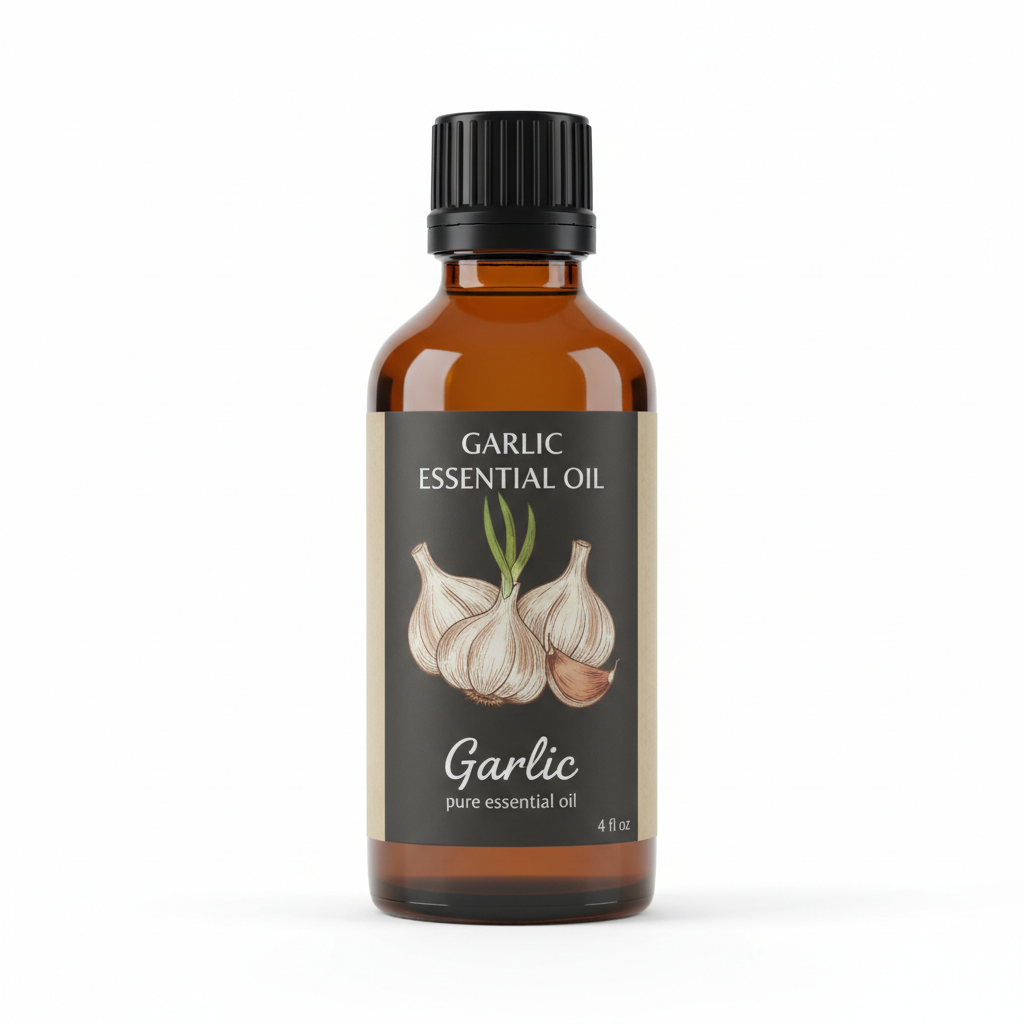
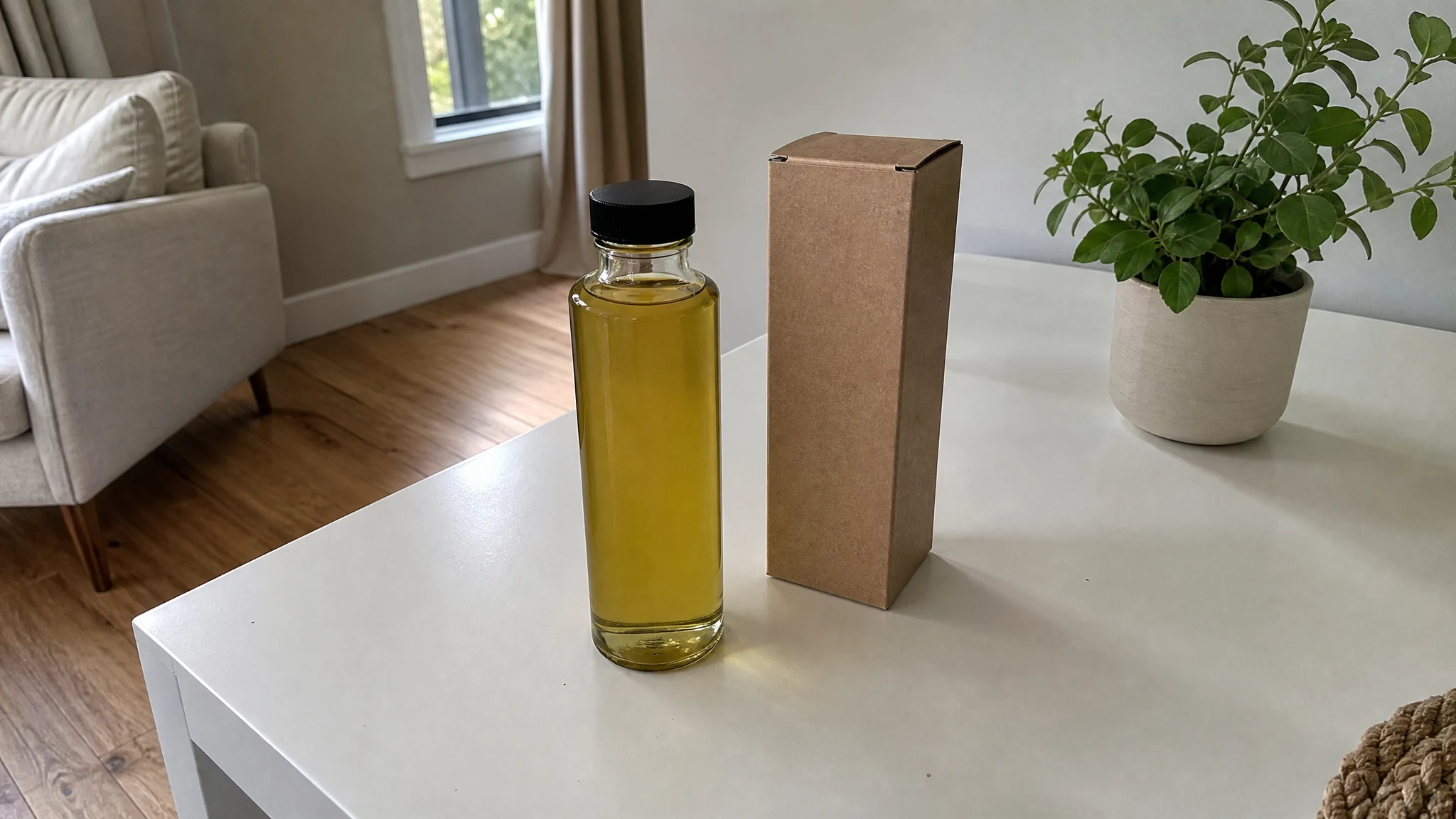
Garlic Essential Oil
Our own Garlic Essential Oil, in sizes from 0.5 oz to bulk.
From $10.99
Shop Now →Two reactions that look alike
Irritant contact dermatitis is direct chemical injury. It needs no prior exposure, and it depends on how much touches the skin and for how long. Allergic contact dermatitis is an immune response that needs earlier sensitization; once someone is sensitized, a small amount can set it off, usually after a delay of a day or more.
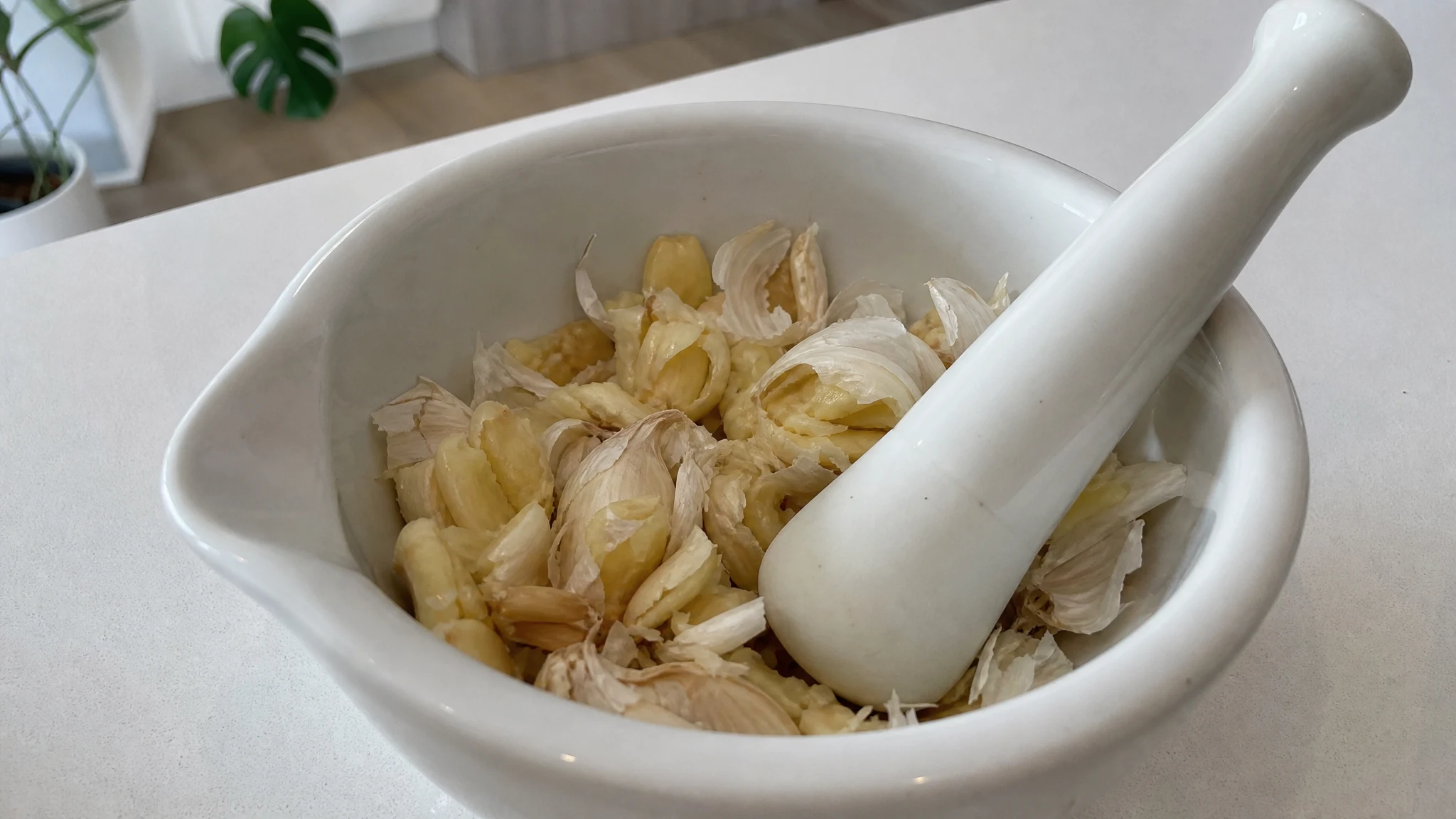
Garlic's record is mostly about the first kind. A 2021 systematic review collected 32 articles describing 39 people with burns from raw garlic, most of them second-degree, many on the legs (Hitl et al., 2021). Those were raw cloves, not essential oil, and case reports cannot give a rate. A 2025 letter goes further and argues "garlic burn" is a misleading name for irritant dermatitis: crushing garlic produces allicin, which reacts with proteins in skin cells and sets off inflammation in proportion to dose, with no immune system involved. The authors single out occlusion, keeping garlic under a bandage, as an aggravating factor (Jamaluddin et al., 2025). Whatever the label, the NIH's message holds: fresh raw garlic can cause severe skin irritation and chemical burns (NCCIH, Garlic).
How a doctor tells them apart
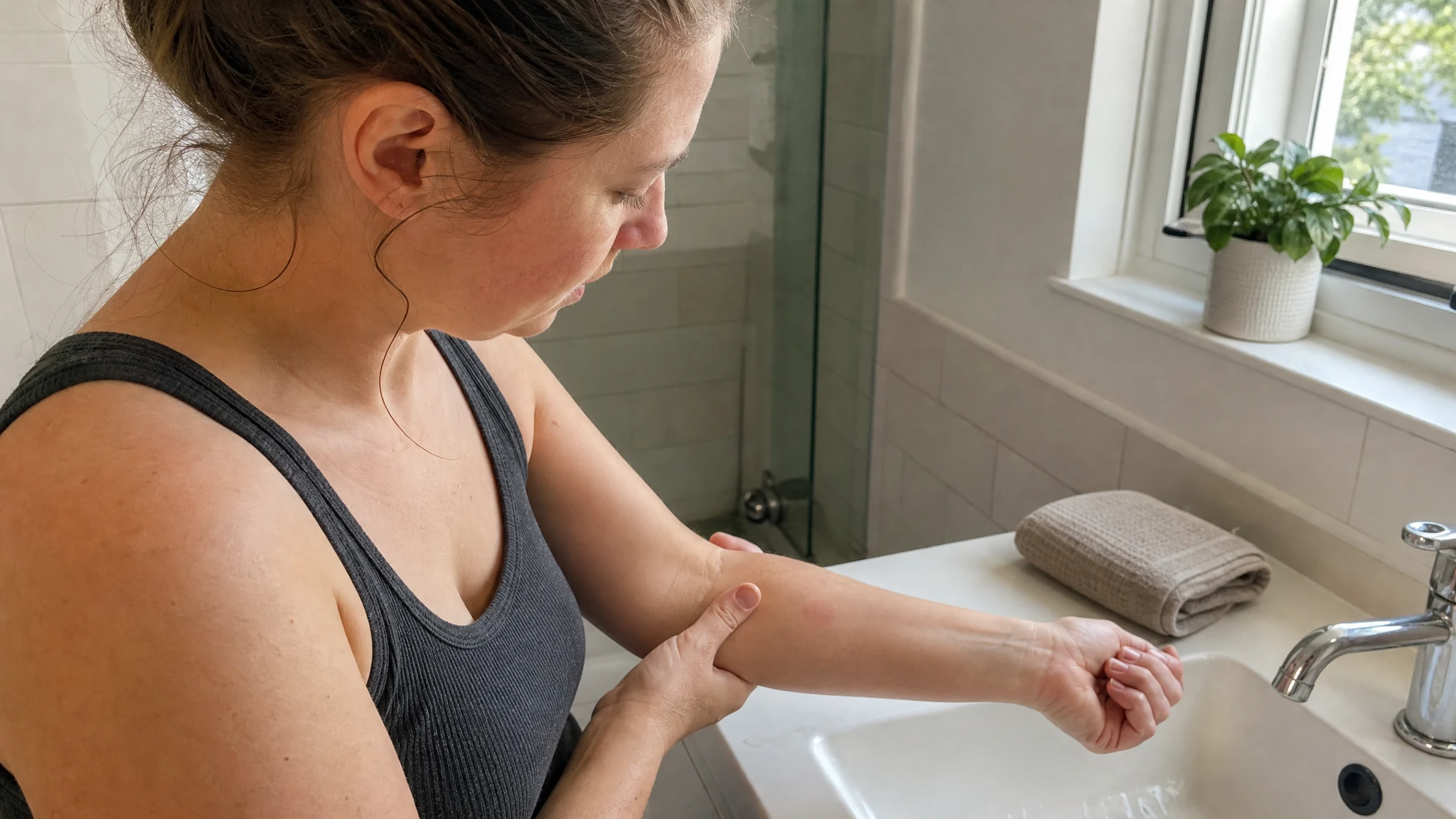
One case report makes the point nicely. A healthy 20-year-old applied crushed raw garlic paste to her inner elbow for itchy dry skin and got sharply bordered blisters, appearing suddenly, only where the paste had touched. Her doctors diagnosed irritant dermatitis from that history alone; no patch test was needed, and the authors note one would only be used to separate garlic allergy from irritation. She healed within a week with simple dressings (Jamaluddin and Jamil, Cureus, 2023).
Reasoning from that, speed and shape are the clues. Fast, sharp-edged reactions confined to the contact area point toward direct irritation. A rash that arrives a day or more later, or spreads past where the garlic touched, points toward allergy. A dermatologist makes that call, and they can run proper tests to confirm it.
What garlic allergy looks like
The compound identified as the allergen is diallyl disulfide, one of garlic's sulfur compounds. In a New York clinic study, three patients showed positive photopatch-test reactions to it, and the authors concluded that the allergy is rare but worth including in testing series (Photocontact allergy to diallyl disulfide, American Journal of Contact Dermatitis, 2003). It was a test substance in three people, and says nothing about garlic essential oil as sold.
What a home patch test is good for
- It can show a strong irritant response to your own diluted blend within hours to a day, which is useful and why we recommend one.
- It is a weaker screen for delayed allergy, since that may take longer to show. Checking again a couple of days later is a sensible minimum.
- A quiet patch test is not a clearance, while a reaction is a clear reason to stop.
Anyone who has reacted to garlic before, or who has sensitive or damaged skin, should check with a dermatologist before trying it.
A simple log helps
Keeping notes sounds fussy, but it makes the second look easy. Write down the date, the dilution, the spot you tested and the time you checked. If a clinician ever asks what you used, a note on your phone with the bottle name, the carrier and the percentage beats memory every time.
Keeping the numbers small
Our dilution guidance is 0.5% to 2% in a carrier oil with a patch test first, beginning at the low end. At roughly 20 drops per milliliter, 0.5% in an ounce of carrier is about 3 drops, and 2% is about 12. Those figures are our product guidance, not a measured safe threshold, since the documented cases involved crushed garlic. Our Certificate of Analysis covers density and refractive index. The arithmetic is laid out in our dilution article.
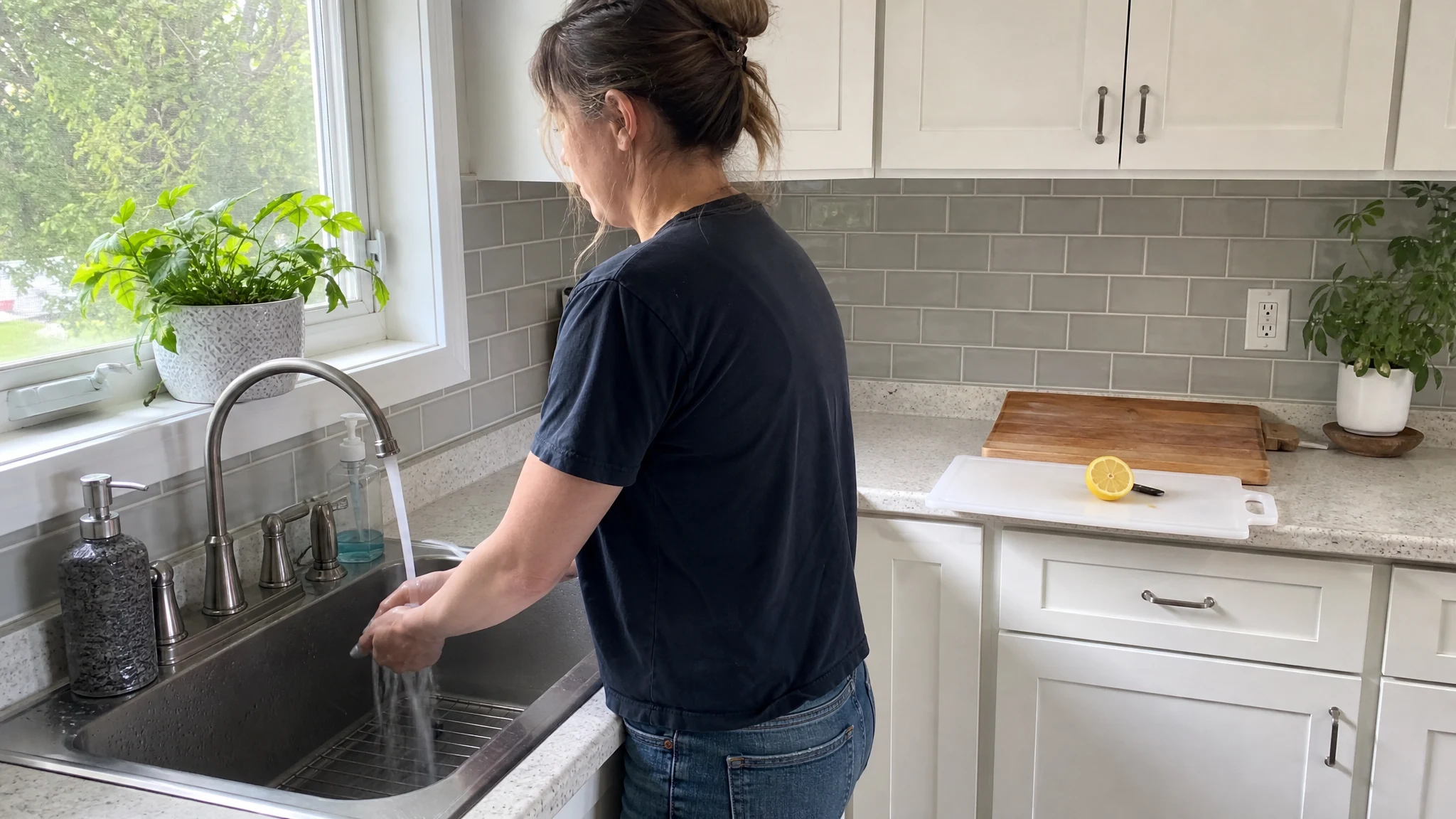
Handle the bottle itself with care too. Wash your hands after you cap it, and you will notice that the smell on your fingers outlasts the first rinse, which is a good reminder that the oil is still on your skin even when you cannot see it. Keep a towel just for wiping up and do not reuse it for the dishes.
If skin reacts
- Stop using the blend. Remove affected clothing, then rinse with plenty of running water for at least 15 minutes, using mild hand soap for anything that clings (Poison Control, first aid).
- If blistering, a large or deep reaction, or pain, redness or swelling worsens or lingers, see a doctor. Bring the bottle, so the suspect product itself can be considered.
- Do not cover garlic or a garlic blend with a bandage to "draw it out"; covering makes irritation worse.
- Tell your clinician about the oil and any raw garlic you handle, including in cooking.
For the wider picture, see our main safety guide, our look at garlic burns and garlic oil on skin.
Garlic Essential Oil
Garlic Essential Oil from our own shop, in sizes from 0.5 oz to bulk.
From $10.99
Shop Now →Sources & Further Reading
- Hitl M et al., 2021. Garlic burn injuries: a systematic review of reported cases. pubmed.ncbi.nlm.nih.gov/33571752
- Jamaluddin J, Jamil SN, Abd Shukor SK, 2025. Garlic burns are not burns. Malays Fam Physician 20:46. pmc.ncbi.nlm.nih.gov/PMC12334324
- Jamaluddin J, Jamil SN, 2023. An Unexpected Reaction to Topical Garlic Medicament. Cureus 15(1):e33657. pmc.ncbi.nlm.nih.gov/PMC9913866
- Photocontact allergy to diallyl disulfide, 2003. Am J Contact Dermat. pubmed.ncbi.nlm.nih.gov/14744409
- NCCIH. Garlic. nccih.nih.gov/health/garlic
- National Capital Poison Center. First aid for poisonings. poison.org/first-aid-for-poisonings