Garlic and Colds: Why the Famous Trial Has Two Numbers
Search for garlic and colds and you will keep meeting the same two statements: a study found fewer colds, and two numbers from that study seem to contradict each other. Both are true, and the disagreement dissolves once you do the division. It is a small, satisfying puzzle, and worth walking through.
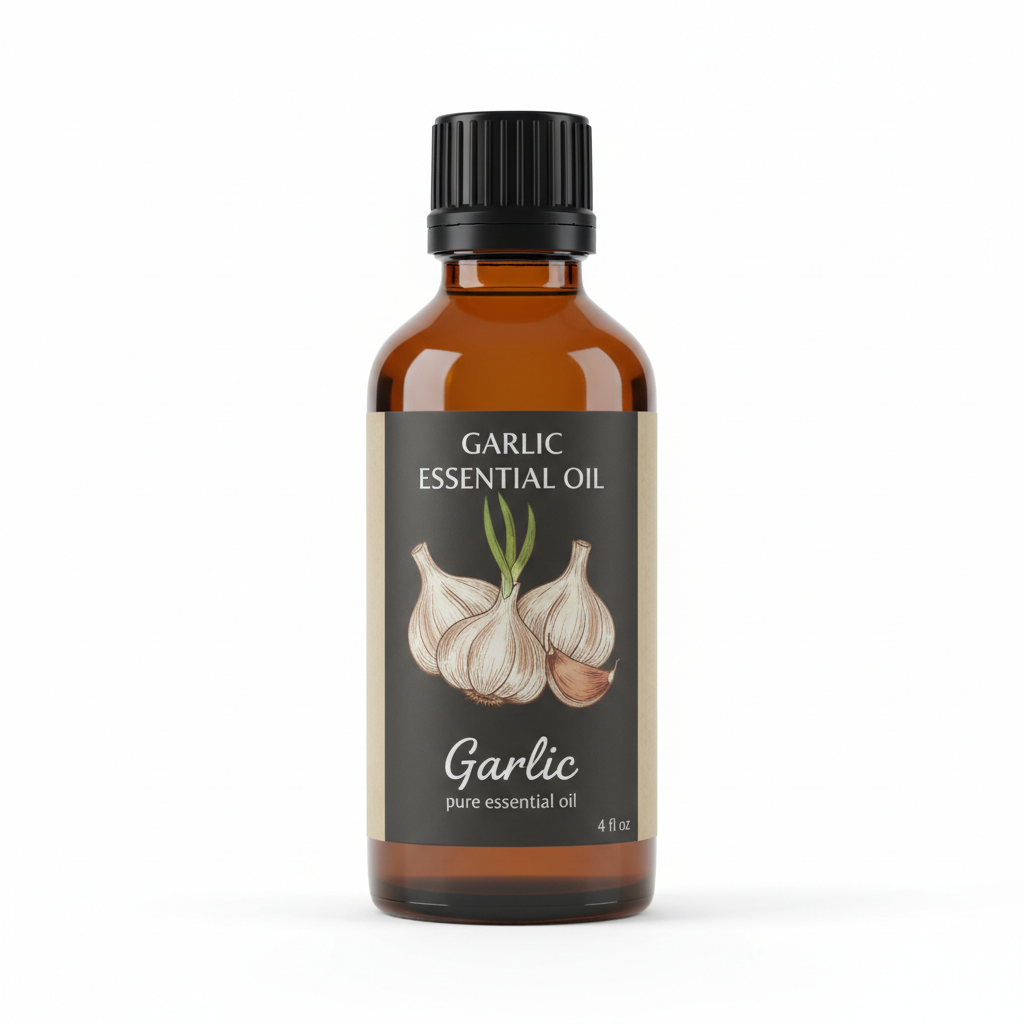
Garlic Essential Oil
Our own Garlic Essential Oil, in sizes from 0.5 oz to bulk.
From $10.99
Shop Now →Only one trial made the cut
When the Cochrane reviewers went looking for good-quality trials of garlic and the common cold, they found exactly one that met their standards. It followed 146 volunteers who took either a daily garlic supplement providing 180 mg of allicin or a placebo for 12 weeks. Their conclusion, in their own words, is that there is "insufficient clinical trial evidence" to say whether garlic has any effect on colds, and that claims of effectiveness rest largely on poor-quality evidence (Lissiman, Bhasale and Cohen, 2014).
That is a fair summary of where things stand, and it is less gloomy than it sounds. A single promising trial is how many ideas begin. It simply cannot carry the weight that supplement labels and blog posts put on it.
Two numbers, one dataset
The original paper (Josling, 2001) counted 24 colds in the garlic group against 65 in the placebo group, and 111 days of illness against 366. Its abstract reports symptom duration of 1.52 days for garlic and 5.01 for placebo. The Cochrane review reports recovery time of 4.63 days against 5.63. Same trial, very different impressions.
Divide the days of illness by the number of colds and you get Cochrane's figures: 366 over 65 is 5.63, and 111 over 24 is 4.63. Now divide the same totals by 73, which is half of 146 and a reasonable guess at group size, and you land on 5.01 and 1.52 exactly. That is our inference from the arithmetic, since we did not see group sizes spelled out in the abstract, but it fits to the second decimal place.
So the abstract spreads illness days across every volunteer, including those who never caught a cold, while Cochrane looks at days per cold. Per participant, the gap looks like three and a half days. Per cold, it is one day. Neither is wrong; they answer different questions, and quoting only one tells a very different story.
How to read a number like this
When a health headline gives you a figure, a few plain questions make it easier to read. What is being counted? What is it divided by? Who was left out? In this puzzle, the answer to the second question is the whole story: days of illness divided by every volunteer gives one number, and days of illness divided by only those who caught a cold gives another. Neither division is dishonest, but they answer different questions, and the headline will usually pick whichever looks more exciting.
What the trial can and cannot tell us
It ran from November to February, so it speaks to one winter. Colds were self-reported in a diary. The product was one allicin-containing supplement that people swallowed daily, so even a perfect repeat would speak for that supplement, not for garlic cloves, other brands or an essential oil. The reported side effects were rash and odor.
The federal view is consistent with this. The National Center for Complementary and Integrative Health says very little research has been done on garlic and colds, describes a 2022 review that found only two small studies suggesting a possible benefit, and notes that garlic supplements may increase bleeding risk, so anyone taking anticoagulants or aspirin, or facing surgery, should tell their health care providers. If you are curious about that last point, our look at garlic and medicines goes further.
It is a habit worth keeping. The next time you see a striking comparison, write the two numbers side by side and ask what each one is divided by. Often that single step turns a confusing claim into a perfectly reasonable one, and sometimes it shows how thin the claim really was.
Where our oil fits in
Our garlic essential oil is a steam-distilled, undiluted aroma material, and our label says it is not for internal use. It is a different thing from the swallowed supplement in the trial, and nothing in the trial applies to it. We sell it as an external cosmetic oil for scent and workshop use, with our dilution guidance of 0.5% to 2% in a carrier and a patch test first, and we make no claims about colds or immunity.
If you have a cold that is severe, lingers or involves trouble breathing, a physician is the right person to ask. If you are weighing a garlic supplement, a pharmacist can check it against your medicines. For the wider evidence picture on garlic, our benefits overview and the heart health piece sit alongside this one.
There is also something quietly encouraging in how this puzzle resolves. Two honest numbers, one trial, and a bit of long division is all it takes to see why they differ. You do not need a science degree to ask what a figure is divided by, and once you start asking, you will notice it everywhere, from food labels to weather forecasts.
That kind of curiosity is one of the nicest things garlic has given us. It is a very ordinary bulb that keeps pulling people into very interesting questions.
Most of all, the trial is a nice reminder to check what a number is dividing by.
Garlic Essential Oil
Garlic Essential Oil from our own shop, in sizes from 0.5 oz to bulk.
From $10.99
Shop Now →Sources & Further Reading
- Lissiman E, Bhasale AL, Cohen M. Garlic for the common cold. Cochrane Database of Systematic Reviews, 2014, Issue 11, CD006206
- Josling P. Preventing the common cold with a garlic supplement: a double-blind, placebo-controlled survey. Advances in Therapy, 2001;18(4):189-193
- NCCIH. Garlic: Usefulness and Safety (updated February 2025)