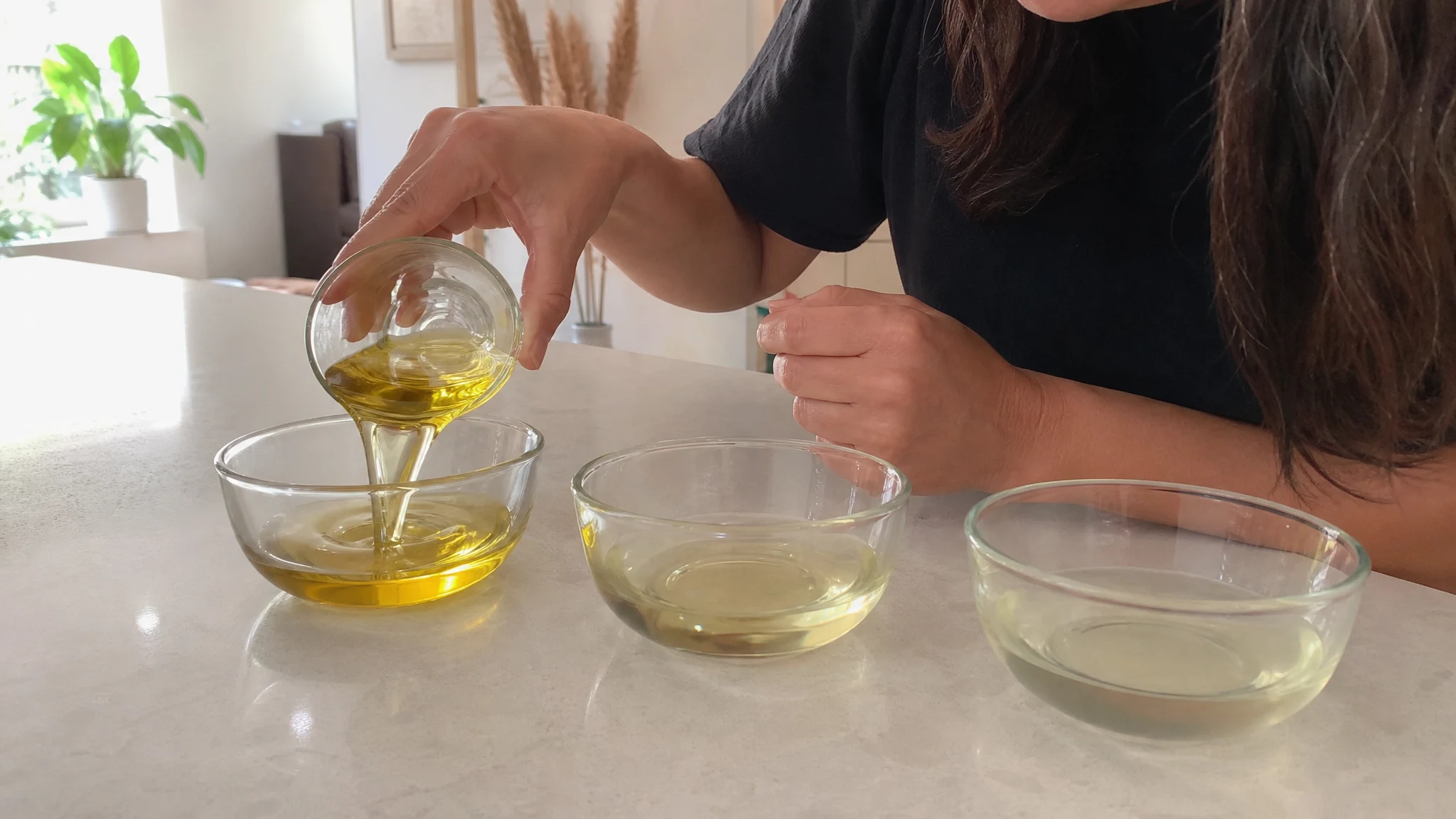
Carrier Oils for Garlic Oil: How to Choose One
Picking the carrier is the easy part of diluting garlic oil. The harder, more important decisions come first: what percentage you are making, and whether you have patch tested. Our garlic oil is sold undiluted, so the arithmetic is yours to do, and the right percentage in an ordinary carrier beats the wrong one in the fanciest bottle on the shelf.
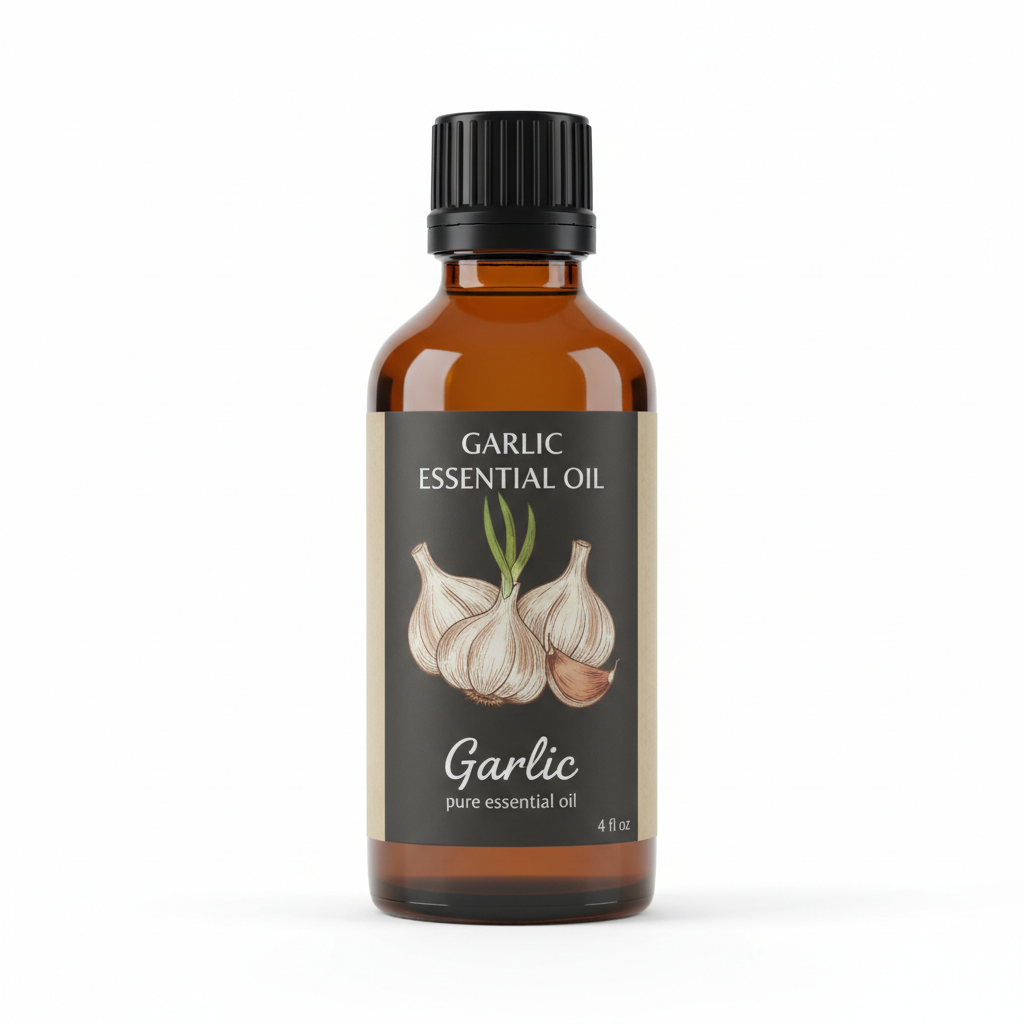
Garlic Essential Oil
Our own Garlic Essential Oil, in sizes from 0.5 oz to bulk.
From $10.99
Shop Now →Decide the percentage first
Our dilution guidance is 0.5% to 2% in a carrier oil, with a patch test first, beginning at the low end because garlic is very strong. Undiluted garlic oil can irritate skin readily, and the scent lingers on skin, hands and cloth.
The Tisserand Institute dilution guide gives general ranges worth using for calibration: 0.2% to 1% for sensitive or impaired skin, 0.5% to 1.2% for the face and underarms, and 1% to 3% for body oils and lotions, with the advice to start low and raise the concentration only if needed. It is not specific to garlic. Notice that our 2% ceiling sits above the facial range, so we treat 0.5% as the working number and would not start a first batch on the face or underarms. For anything beyond a small, patch-tested area, a dermatologist is the right person to ask.
The drop arithmetic
We use 20 drops per millilitre as a working assumption, and a 30 ml bottle as close enough to one fluid ounce. In 30 ml of carrier, 0.5% is about 3 drops, 1% about 6 and 2% about 12. In a 10 ml roller bottle, 0.5% is one drop. Since one drop is about 0.05 ml, a single drop in 30 ml is already roughly 0.17%.
At this scale, small errors matter. Make the 30 ml batch once, write the drop count on the label, and repeat the same recipe rather than eyeballing a second. Our dilution basics guide goes through the steps.
What to look for in a carrier
A carrier sits in your bottle for weeks or months, so stability matters most. Plant oils differ in how readily they oxidize, and as a general rule the more unsaturated fat an oil has, the sooner it turns. Because we sell only garlic oil, you will find carriers at a pharmacy, grocery or soap-supply shop, and the useful habit is to read the supplier's date and sniff the oil before blending.
Jojoba is a worthwhile case. A 2021 review describes it as a liquid wax rather than a triglyceride oil, notes its natural tocopherols, and says it resists rancidity, while refining that removes those antioxidants leaves the oil with much lower oxidative stability. Reasoning from that, an unrefined jojoba is a sensible choice if shelf stability is your priority. Thickness is the other practical difference. A very thick oil such as castor pours slowly and drags in a roller bottle, so if you like it, treat it as a small share of a thinner base. That is reasoning from how thick oils behave, not a measurement.
Smell the carrier first
Before you blend anything, open the carrier and smell it. A fresh plant oil smells faint and clean, maybe a little nutty or grassy. If it smells like old crayons, stale nuts or paint, it has turned, and no amount of garlic will hide that. Check the date on the bottle too, and buy the smallest size that suits your project, so the carrier is always younger than your recipe.
A quick note on bottles
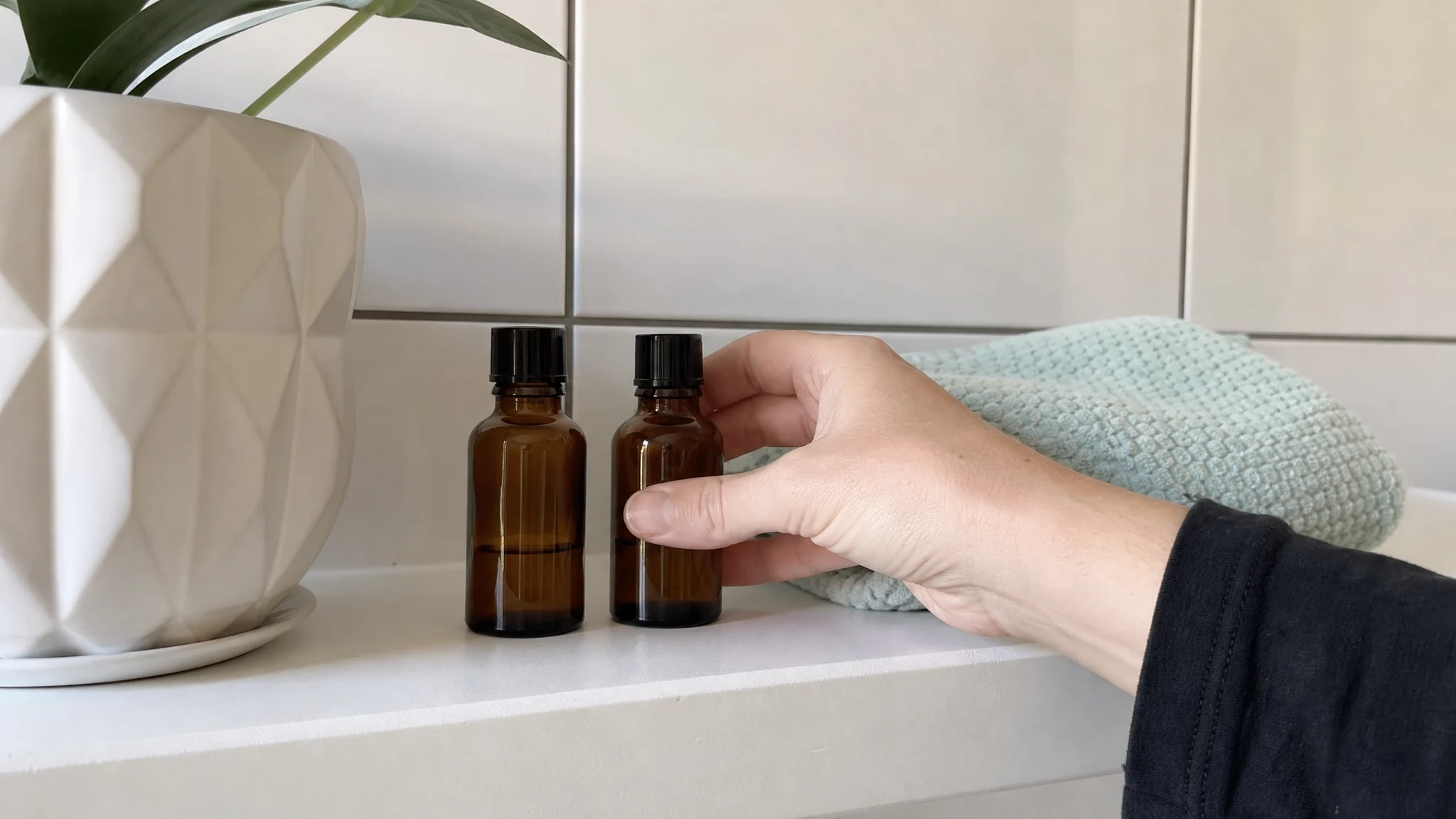
Dark glass protects an oil blend from light, and a tight cap keeps air out. A bottle with a dropper is handy for working, but for storage a plain cap is better, because the rubber bulbs on droppers tend to soften over time. Pour a small working amount into a dropper bottle and keep the rest sealed. Label every bottle with the percentage, the carrier and the date, so a blend never turns into a mystery.
Expect the garlic to stay loud
We have not found evidence that any carrier masks, binds or softens garlic's smell. Choose a carrier with no scent of its own, and expect garlic to be the most prominent thing in the bottle. If the smell on skin bothers you, the answer is a lower percentage or a different scent material, not a cleverer base. The deodorizing guide covers cleanup.
Setting up your bench
- Work somewhere ventilated, on a surface you do not mind scrubbing.
- Use clean glass for mixing and an amber or dark bottle for storing.
- Put the percentage and the date on the label before the oil goes in.
- Keep a paper towel handy for drips, and wash your hands and tools right after.
Our advice is to make one small test batch first. If you like how it behaves, repeat the exact recipe, and if the smell is more than you want, lower the percentage before anything else.
A carrier is a vehicle, not a safeguard
Garlic is also an irritant in its own right: NCCIH warns that fresh raw garlic may not be safe on skin and can cause severe irritation and chemical burns. That page concerns raw garlic, not essential oil, but it is the right reason to patch test and keep the percentage low.
Pick a fresh, scentless carrier, measure with care, and let a patch test make the final call.
Garlic Essential Oil
Garlic Essential Oil from our own shop, in sizes from 0.5 oz to bulk.
From $10.99
Shop Now →Sources & Further Reading
- Tisserand Institute. Dilution guide. tisserandinstitute.org/safety/dilution
- Gad HA et al., 2021. Jojoba Oil: An Updated Comprehensive Review on Chemistry, Pharmaceutical Uses, and Toxicity. Polymers 13(11):1711. pmc.ncbi.nlm.nih.gov/articles/PMC8197201
- NCCIH, Feb 2025. Garlic. nccih.nih.gov/health/garlic