Garlic Oil vs. Onion Oil: How the Two Scents Differ
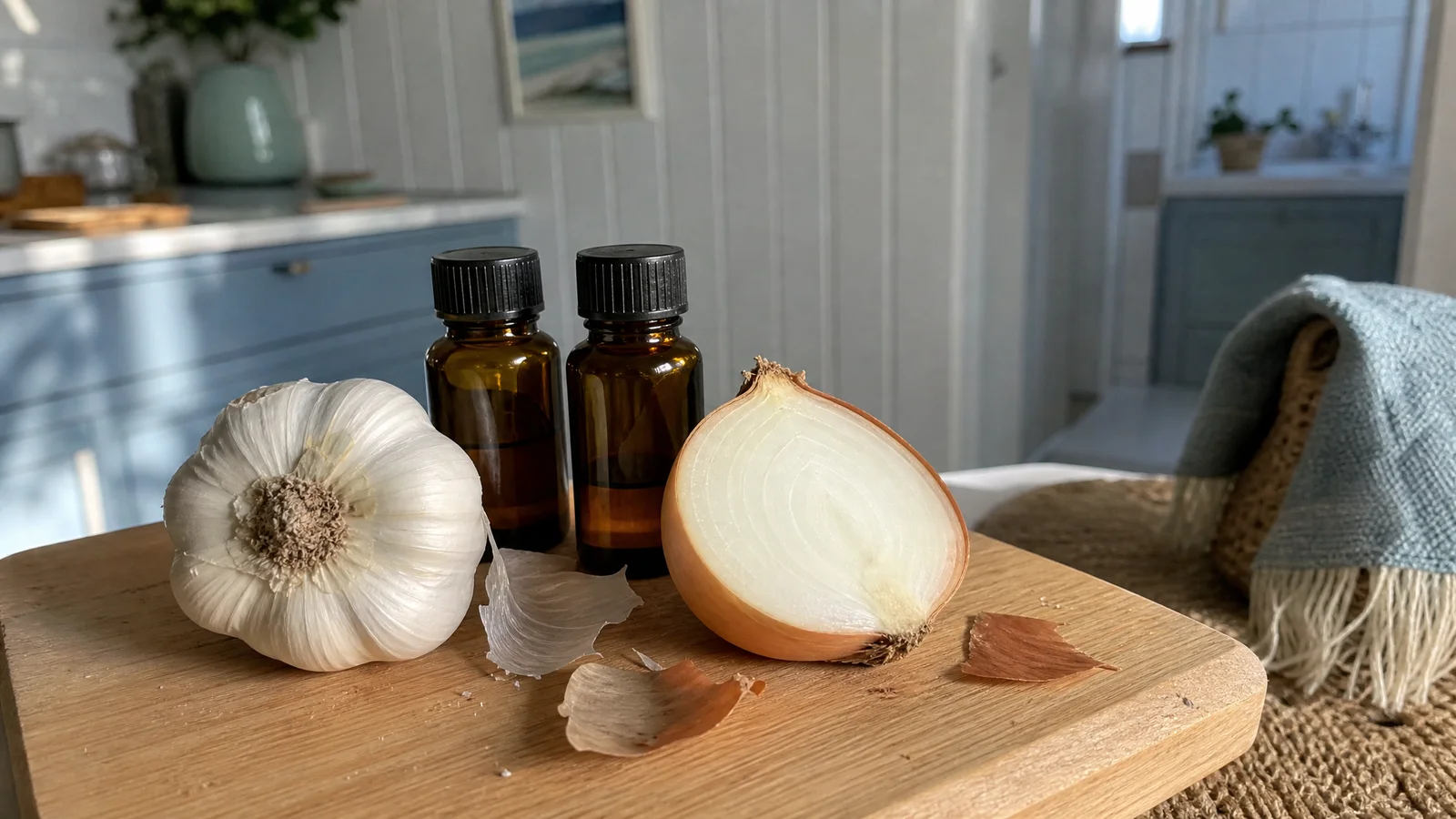
Cut an onion and cut a clove of garlic and your eyes and nose agree they are cousins. Distill them and the cousins turn out to be built from different parts. Both oils are sulfur-rich and both are strong, but the molecules doing the work are not the same, which is why a garlic oil will never stand in for an onion oil. We sell garlic oil only, so think of this as a guide to telling the two apart.
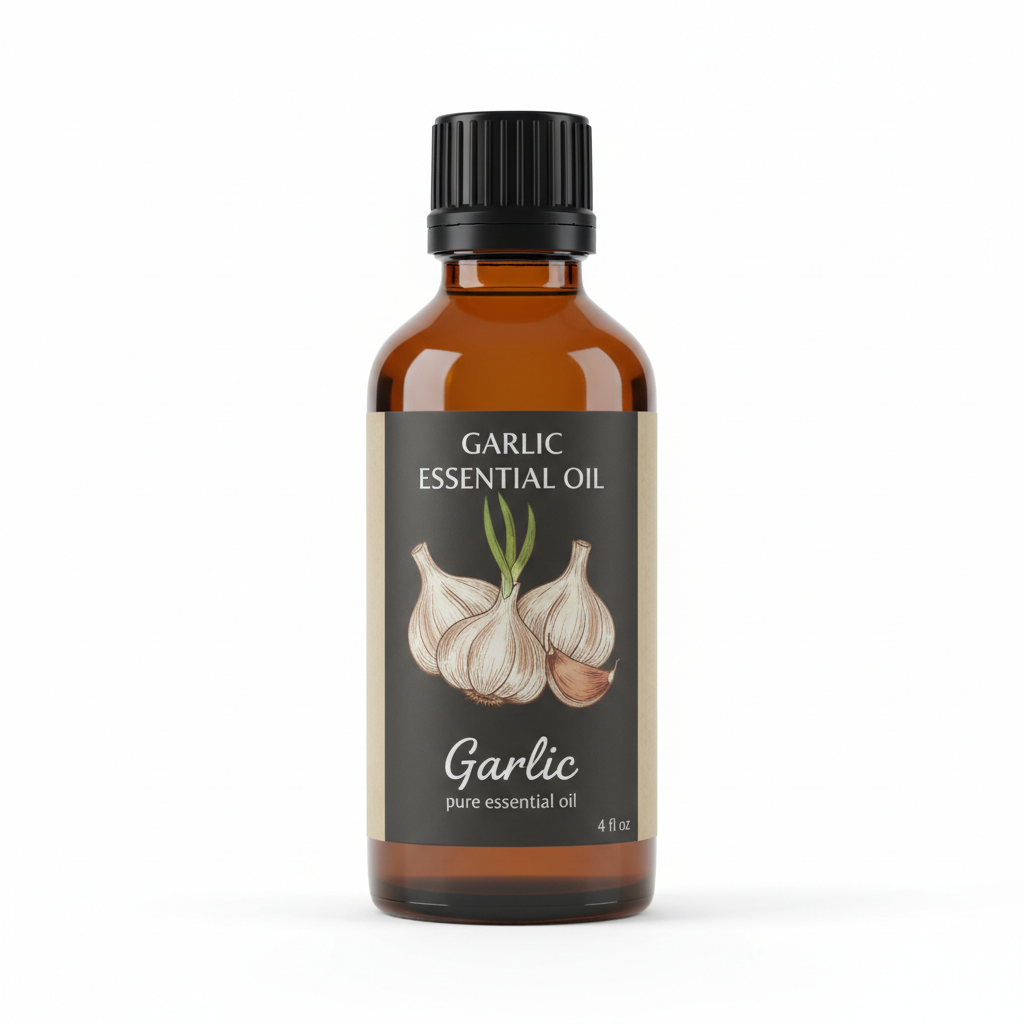
Garlic Essential Oil
Our own Garlic Essential Oil, in sizes from 0.5 oz to bulk.
From $10.99
Shop Now →Allyl on one side, propyl on the other
When researchers distilled chopped Spanish garlic, the oil came out led by diallyl disulfide, with allyl methyl trisulfide and diallyl trisulfide close behind in the steam-distilled version (Satyal et al., Foods, 2017). "Diallyl" means two allyl groups, and allyl is garlic's signature.
A 2020 study of yellow onions, steam-distilled from homogenized bulbs, reached for different names: the compounds present in the largest amounts were isomers of 1-propenyl propyl trisulfide and a ring compound called 3,6-diethyl-1,2,4,5-tetrathiane. The numbers there are rough estimates against a reference compound, so we would not line them up against garlic's percentages. What carries over is the pattern: propyl and propenyl groups mark onion, allyl marks garlic, and the onion extract spreads across many compounds instead of being led by one (Cantrell et al., Foods, 2020). It was one onion variety in a laboratory, so treat it as a clear example and not a rule about every onion oil on the market.
If you like organizing, give each strip a number rather than a name, shuffle them, and see whether you can tell them apart blind. It turns an ordinary afternoon into a small game and sharpens your nose without costing anything.
Compare them the way a perfumer would
No study we know of puts the two side by side for aroma, so your own nose is the best instrument. Our garlic oil has a pungent, savory, sulfurous aroma with lasting depth and sits as a base note, and we suggest a simple blotter strip comparison next to an onion oil from another supplier:
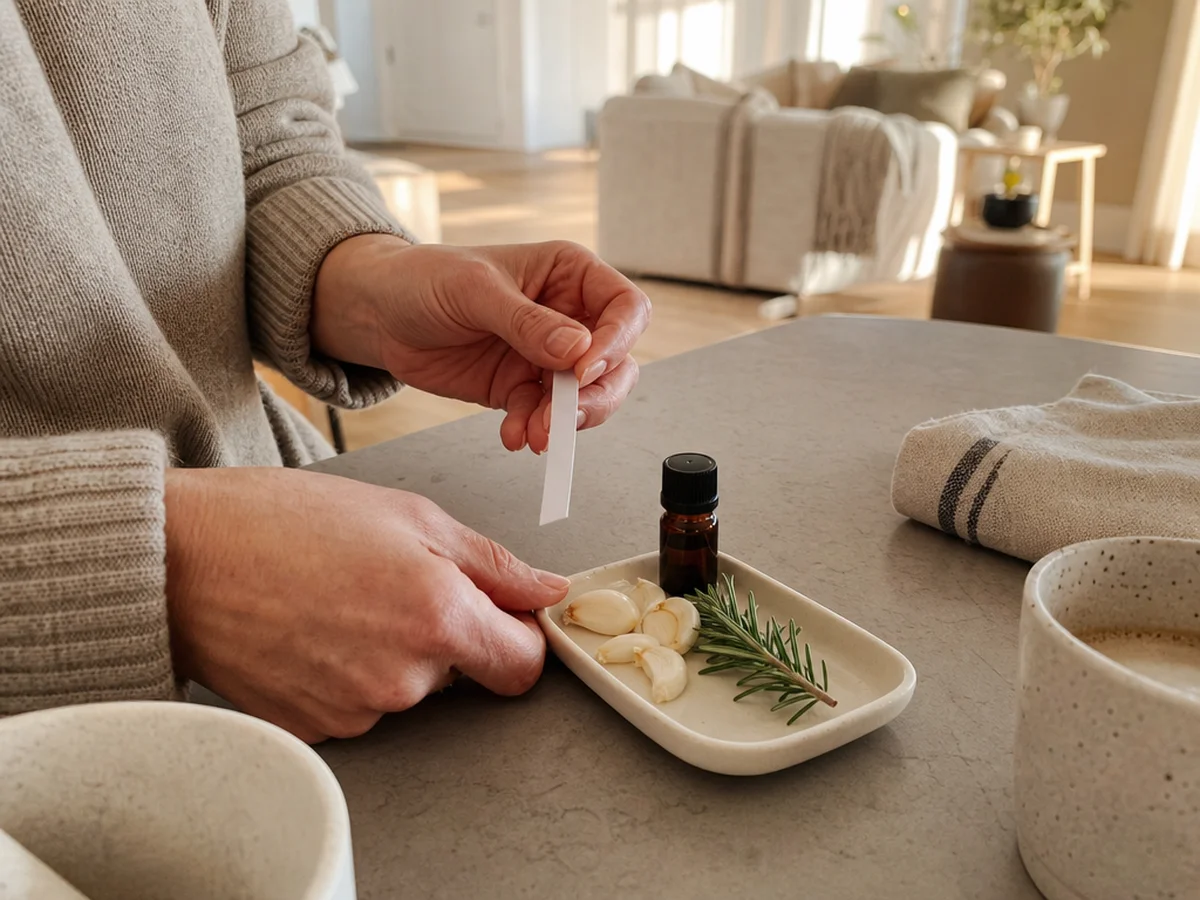
- Put one drop of each on its own labelled strip, ideally on different days, since the smell lingers on skin and cloth and will cross over to the second strip.
- Smell right away, again at five minutes and again at thirty, in a ventilated room, and jot down how each changes.
- Keep each oil in its own capped bottle, away from other aromatics.
- Keep strips away from skin, children and pets.
Because garlic is a base note, expect that strip to keep changing long after the onion strip has settled. If you move on to a diluted trial, our dilution range for garlic is 0.5% to 2% in a carrier with a patch test, and our skin irritation article explains why we start at the low end. We have no dilution figure to offer for onion oil, so follow whatever the supplier gives.
What you will notice side by side
Expect the garlic strip to read savory and heavy, with a sulfurous edge that does not hurry away. Trust your own nose for the onion strip, and jot a few adjectives next to each: sharp, sweet, roasted, green, heavy, whatever comes to mind. Smell them again an hour later and then the next day, and write what changed. By the end of the afternoon you will have your own vocabulary for the two, which beats any description we could hand you.
In the food world they travel together
Food regulation treats both as flavorings. Garlic and its derivatives fall under 21 CFR 184.1317, which sets a Food Chemicals Codex specification (21 CFR 184.1317), and onion appears in the natural extractives list in 21 CFR 182.20 (21 CFR 182.20). The flavor industry even assessed garlic, onion and asafetida oils together in a 2023 safety assessment cited by its library (FEMA flavor library, garlic oil). That is about flavor ingredients made for food. Our oil is an aromatic and is not for internal use, so please do not season food with it or any essential oil. The National Capital Poison Center explains why, and gives its number, 1-800-222-1222 (National Capital Poison Center). For flavor, garlic and onion themselves are wonderful, and a food maker's guide to buying garlic flavor is in our flavoring comparison.
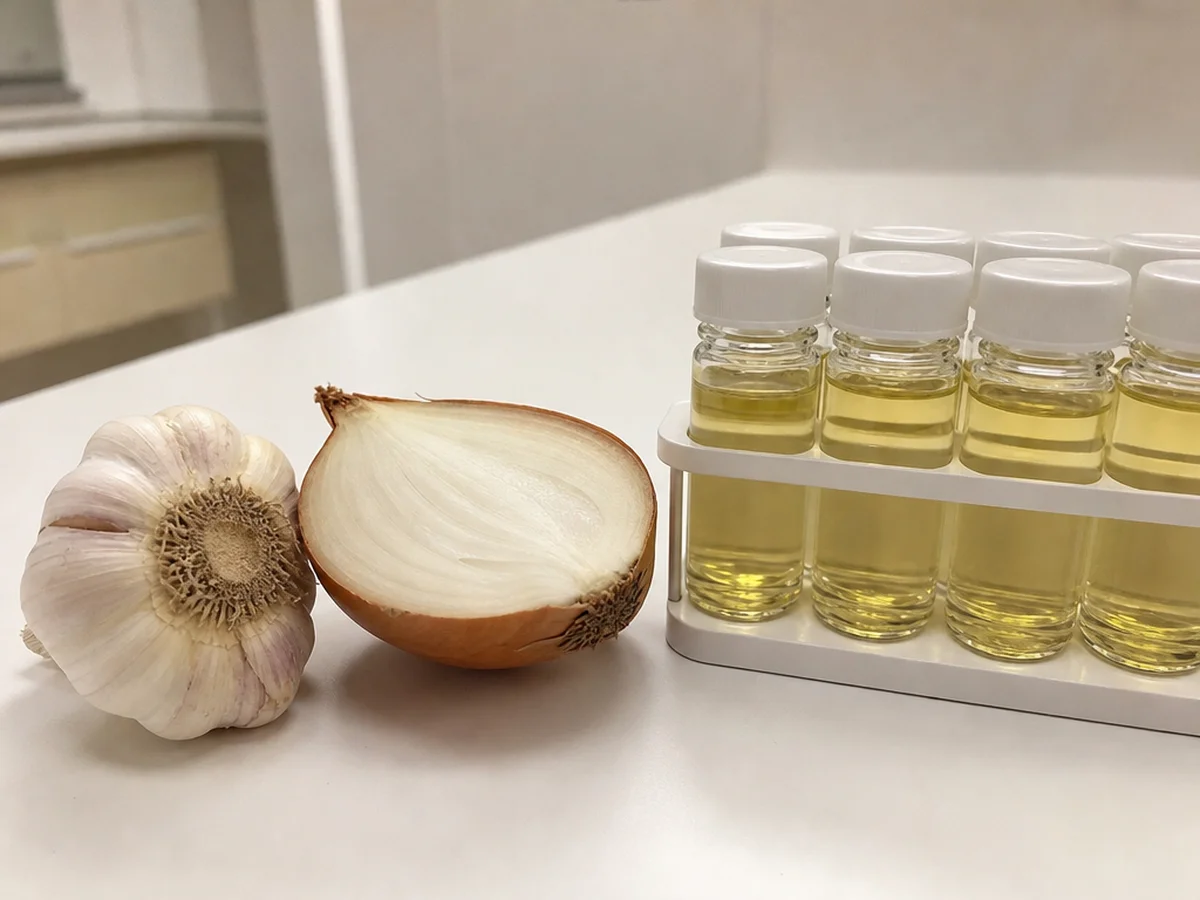
If you are choosing for a project rather than for curiosity, the order that works is nose first, paperwork second, tiny trial third. It sounds slow, and it saves a lot of wasted bottles.
Choosing between them
Choose by the sulfur character you want. If you want the allyl-led garlic note, that is what garlic oil is built around. If you want the propyl and propenyl profile of onion, you want an onion oil, and that is someone else's shelf. When you shop for one, read the ingredient line for a single plant material and ask for lot paperwork. For sizing a first bottle, see the first bottle guide, and for another garlic comparison, garlic oil and garlic extract.
Two strips, two noses, and a few minutes of patience will tell you more than any spec sheet.
Garlic Essential Oil
Garlic Essential Oil from our own shop, in sizes from 0.5 oz to bulk.
From $10.99
Shop Now →Sources & Further Reading
- Satyal P, Craft JD, Dosoky NS, Setzer WN, 2017. The chemical compositions of the volatile oils of garlic (Allium sativum) and wild garlic (Allium vineale). Foods 6(8):63. pmc.ncbi.nlm.nih.gov/PMC5575638
- Cantrell MS, Seale JT, Arispe SA, McDougal OM, 2020. Determination of organosulfides from onion oil. Foods 9(7):884. pmc.ncbi.nlm.nih.gov/PMC7404636
- US Code of Federal Regulations, 21 CFR 184.1317, Garlic and its derivatives. law.cornell.edu/cfr/text/21/184.1317
- US Code of Federal Regulations, 21 CFR 182.20, Essential oils, oleoresins (solvent-free), and natural extractives (including distillates). law.cornell.edu/cfr/text/21/182.20
- Flavor and Extract Manufacturers Association. Garlic oil (Allium sativum L.), FEMA 2503, flavor library entry. femaflavor.org/garlic-oil
- National Capital Poison Center. Essential oils: poisonous when misused. poison.org/articles/essential-oils