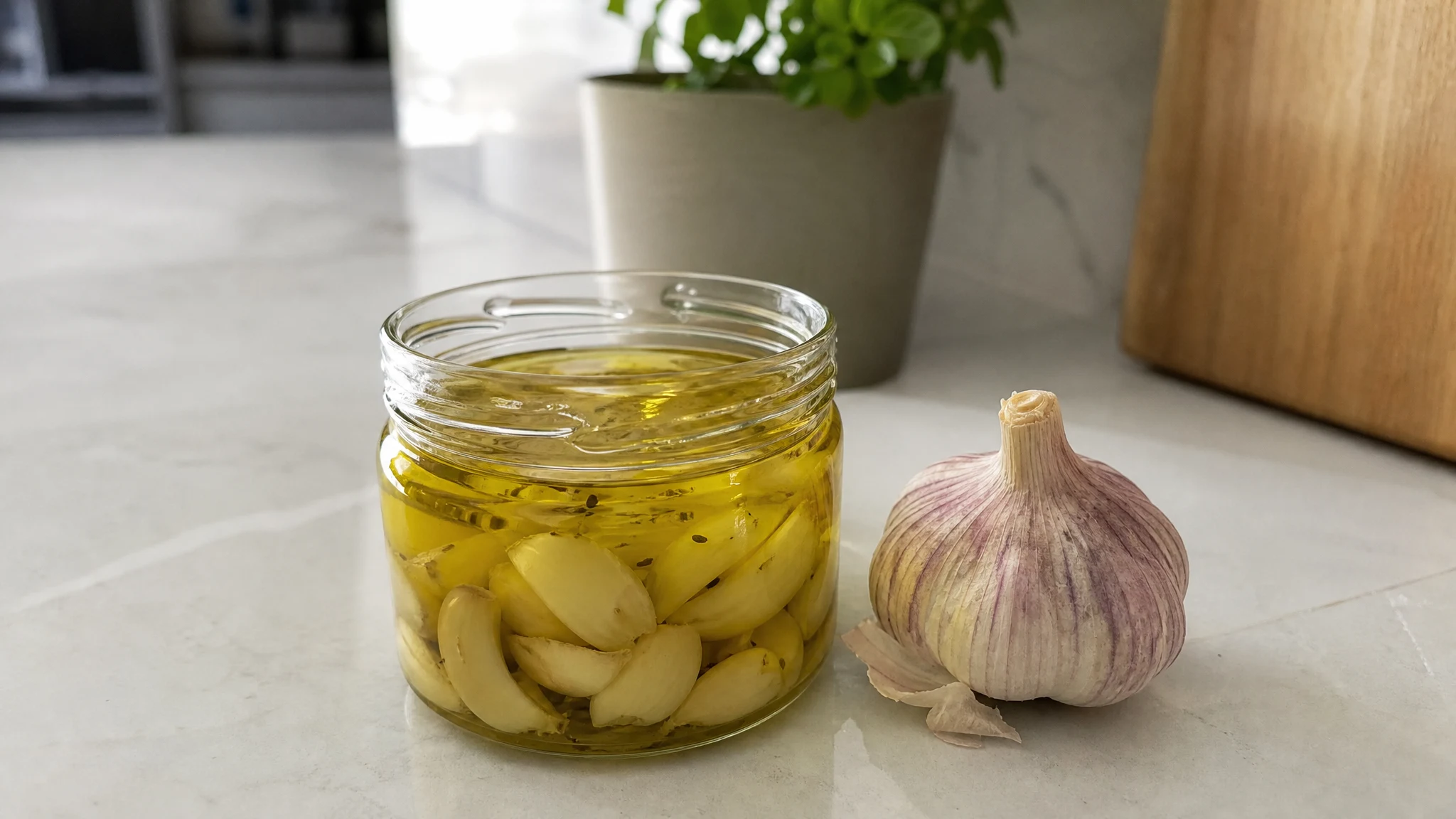
Garlic Essential Oil vs Infused Garlic Oil: Which Is Which?
Imagine two bottles on a shelf, both labeled "garlic oil." One is a few drops' worth of concentrated aroma. The other is a pantry item that is mostly olive oil. Mixing them up would be like swapping vanilla extract for a vanilla candle, and it is an easy mistake to make because the names are nearly identical. We sell only the first, so we feel responsible for helping you tell them apart.
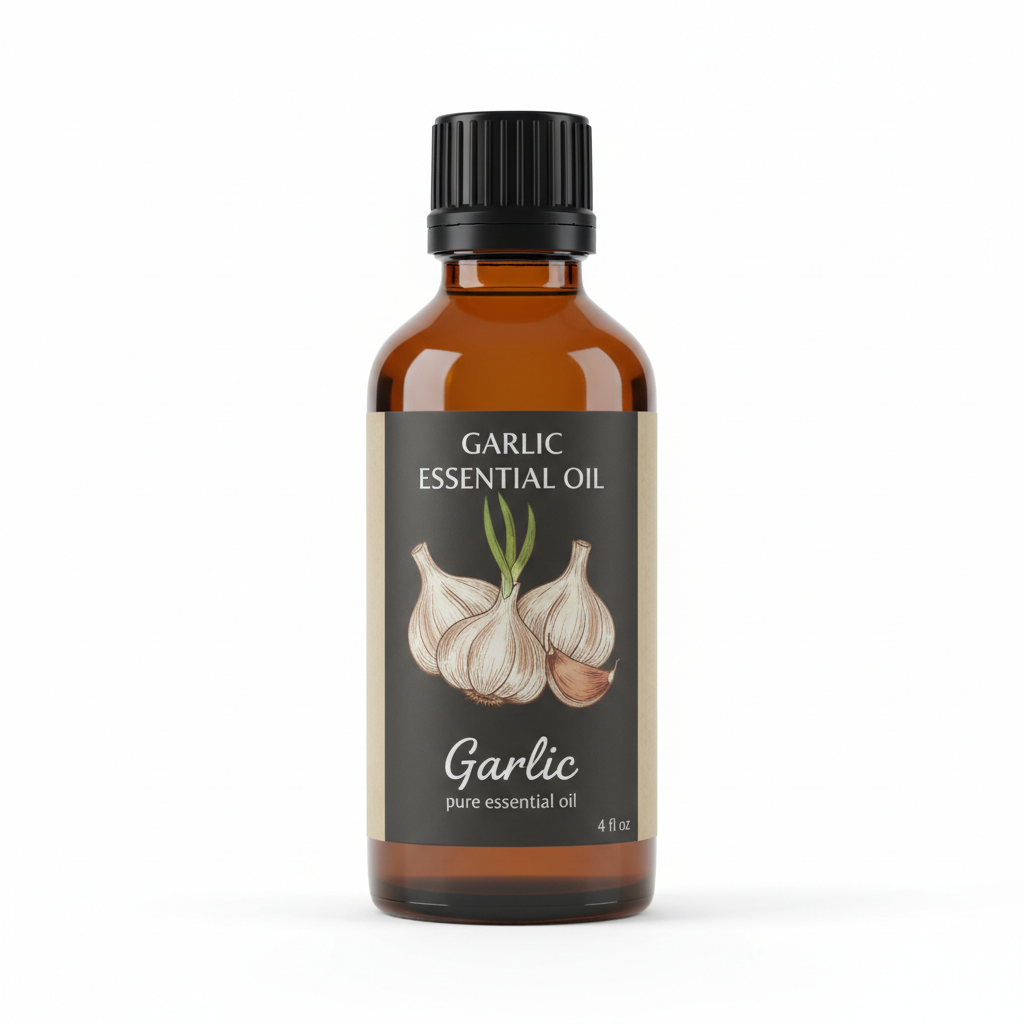
Garlic Essential Oil
Our own Garlic Essential Oil, in sizes from 0.5 oz to bulk.
From $10.99
Shop Now →Reading the label
The wording on the bottle usually settles it.
| What the label says | What it most likely is | What to ask |
|---|---|---|
| "Garlic essential oil" or "Allium sativum bulb oil" | A distillate of the bulb, like ours, which our product page describes as steam-distilled from crushed bulbs and sold undiluted | Which lot, and what does its report cover? |
| "Garlic oil" with olive or sunflower oil listed first | A carrier oil that garlic was steeped in | Was it acidified, and how do I store it once open? |
| "Garlic flavored oil" or "garlic flavor" | Possibly a blend | What is the full ingredient list? |
In cosmetics the distillate is listed as Allium Sativum Bulb Oil (Cosmile Europe). A label that cannot say which of these it is deserves a pass.
Built in opposite directions
A distillate is made by pulling a tiny aromatic fraction out of a lot of bulbs. In a 2017 study of Spanish garlic, industrial steam distillation gave 0.18% oil, which works out to roughly 555 g of bulbs for every gram of oil (Satyal et al., Foods, 2017). The arithmetic is ours, from their yield. An infused oil goes the other way. Penn State Extension's home method combines 1 part acidified chopped garlic with 10 parts oil, so the finished jar is mostly cooking oil (Penn State Extension). Neither is a stronger or weaker version of the other. They are different materials, with different jobs. Our garlic oil versus extract article adds supplements to the picture.
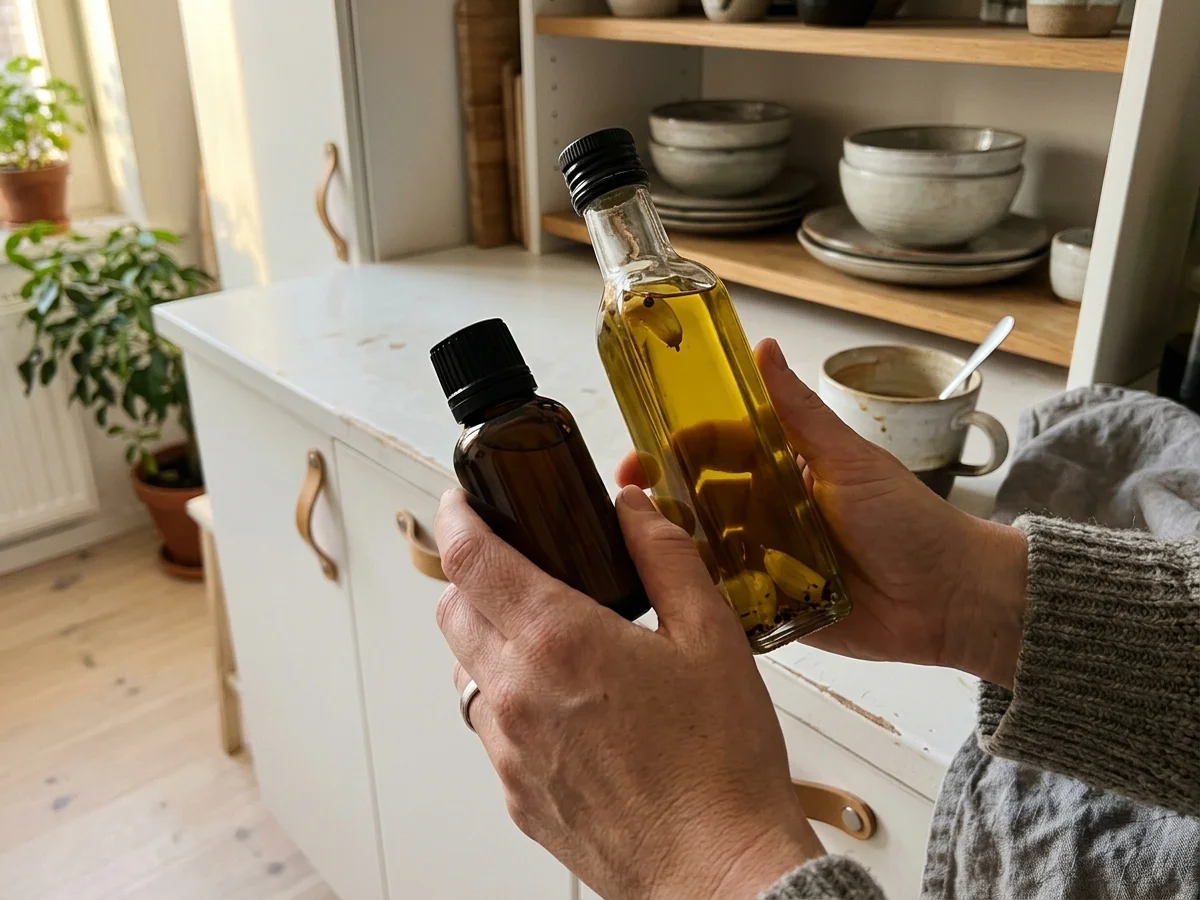
Telling them apart by eye and nose
An infused oil looks like olive oil, golden and clear or slightly cloudy, and smells like garlic in a pan. A distillate is a much more concentrated thing, with a loud, savory, sulfurous smell that fills the room as soon as the cap comes off. If you have a bottle in front of you and are not sure which it is, the strength of the smell and the way the label is written will usually tell you.
Picking the right one
For cooking, reach for fresh garlic or an infused oil made and labelled for food. Our oil is not for internal use, and the National Capital Poison Center notes that swallowing some essential oils can be poisonous (Poison Control, essential oils). For any question about swallowing an essential oil, ask a physician or pharmacist.
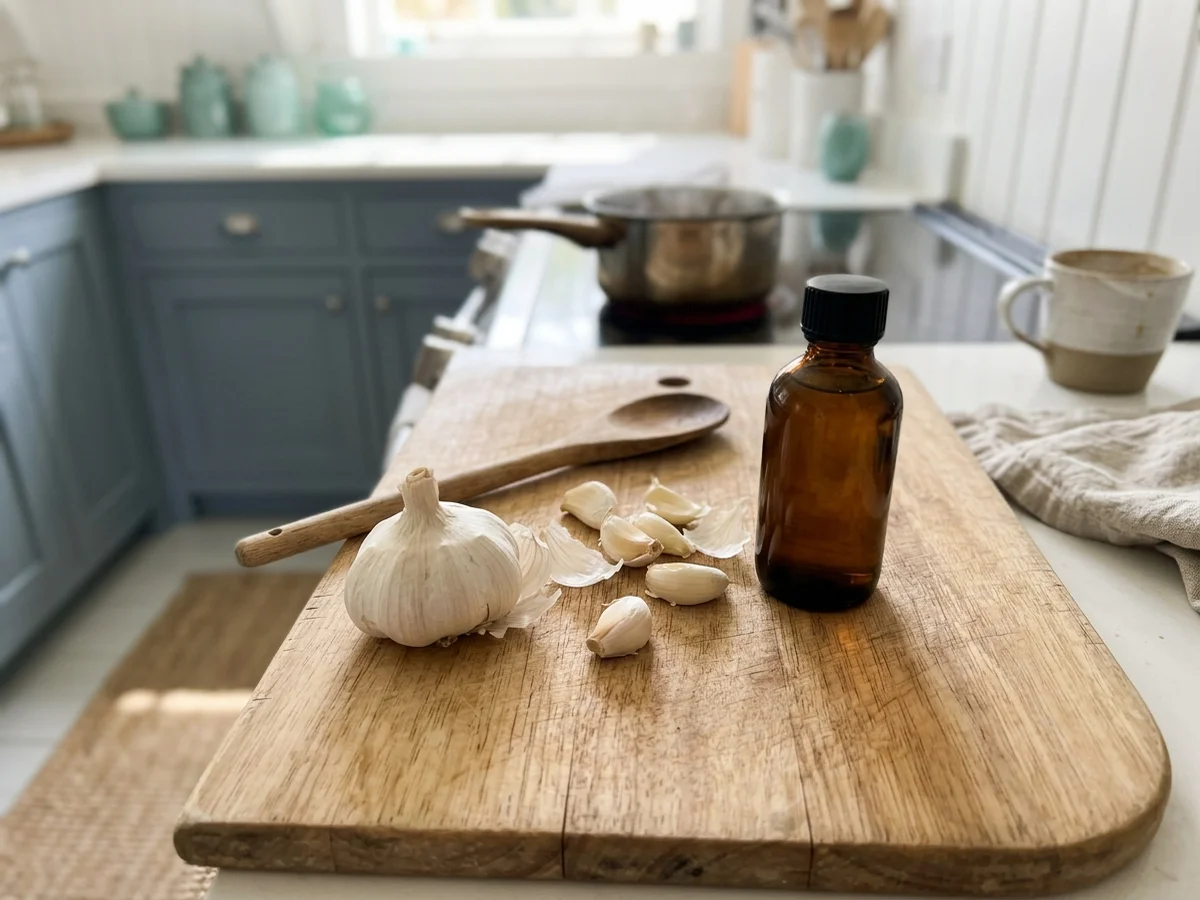
For skin or hair, neither bottle is one we would reach for. NCCIH says fresh raw garlic may not be safe applied to skin and can cause severe irritation and chemical burns (NCCIH, Garlic), and an infused oil is a way of putting garlic's contents on skin. Our skin article goes into it, and a dermatologist is the right person for any skin concern.
For aroma and workshop experiments, this is what a distillate is for: a trace in soap or candles, diffuser trials, side by side scent studies. Our guidance is to dilute 0.5% to 2% in a carrier oil for skin contact and patch test first. The carrier oil guide shows how to size a blend.
The size of the bottle is a clue
Look at the quantity on the label. Aroma oils come in small amounts because a little goes so far, while a pantry jar of infused oil is a food product that you expect to pour. A tiny dark bottle and a large clear jar are meant for very different jobs, and thinking of them that way keeps the two from ever getting mixed up on a shelf.
Different bottles, different shelf rules
An infused oil is a perishable food. The CDC lists chopped garlic in oil as a botulism source and says to refrigerate homemade versions and discard them after 4 days (CDC, Botulism Prevention). For a store bought jar, Penn State suggests looking for a label that says the oil was acidified or contains another microbial inhibitor, and following its storage line once opened. A distillate has its own routine: tightly capped, cool, dark and out of reach of children and pets, which we cover in our storage guide.
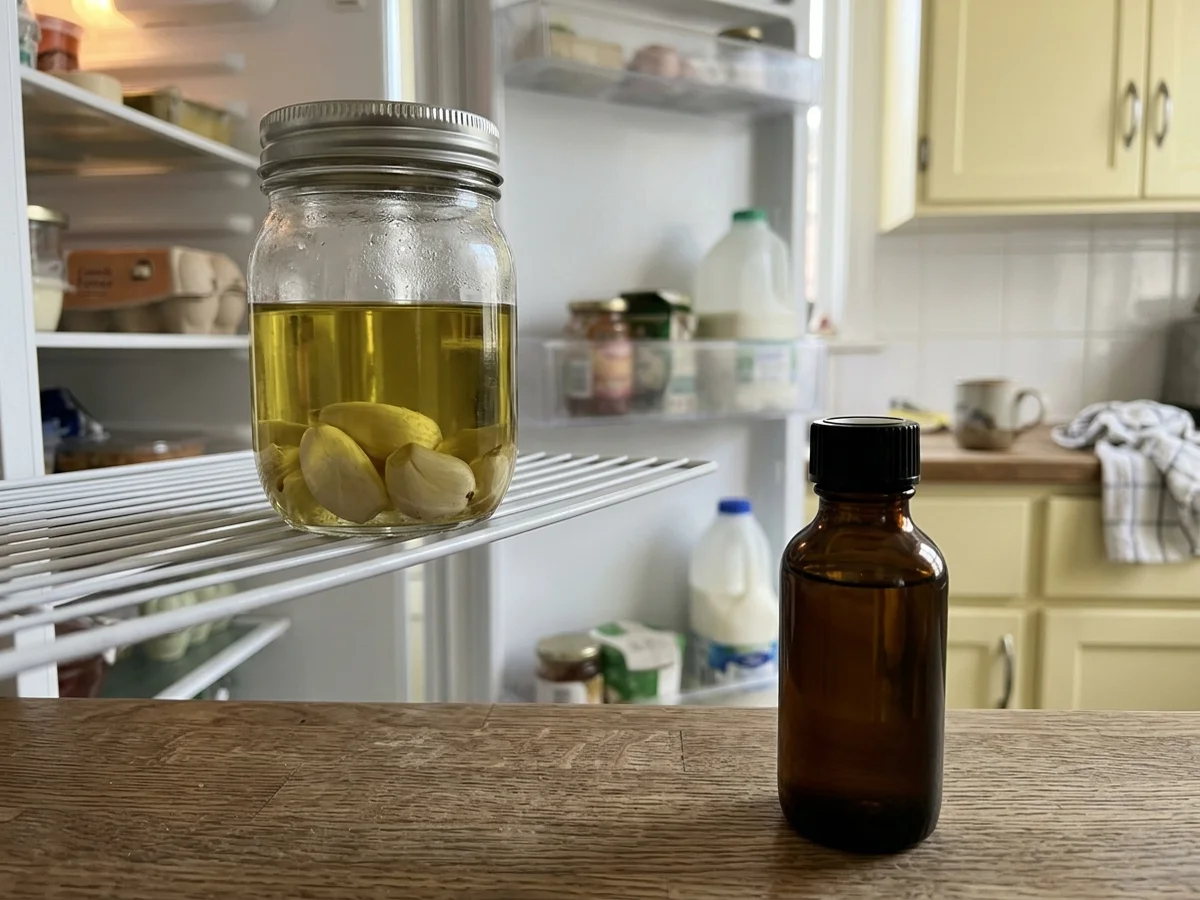
If you are shopping for the infused kind, a grocery or specialty food seller is the place, and the jar's label is your best friend: acidification, storage directions, and an ingredient list that names both oil and garlic. For the distillate, ask about lot reports. Our certificate guide shows what to look for.
A good rule when you shop is to read the ingredient line before the front of the label. If the first thing listed is a cooking oil, you are holding a pantry item. If the only ingredient is Allium sativum, you are holding an aroma material, and you will want to handle it that way.
Label them clearly at home if you keep both, and store them apart so nobody reaches for the wrong one in a hurry.
Two bottles, two jobs, and a label that tells you which is which.
Garlic Essential Oil
Garlic Essential Oil from our own shop, in sizes from 0.5 oz to bulk.
From $10.99
Shop Now →Sources & Further Reading
- Cosmile Europe. Allium Sativum Bulb Oil. cosmileeurope.eu
- Satyal P, Craft JD, Dosoky NS, Setzer WN. The chemical compositions of the volatile oils of garlic (Allium sativum) and wild garlic (Allium vineale). Foods 2017;6(8):63. pmc.ncbi.nlm.nih.gov/articles/PMC5575638
- Penn State Extension. How to safely make infused oils. extension.psu.edu/how-to-safely-make-infused-oils
- National Capital Poison Center. Essential oils. poison.org/articles/essential-oils
- NCCIH. Garlic. nccih.nih.gov/health/garlic
- CDC. Botulism prevention. cdc.gov/botulism/prevention