Is Garlic Spray Safe for Bees? What the Research Says
Garlic spray has a gentle reputation: it is a kitchen plant, so surely it is kind to the garden. For bees, the honest answer is that nobody has shown that. The evidence is thin, and the small amount that exists does not give garlic a clean bill of health. If you have a garden full of flowers, this is worth a few minutes before you mix anything.
Garlic Essential Oil
Our own Garlic Essential Oil, in sizes from 0.5 oz to bulk.
From $10.99
Shop Now →What the research says
A 2023 review of botanical pesticides and bees pulled together what is known, and its summary of the garlic evidence is short. A laboratory study from Brazil reported that a garlic extract raised honey bee larval mortality and affected development and body mass. The same work found garlic and eucalyptus slowed adult bees in walking tests, and that every botanical product it tried repelled worker bees (Catania et al., Insects, 2023). Two things are worth keeping in mind. It was a laboratory test, not a garden, and the material was a garlic extract, not an essential oil, so it does not speak for our oil in either direction.
The review also draws a balanced conclusion: botanical products generally show less toxicity to bees than synthetic ones, but they can still cause lethal and sublethal effects. And it notes that no field or semi-field studies had been done with essential oils or their extracts on honey bees. In other words, the question is open, which is not the same thing as safe.
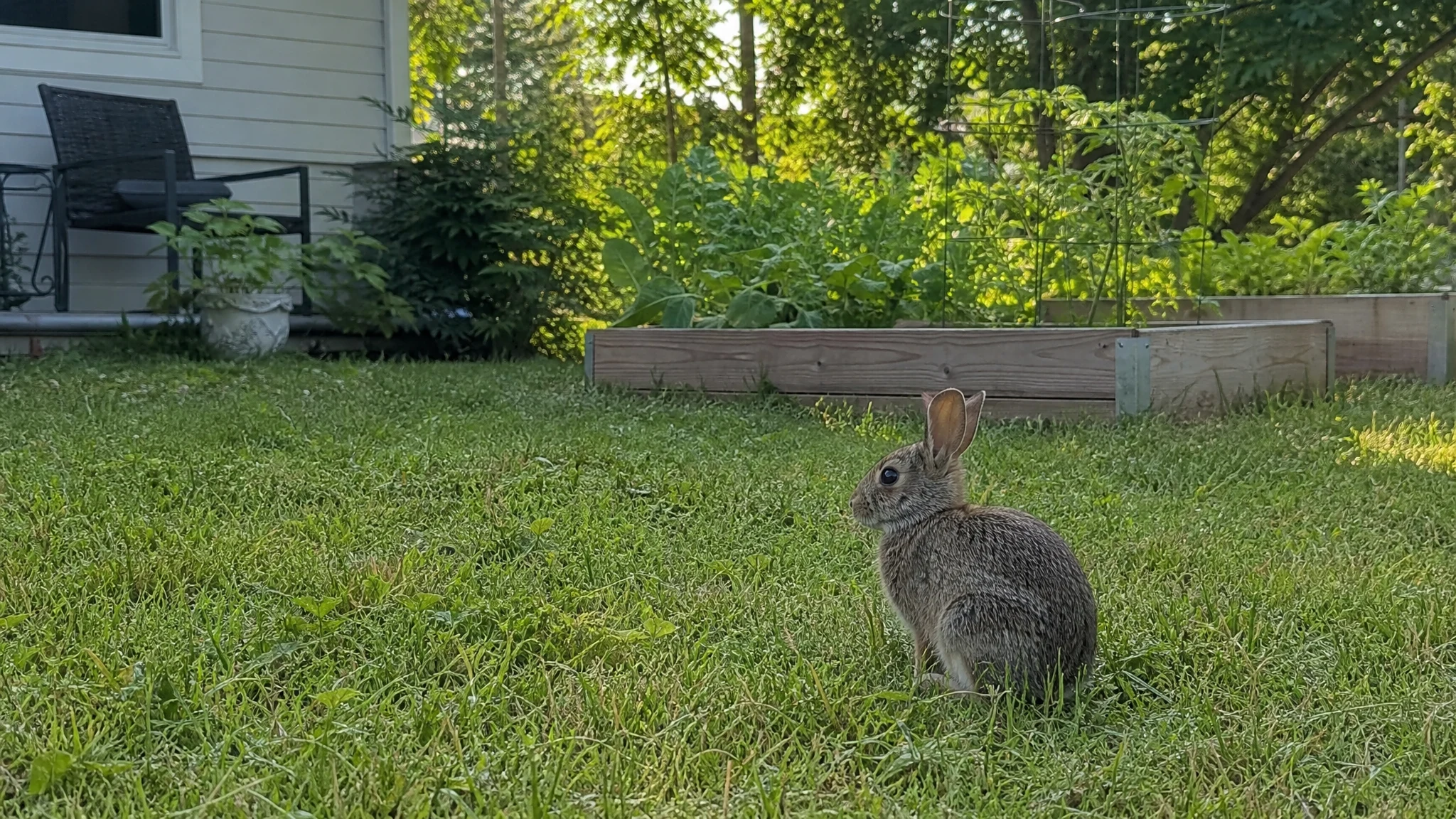
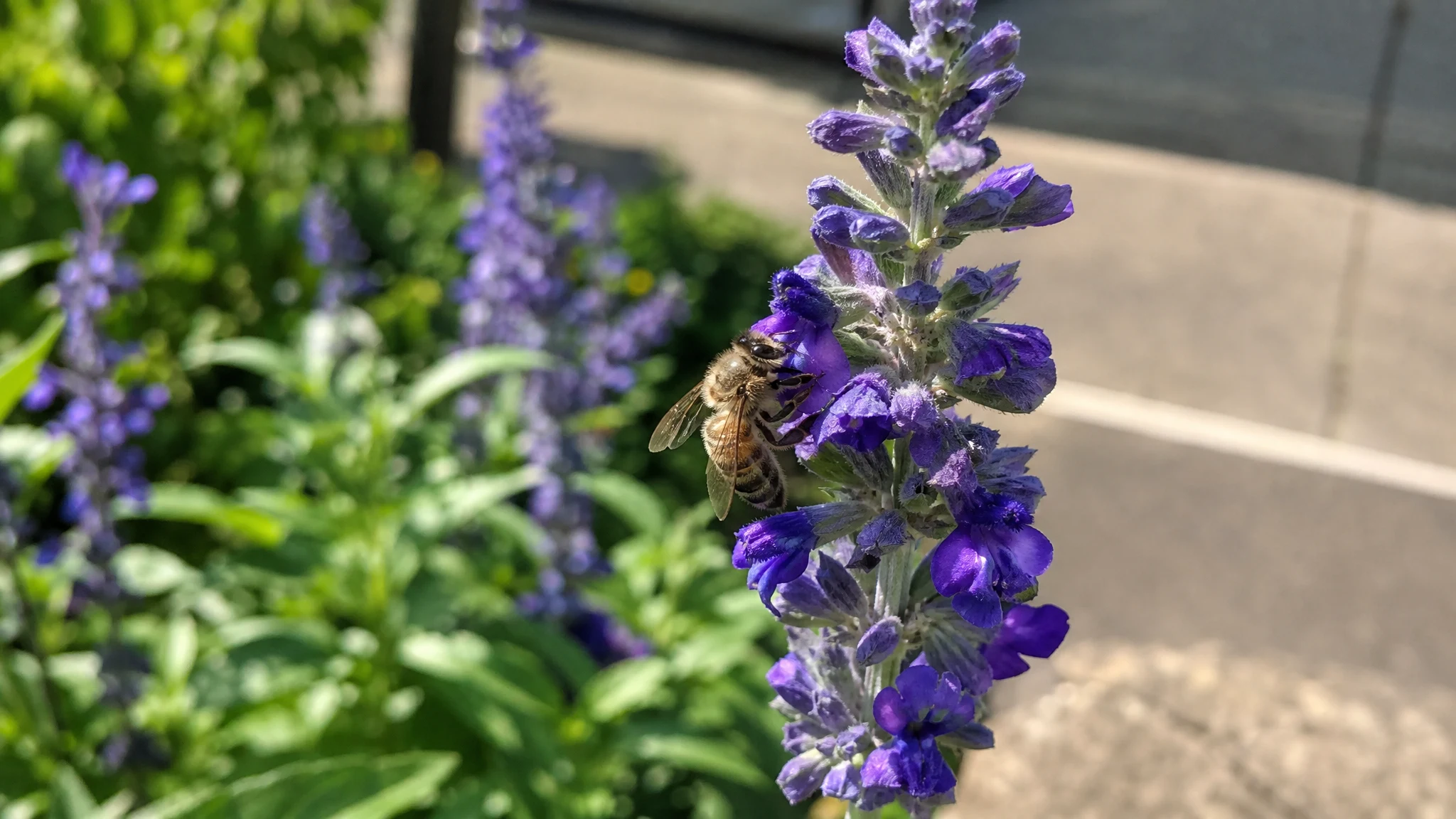
It helps to picture a garden the way a bee does. A single flowering shrub in midsummer can be a busy place from early morning, and the bees working it are not looking at labels. They land on whatever is open and sweet, and they carry what they touch back with them. Anything we put on a plant, however homemade or kitchen-friendly it feels, becomes part of that landscape for a while. That is a good reason to slow down before treating a plant in bloom.
Why the gap exists
Garlic studies tend to ask whether garlic works on a pest, not what it does to bystanders. A 2024 vine weevil study, for instance, tested a commercial garlic extract bioinsecticide in the laboratory and reported that it reduced egg hatch as a fumigant and lowered larval survival, and its authors called for field studies before drawing wider conclusions (Fezza et al., Journal of Economic Entomology, 2024). Effects on the target get measured, and effects on neighbors are left for later. The Xerces Society, which works on invertebrate conservation, puts the general principle plainly: pesticides designed to control unwanted plants and animals rarely distinguish between beneficial invertebrates and those that cause harm (Xerces Society, pesticides).
Is neem the safer choice?
The sources do not agree, and both can be true in their own settings. The National Pesticide Information Center calls neem oil practically non-toxic to bees and reasons that because insects must eat the treated plant to be affected, pollinators are unlikely to be harmed (NPIC, neem oil fact sheet). Laboratory tests that force exposure, like the Brazilian work above, include neem among the products that raised mortality. A registered neem product comes with a label that governs how it may be used, and a homemade garlic spray has no such label. Our neem comparison goes through the difference.
If you spray anything in a garden
This is common sense reasoning, not a garlic trial, but it follows how pollinator guidance works generally: bees are at risk when they forage, so open blooms and daytime are the times to avoid.
- Keep spray off open flowers, which is where bees feed.
- Hold off when bees are working the area.
- If you do spray, choose the evening and aim at foliage, not blossoms.
- Skip windy days, since drift carries droplets onto flowers you did not mean to hit.
If you keep bees or have a hive nearby, let neighbors know before spraying anything. For colony questions, your state apiarist or an extension entomologist is the best resource.
Little habits that help pollinators
Whether or not you ever spray anything, a few small habits make a garden friendlier to the creatures visiting it:
- Look before you act. Walk the bed in the morning and see what is flying, crawling and feeding before you decide a problem needs a response.
- Let some flowers stay wild. A corner of clover or an untidy herb bed is a pantry for pollinators.
- Offer a shallow dish of water with a few stones in it so bees have somewhere safe to land and drink.
- Check with your local extension office before using anything new, including homemade mixtures. They know the pollinators in your area and the rules where you live.
None of that takes much time, and it keeps the decision with you rather than with a bottle label or a search result.
A note on the rules
Our product page makes no pest control claim, we do not recommend our oil for pest control, and we sell it as an aroma material. Under federal pesticide law, a product sold with pest claims is a pesticide. EPA lists "Garlic oil" among the active ingredients eligible for its minimum risk exemption (40 CFR 152.25). EPA's page explains that it exempted such products because it determined they pose little to no risk to human health or the environment under the stated conditions (EPA, minimum risk pesticides), which is a judgment about the listed ingredients, not a finding on bees. If you make your own spray, please read EPA and state rules and ask your county extension office. Our explainer on the exemption and the aphid article go further.
The kindest garden for bees is one where the flowers are left alone and the sprayer waits for dusk.
Garlic Essential Oil
Garlic Essential Oil from our own shop, in sizes from 0.5 oz to bulk.
From $10.99
Shop Now →Sources & Further Reading
- Catania R, Lima MAP, Potrich M, Sgolastra F, Zappalà L, Mazzeo G. Are botanical biopesticides safe for bees (Hymenoptera, Apoidea)? Insects 2023;14(3):247. pmc.ncbi.nlm.nih.gov/articles/PMC10053700
- Fezza E, Roberts JM, Bruce TJA et al. 'The Garlic Gambit': an alternative strategy for controlling vine weevil. Journal of Economic Entomology 2024;117(5):1968-1976. pmc.ncbi.nlm.nih.gov/articles/PMC11473037
- Xerces Society. Pesticides. xerces.org/pesticides
- National Pesticide Information Center. Neem oil general fact sheet. npic.orst.edu/factsheets/neemgen
- US Code of Federal Regulations, 40 CFR 152.25, as published by Cornell Legal Information Institute. law.cornell.edu/cfr/text/40/152.25
- EPA. Minimum risk pesticides. epa.gov/minimum-risk-pesticides