Garlic and Heart Health Research: What It Does Not Cover
"Garlic and heart health" is one of the most-searched garlic topics, and it has a detail that gets lost in the headlines: every study behind it involves garlic supplements taken by mouth, tablets, powders and extracts. None of it is about garlic essential oil, which is an aroma and workshop material that we do not suggest swallowing. If you take medicine for blood pressure or cholesterol, your prescriber or pharmacist is the right first call before you add any garlic supplement.
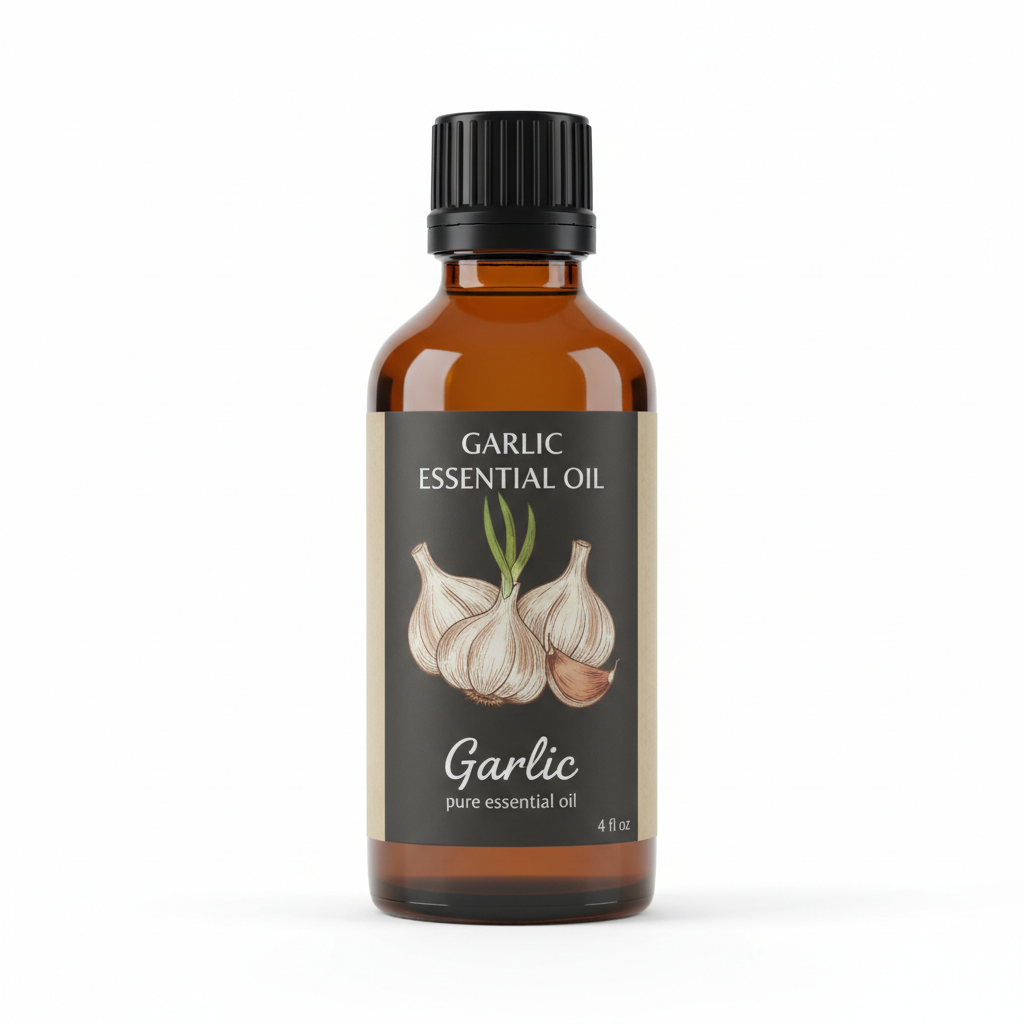
Garlic Essential Oil
Our own Garlic Essential Oil, in sizes from 0.5 oz to bulk.
From $10.99
Shop Now →What the trials looked at
The oldest careful look is a Cochrane review that found only two small placebo-controlled trials in people with high blood pressure, 87 patients in all. The trials suggested lower readings than placebo, by roughly 10 to 12 mmHg systolic, but the authors said the intervals were imprecise, that the difference fell within normal measurement variability, and that neither trial reported heart attacks, strokes or deaths. Their conclusion was that there was not enough evidence to say whether garlic gives a therapeutic advantage (Stabler and colleagues, 2012).
Later meta-analyses pooled more trials and found smaller, steadier numbers. One covering 20 trials and 970 participants found an average systolic drop of about 5 mmHg across all participants (Ried, 2016). They are averages across different supplements and doses, so no single person should expect a particular number.
How to read a headline like this
When a headline says garlic changed some number, three quick questions save a lot of confusion. What exactly did people take: a tablet, a powder, an aged extract, a raw clove? How many people took part, and for how long? And how big was the change, not just its direction? Study summaries tend to bury those answers in the second paragraph, so it is worth reading that far before you pass the headline along.
It also helps to notice the word "garlic" doing a lot of work. In a headline it can mean a capsule from a pharmacy shelf. In a recipe it means a clove on a board. For us it means a bottle of aroma material. Same plant, three very different things.
Why the form matters so much
Garlic powder tablets, aged garlic extract, black garlic and raw cloves are different materials with different chemistry. A distilled essential oil is another thing again: a concentrate of volatile compounds, which our Certificate of Analysis for one batch describes only by density and refractive index. So a result for one form cannot be stretched over another, and nothing here says anything about oil.
That is why we do not suggest taking our oil by mouth for any reason. It is an external aroma material, and we recommend 0.5% to 2% in a carrier with a patch test if it goes on skin.
What the oil is for
We love this oil for what it is: a bold, savory, sulfurous aroma with real staying power. Open the bottle in a ventilated room and you will notice the smell arrives before you have even lifted it to your nose, and a single drop on a blotter strip is plenty for a scent comparison. That intensity is exactly why our guidance stays short: measure sparingly, ventilate, and leave the health questions to people who can answer them.
The conversation to have with a pharmacist
The NCCIH says garlic supplements may increase the risk of bleeding, that people should tell their health care providers, particularly before surgery, and that caution is advised with blood thinners such as anticoagulants and aspirin. It also says oral garlic in amounts above those in food may not be safe during pregnancy. These are the questions where a pharmacist with your actual medicine list is worth more than any article, ours included. Our drug interactions post and pregnancy and children guide explain how to ask.
If you do book that conversation, a little preparation helps:
- Write down every medicine, vitamin and supplement you take, including the ones you only take now and then.
- Bring the bottle or a photo of the label for any garlic product you use or are thinking about.
- Say how much and how often, in plain numbers.
- Mention any surgery or dental work coming up.
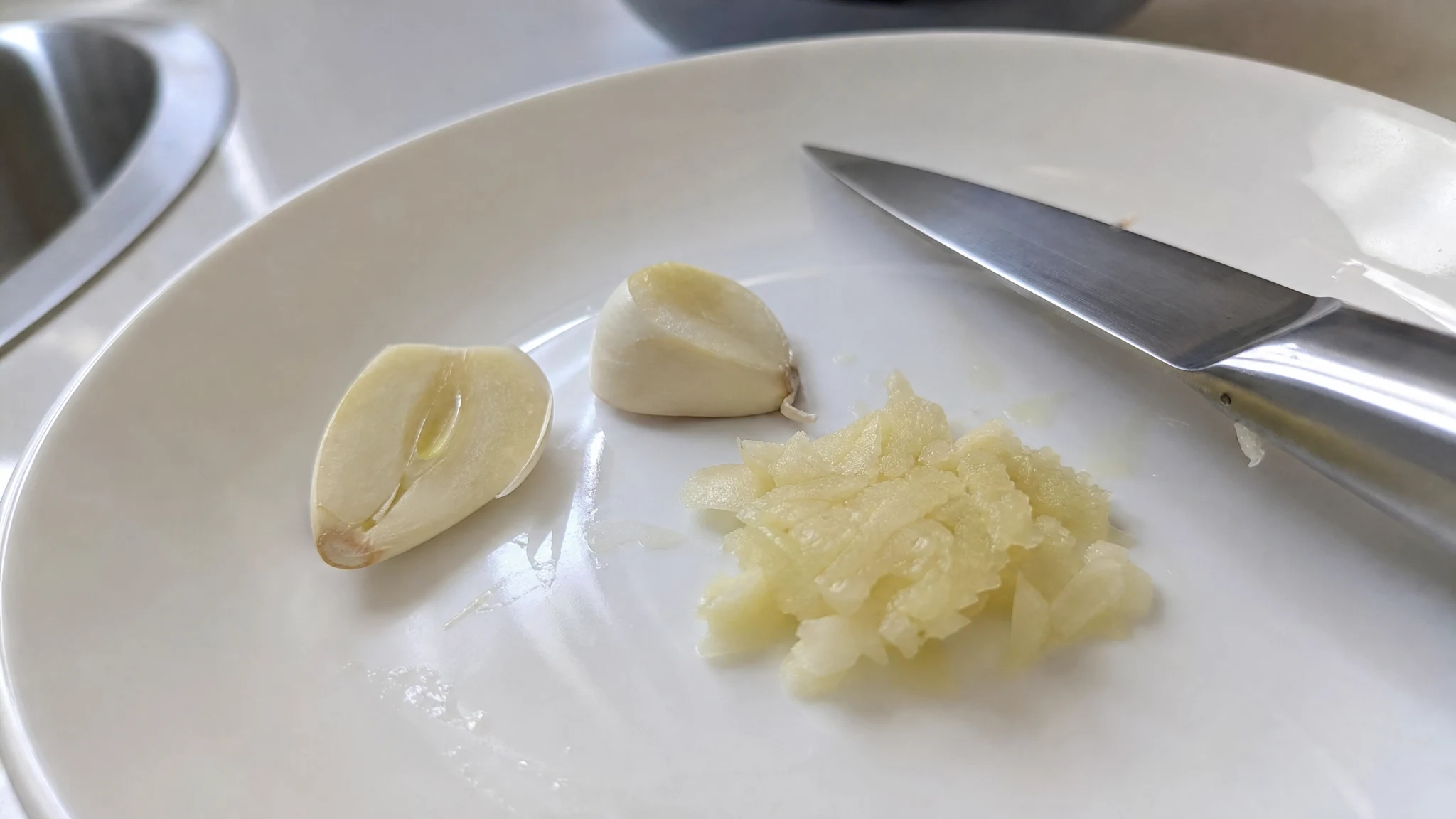
If you are simply curious about garlic, the kitchen is the friendliest place to explore it. Roast a head and notice how mild and sweet it becomes, or crush a raw clove and notice how sharp. The two are the same plant and a world apart, which is a good reminder that preparation matters.
What we make of it
Garlic has been part of the kitchen for thousands of years, so it is natural to wonder what else it does. The research is genuinely interesting, and it reads as modest: small average changes, imprecise estimates, and the Cochrane review found no trial reporting cardiac events. Heart decisions belong to a cardiologist or your prescriber, and no supplement, garlic or otherwise, replaces a prescribed medicine.
If you like garlic's story, our benefits post sorts the claims by preparation, and the colds review covers the other famous garlic trial.
For us, the lesson is simple and a little reassuring: eat garlic for the joy of it, and leave the heart planning to the people who can check your blood pressure.
Garlic Essential Oil
Garlic Essential Oil from our own shop, in sizes from 0.5 oz to bulk.
From $10.99
Shop Now →Sources & Further Reading
- Stabler SN et al., 2012. Garlic for the prevention of cardiovascular morbidity and mortality in hypertensive patients. Cochrane Database Syst Rev. PubMed 22895963
- Ried K, 2016. Garlic lowers blood pressure in hypertensive individuals, regulates serum cholesterol, and stimulates immunity: an updated meta-analysis and review. J Nutr. PubMed 26764326
- National Center for Complementary and Integrative Health. Garlic. nccih.nih.gov