What Does Organic Mean on a Garlic Oil Label?
The word "organic" on a bottle carries more weight than most labels, and for good reason: in the United States it is a legal status granted to a named operation by an accredited certifier. It is not a description of how a plant looked, smelled or was grown on a good day. For a garlic essential oil, that means the useful question is never "is it organic?" but "who certified it, and for what?"
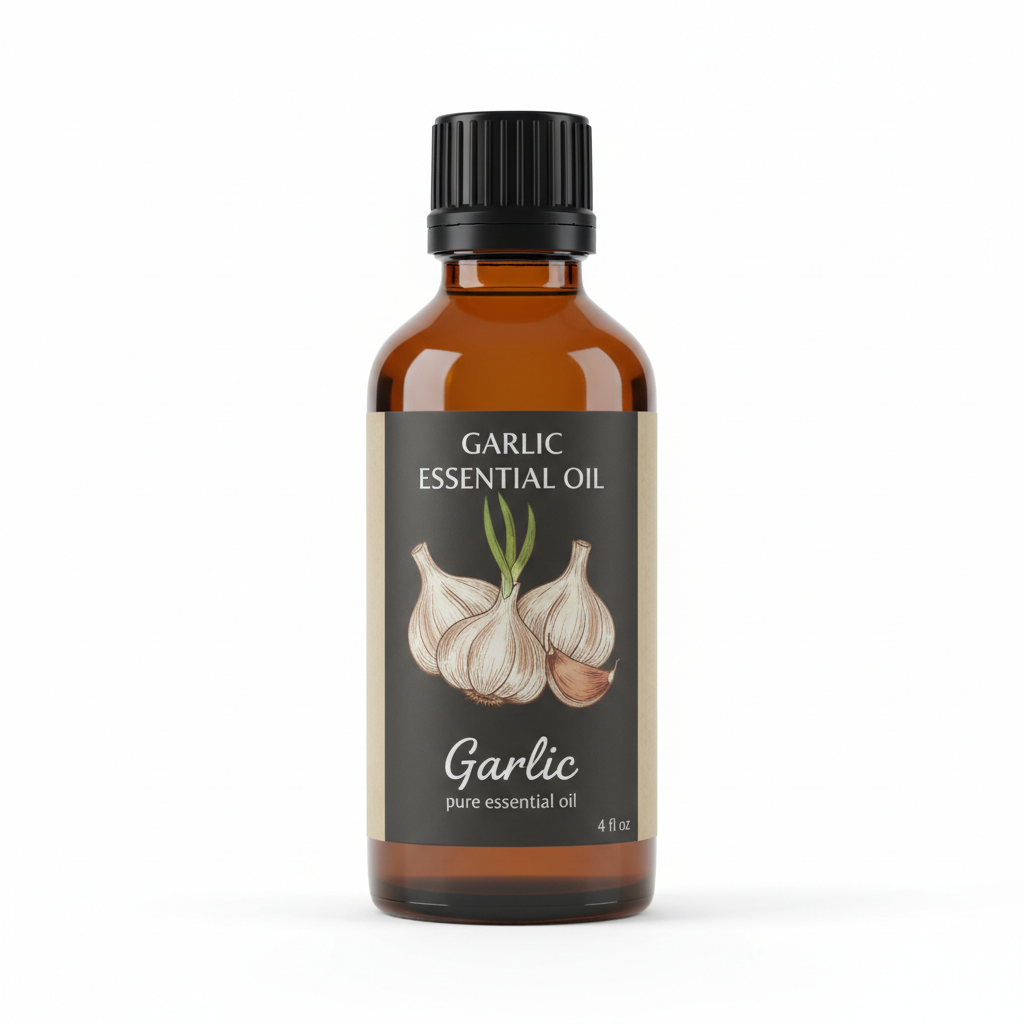
Garlic Essential Oil
Our own Garlic Essential Oil, in sizes from 0.5 oz to bulk.
From $10.99
Shop Now →What the rule says
Under 7 CFR 205.100, each operation that produces or handles agricultural products sold as organic must be certified, except for the exempt operations described in section 205.101. A person who knowingly sells or labels a product as organic outside the Act is subject to a civil penalty. That is why a genuine organic claim always has a name behind it: a certifier, and an operation the certifier covers.
For a single-ingredient oil there is no sliding scale of percentages to puzzle over. Either the oil is certified, or it is not.
Two exemptions worth knowing
Section 205.101 sets out a few exemptions, and two matter to anyone buying a small bottle. One covers an operation whose gross agricultural income from organic sales totals five thousand dollars or less annually. Such a small producer is exempt from certification, which means a lack of a certificate does not always signal a lack of care. The other covers an operation that only buys, sells, receives, stores or prepares for shipment organic products already labeled for retail sale, and that stay in the same sealed, tamper-evident packages. In that case a shop can sell a certified bottle without being certified itself.
Put those together and you get a handy rule of thumb: the name that matters is the operation printed on the label, which may not be the seller's name.
Asking well
When organic status is what you are after, a short email to a seller goes a long way. Ask for the name of the certifier, the legal name of the certified operation, and whether the oil itself falls within what that operation is certified for. A certificate for a farm's vegetables does not automatically cover an oil. Then confirm the details with the certifier directly. A seller who can answer all three plainly has done the work, and one who answers "natural" has answered a different question.
Reading a label with a calm eye
Labels can feel like a puzzle, and a bottle of garlic oil is no exception. A few small habits make them easier to read. Start with the front and the back together, since what appears in large print on one side may be balanced, or contradicted, by the small print on the other. Look for the botanical name, the ingredient list and the name and place of the business. Notice whether words like "natural," "pure" or "botanical" are doing the work that a certifier's name would do. Words like those describe a feeling, not a status.
If a label does carry an organic seal, take a moment to look for the name of the certifier near it. That name is what turns a pretty symbol into something you can follow up on.
Who should pay the premium
Our view is that organic certification is worth paying for when the paperwork is what you need. A soap maker planning an organic claim on a finished product, or a buyer whose own customers or auditors ask for documentation, will want a supply chain that can be traced on paper, and should talk to their own certifier before promising anything.
If your goal is simply a good aroma material for a project, other questions often matter more: what the batch documentation shows, how the oil was made, how it is stored, and what size suits your use. Our guide to judging garlic oil quality and our buying checklist are written for that, and our piece on origin and sourcing covers the questions to ask any seller.
It is easy to feel that a missing word means a missing quality, but that is not how we like to think about shopping. We would much rather you understand what a label does and does not say, and choose the thing that matches your project, than pick on a single word. A soap maker with an organic claim to make and a hobbyist trying a scent study are asking different questions, and both questions deserve straight answers.
Where we stand
We do not make an organic claim for our garlic oil, and you will not find the word used as a description of it. What we can offer is the Certificate of Analysis we publish for one batch, which lists relative density and refractive index, and our product description of an oil steam-distilled from crushed bulbs and sold undiluted. If you need a particular report or document for a lot before you order, you are welcome to ask us in writing through our contact page.
A note for soap makers and other small producers: keep a folder of the paperwork for each ingredient you use, with the label, the date and any documents the seller sent. If someone asks about a claim months from now, you will be glad it is all in one place.
A clear question is the best shopping tool there is, and "who certified this?" is one of the clearest.
Garlic Essential Oil
Garlic Essential Oil from our own shop, in sizes from 0.5 oz to bulk.
From $10.99
Shop Now →Sources & Further Reading
- US eCFR via Cornell LII. 7 CFR 205.100, What has to be certified. law.cornell.edu/cfr/text/7/205.100
- US eCFR via Cornell LII. 7 CFR 205.101, Exemptions and exclusions from certification. law.cornell.edu/cfr/text/7/205.101