Does Garlic Oil Origin Matter? Five Questions to Ask
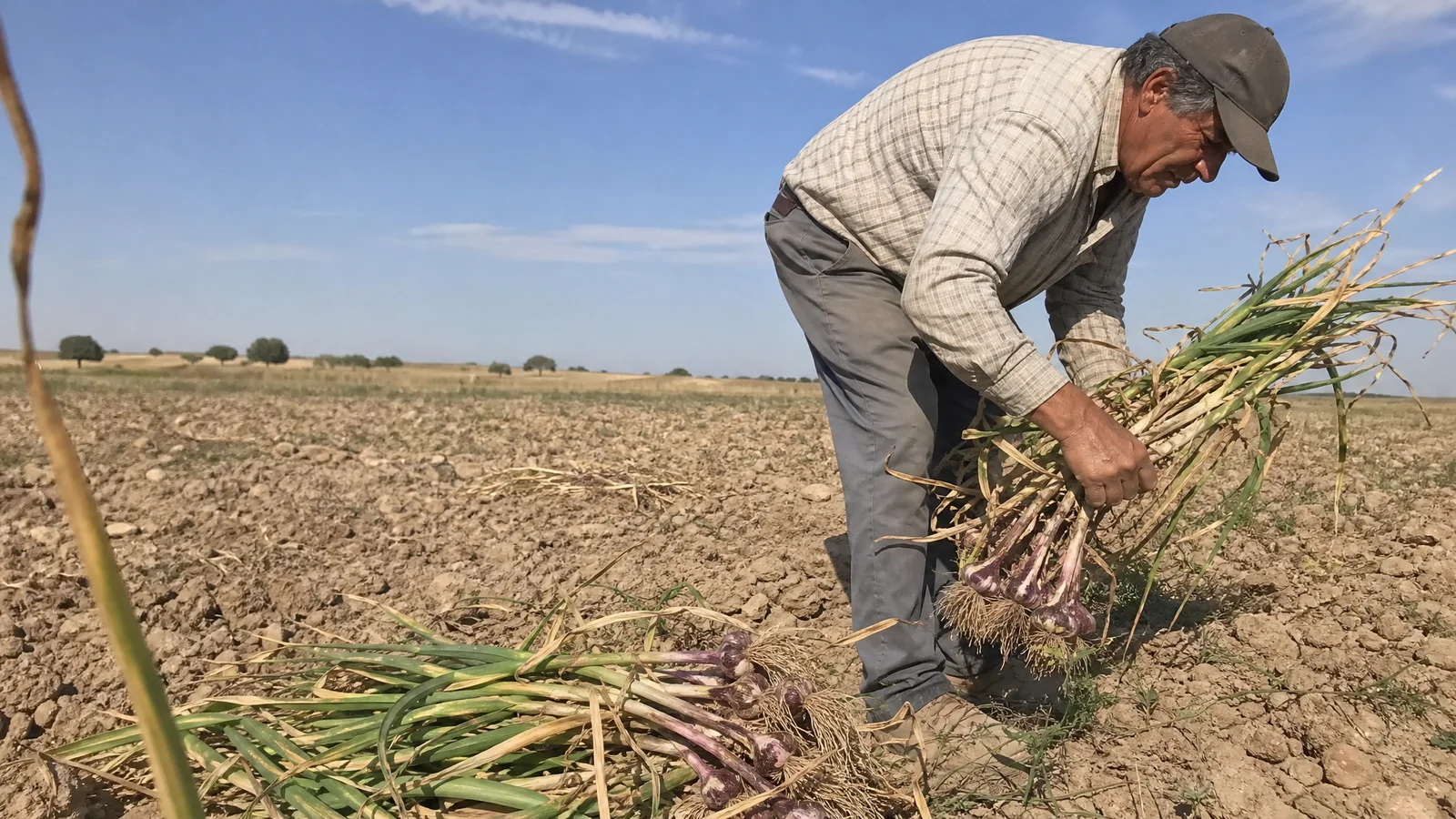
A country name on a garlic oil listing feels reassuring, as if it settled the question of quality. The published data says otherwise: oils reported from different countries overlap a lot on their main compounds, and a single lot of Spanish bulbs gave three different profiles in one study just by changing how it was distilled. We do not publish a country of origin for our oil, so instead of naming one, here is what origin does and does not change, and the questions worth asking any seller.
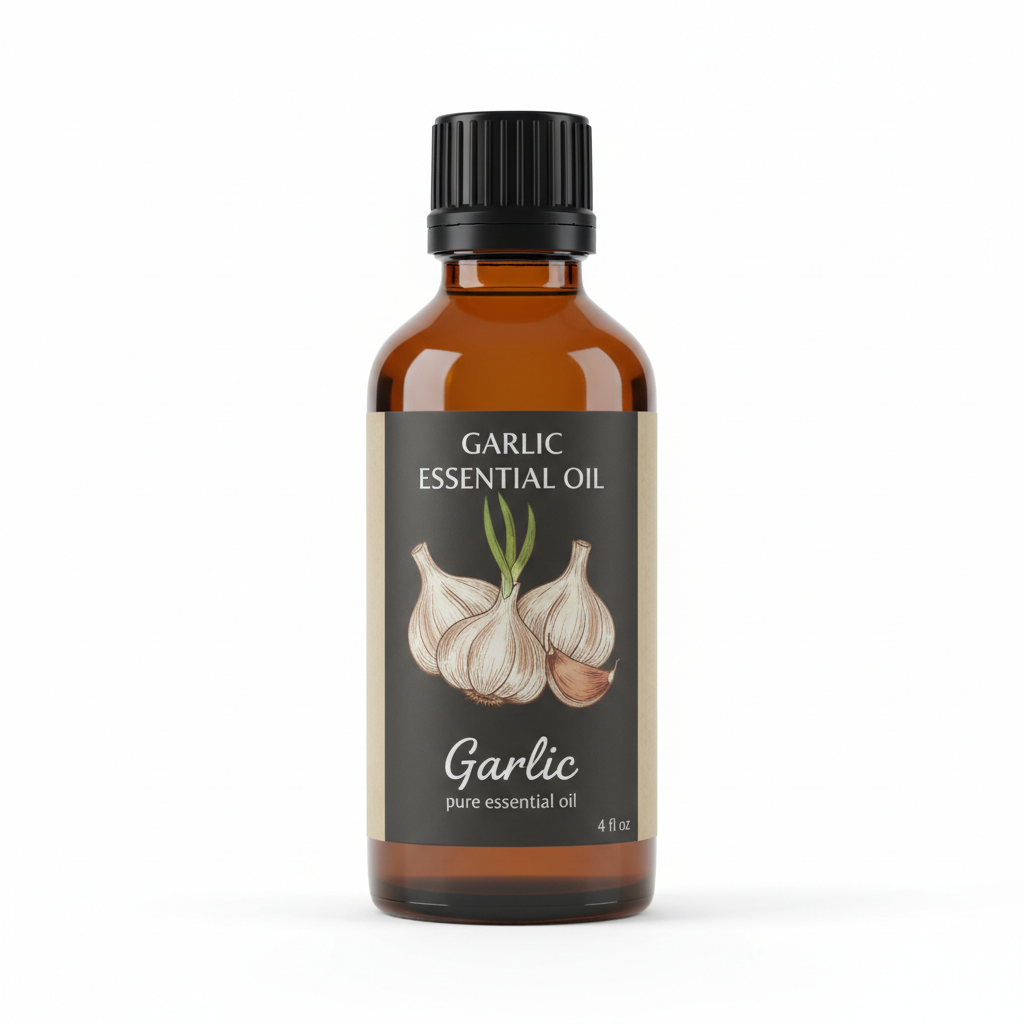
Garlic Essential Oil
Our own Garlic Essential Oil, in sizes from 0.5 oz to bulk.
From $10.99
Shop Now →What the numbers say about place
A 2017 paper on chopped Spanish bulbs set its own results beside oils reported from other places. For the two leading sulfur compounds, diallyl disulfide and diallyl trisulfide, the spreads look like this (Satyal et al., Foods, 2017):
| Reported origin | Diallyl disulfide | Diallyl trisulfide |
|---|---|---|
| Spain, steam distillation | 27.9% | 16.8% |
| Spain, laboratory hydrodistillation | 20.8% | 33.4% |
| Egypt | 25.2% | 21.1% |
| Serbia | 28.1% | 33.6% |
| Tunisia | 49.1% | 30.4% |
| France | 37.9% | 28.1% |
Every row comes from a different paper with its own garlic, harvest and distillation, so this is not a ranking of countries. The two Spanish rows are the same bulbs and still differ by 7 points on one compound and nearly 17 on the other. The same review also lists six Indian varieties spanning roughly 27% to 47% diallyl disulfide in a single study. Reading that, cultivar and processing move the numbers at least as much as geography, so "from country X" describes one input among several. A blank origin field does not mean a bad oil, and a named country does not prove a good one.
A clean chromatogram is not the whole story
A review of adulteration detection adds a note of caution. It points out that essential oil composition can vary regionally and seasonally, so an unexpected peak pattern is not automatically evidence of tampering. It also describes a case where vegetable oil added to clove oil was missed by GC/MS/MS because the non-volatile part stayed in the injection port (Jentzsch et al., 2019). Reasoning from that: a tidy report is a good sign and an odd one calls for a conversation before an accusation.
Keeping a nose diary
A retained sample works best with a little routine. Use a small glass vial with a tight lid, label it with the lot number and the date, and keep it somewhere cool and dark. When the next lot arrives, put one drop of each on side-by-side strips and notice whether the opening, the middle and the lingering tail match. Write down what you notice in your own words. It is a pleasant ten minutes, and it gives you something no country name can.
What this means for soap, candle and scent work
For a maker, the practical effect of changing origin is lot-to-lot drift. A disulfide-heavy lot and a trisulfide-heavy lot could open differently in a formula. That is an inference from the chemistry, and the habit that guards against it needs no country at all: keep a small retained sample of the lot you formulated with and smell it beside the next lot before you commit to a drum.
If you do need an origin for a label statement, a supply-chain form or an import rule, that is a documentation matter. Ask the seller to state it in writing and to say whether it applies to your exact lot, and file the answer against the lot number.
It also helps to decide in advance what you will do with each answer. If you only need the oil for a scent trial, a missing country may not matter at all. If you are labelling a product or shipping across a border, it may matter a great deal. Knowing which situation you are in makes the conversation with a seller shorter and friendlier.
Five questions in the order we would ask them
- Botanical name and plant part. Our product page gives Allium sativum, bulb (crushed).
- How it was made: steam distillation, hydrodistillation, CO2 or solvent. We compare them in our steam and CO2 article.
- Country and crop year, and whether they apply to this lot.
- A GC-MS report for the lot, naming the laboratory and test date.
- Whether anything has been added, and whether it is sold undiluted.
A seller who answers all five has told you more than a country name could. One who answers some and says plainly what they cannot is still fine for a trial.
What we can tell you
We sell one garlic oil, sold undiluted. The certificate on our site covers one batch, with a relative density of 1.075 and a refractive index of 1.566. If you need a report or an origin statement for a particular lot, ask us in writing through our wholesale page or the contact page and wait for the answer before relying on it. Our cheapest checks are in the quality article, the money side is in the price article, and what an organic certificate would have to show is in the organic article.
Asking questions is not rude, and any seller worth working with expects them. We would much rather answer an email about your lot than have you guess. Keep the answers, file them with the lot number, and the next order becomes much easier to compare.
Origin is worth asking about and filing, and the profile of your own lot is the thing to check.
Garlic Essential Oil
Garlic Essential Oil from our own shop, in sizes from 0.5 oz to bulk.
From $10.99
Shop Now →Sources & Further Reading
- Satyal P, Craft JD, Dosoky NS, Setzer WN, 2017. The chemical compositions of the volatile oils of garlic (Allium sativum) and wild garlic (Allium vineale). Foods 6(8):63. pmc.ncbi.nlm.nih.gov/PMC5575638
- Jentzsch PV, et al., 2019. Detection of essential oils adulteration: a quick overview and current challenges. Advances in Biomedical Sciences and Research 4(1). biomedgrid.com/000746