Crunchy Garlic Chili Oil: Make a Small Jar, Keep It Cold
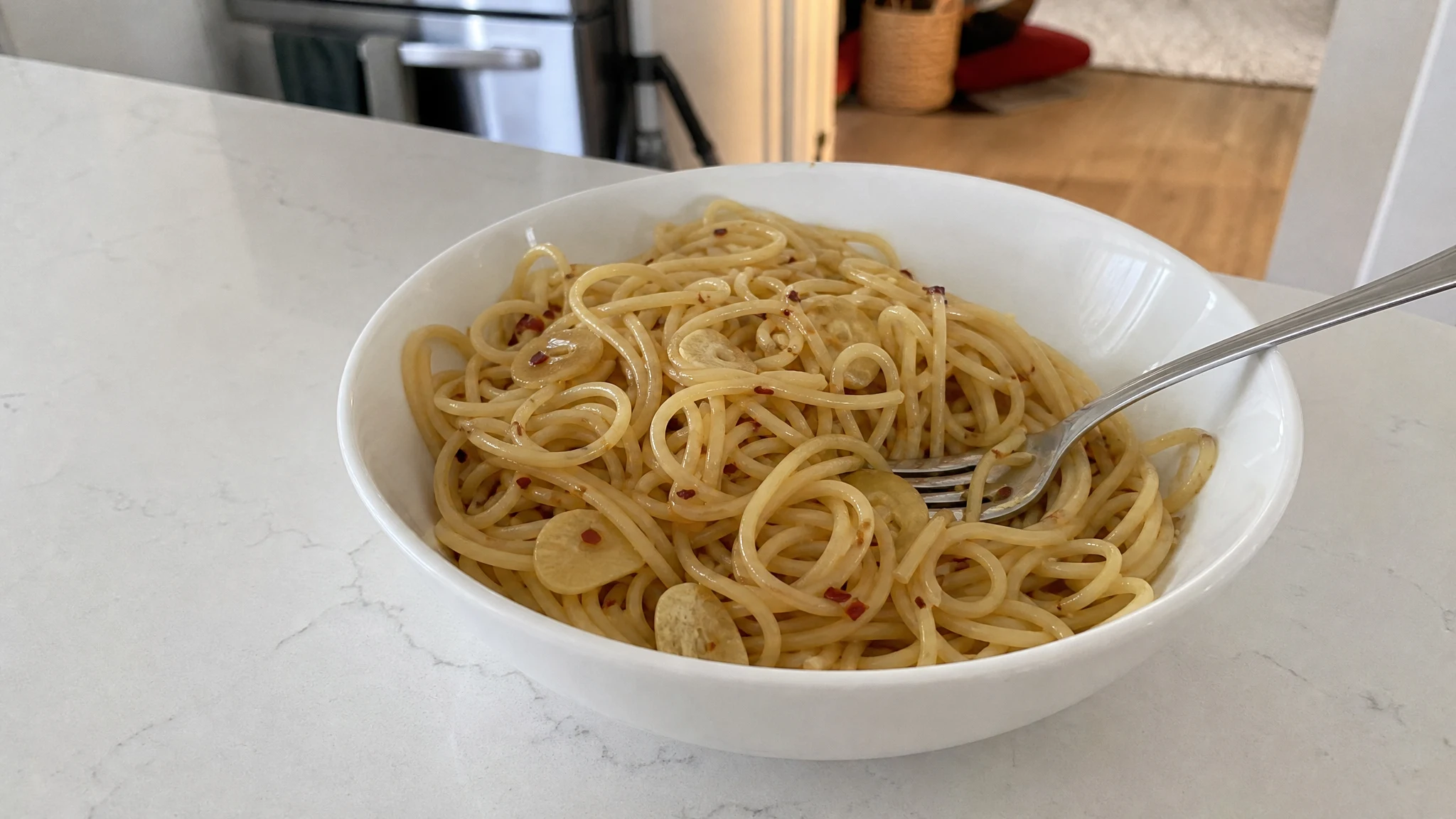
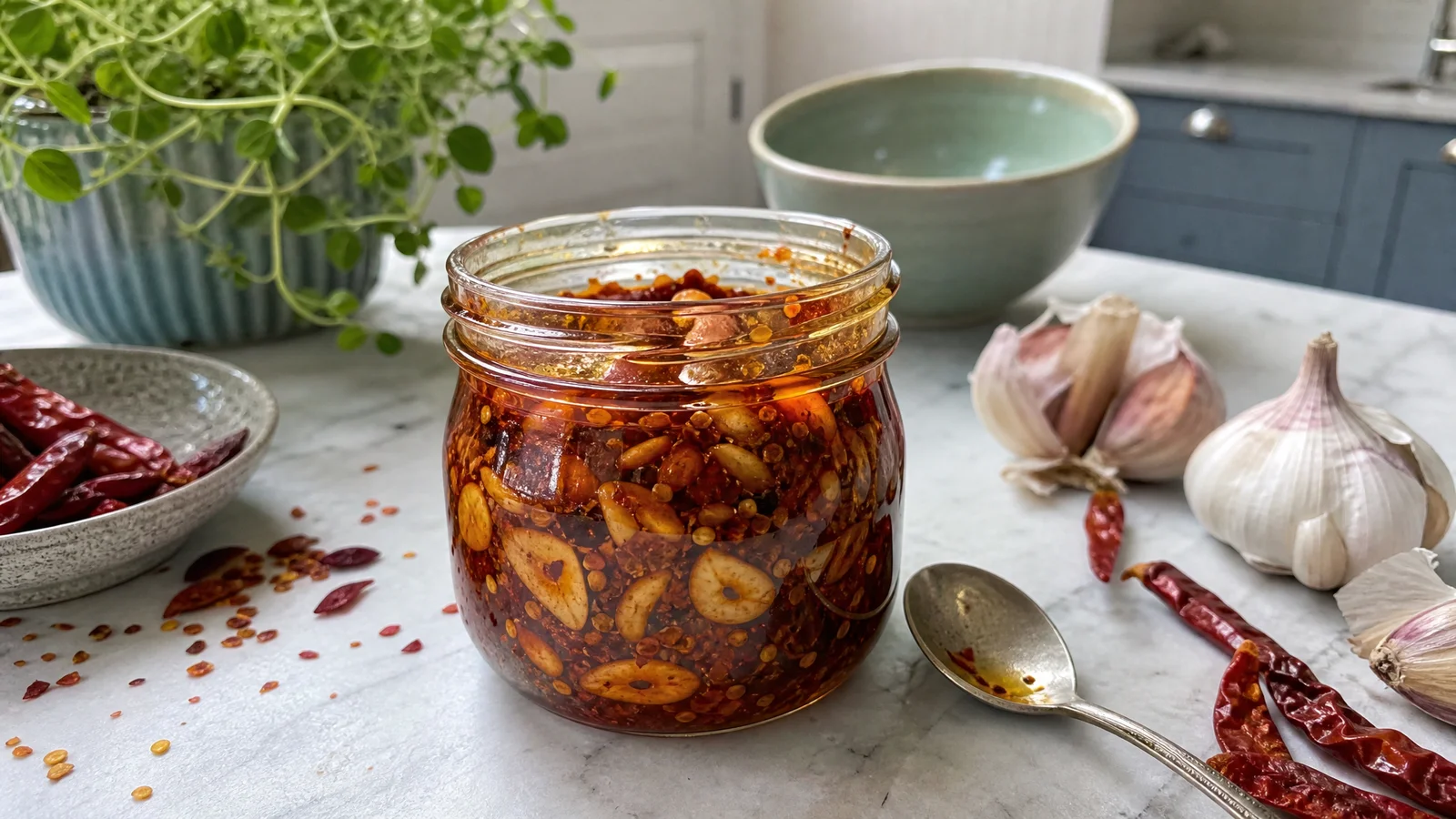
Crunchy garlic chili oil is the kind of jar people start putting on everything: eggs, noodles, dumplings, a spoon of rice. The crisp bits and the glossy red oil do a lot with very little. It is also a condiment with one firm rule, and the rule is that it lives in the fridge. It is a kitchen recipe built on real garlic, not on garlic essential oil, which is a workshop material that never goes in food.
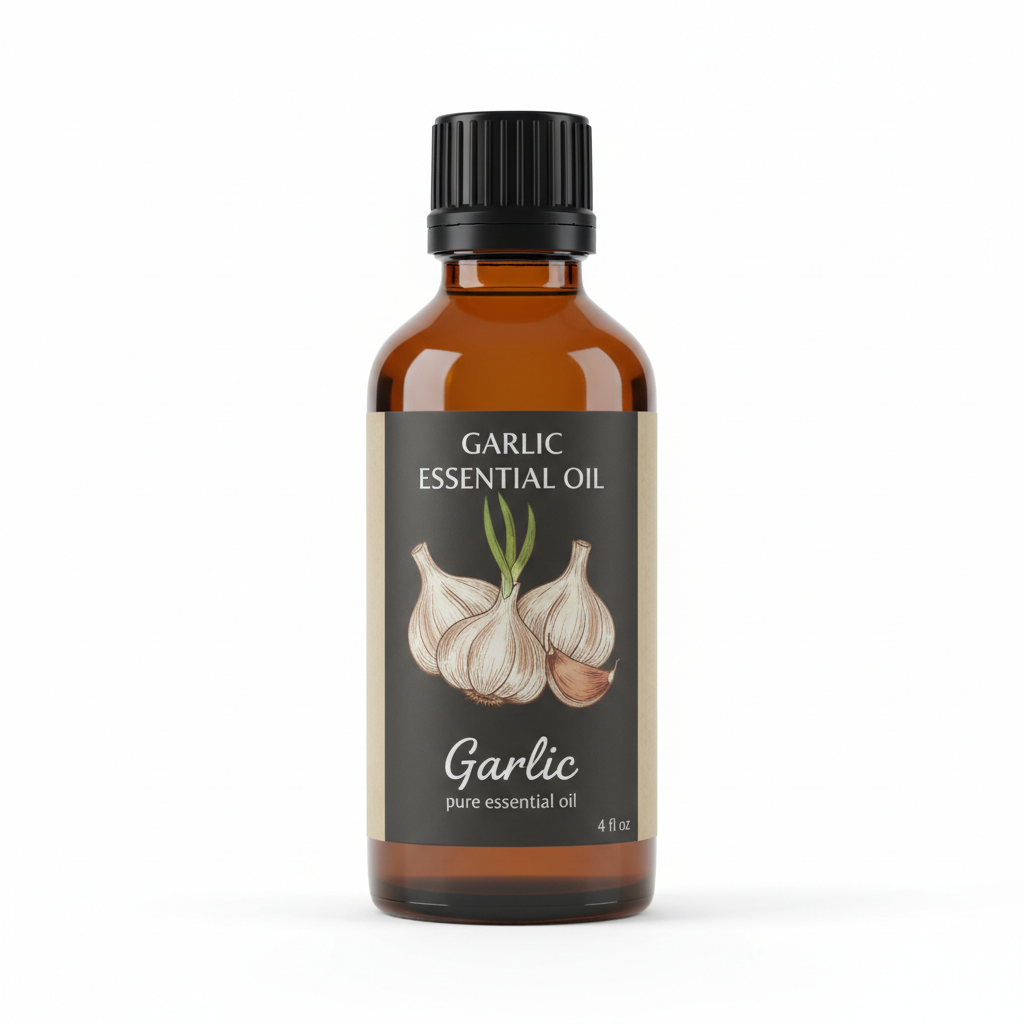
Garlic Essential Oil
Our own Garlic Essential Oil, in sizes from 0.5 oz to bulk.
From $10.99
Shop Now →Start with the storage rule
The CDC lists chopped garlic in oil among foods linked to foodborne botulism, and gives a flat instruction for home cooks: refrigerate homemade oils made with garlic or herbs and throw them away after 4 days (Botulism Prevention). Penn State Extension explains why: garlic and herbs are low-acid, and submerging them in oil removes oxygen and lets Clostridium botulinum spores grow (How to Safely Make Infused Oils). University of Minnesota Extension adds dried chili flakes to the list of surfaces that can carry the spores (Chili oil and oil-based products, Stoll, University of Minnesota Extension).
None of those pages gives a longer window for fried garlic. So we treat any recipe that promises a long pantry life with some suspicion unless it cites a food-safety authority, and for a home jar we would follow the CDC's line.
What one popular recipe does
A well-known chili crisp recipe makes about 2 cups from 1 1/4 cups of grapeseed, avocado or vegetable oil, 1/2 cup of thinly sliced shallots, 8 large sliced garlic cloves, a cinnamon stick, 1 cup of crushed red pepper, and small amounts of maple syrup, tamari, ginger and salt. The oil simmers gently for about 25 minutes until the garlic and shallots are golden and crispy, not dark brown, then the crisp cools before everything goes into a jar, which keeps the aromatics crunchy (Easy Chili Crisp Recipe, Cooking For Peanuts). It gives no oil temperature, so go by colour.
Its own safety notes are in line with the extension pages: the garlic and shallots should be completely crispy, extra moisture encourages spoilage, and soft or under-fried pieces should never sit at room temperature. It keeps the jar in the fridge for up to 2 weeks, or freezes it. That is longer than the CDC's 4 days for homemade garlic oil, and the blog does not cite a test for it, so we would take the CDC number as the cautious one and ask a county extension office if you want a longer window.
Reading the pan by sight and sound
When the sliced garlic and shallots go into the warm oil, you will see tiny bubbles around each piece. As the moisture cooks out, the bubbling slows and gets quieter, and the slices turn from pale to gold. That quieting, together with the color, is your signal. The pieces keep cooking in the hot oil after the pan leaves the burner, so pull it when they look a shade lighter than you want. Dark brown is past the point of no return, and the bitterness shows up in every spoonful.
Making a smaller jar
A small batch is the sensible way to go. By simple arithmetic, 1 1/4 cups of oil is about 296 ml (a cup is 236.6 ml), so a half batch is 5/8 cup of oil, 1/4 cup of shallots, 4 cloves and 1/2 cup of chili flakes. A smaller jar is used up inside the cold-storage window, and a smaller pan lets the slices brown evenly. A crowded pan produces both soft and scorched pieces, and the soft ones are what the recipe says to avoid.
Ways to enjoy a small jar
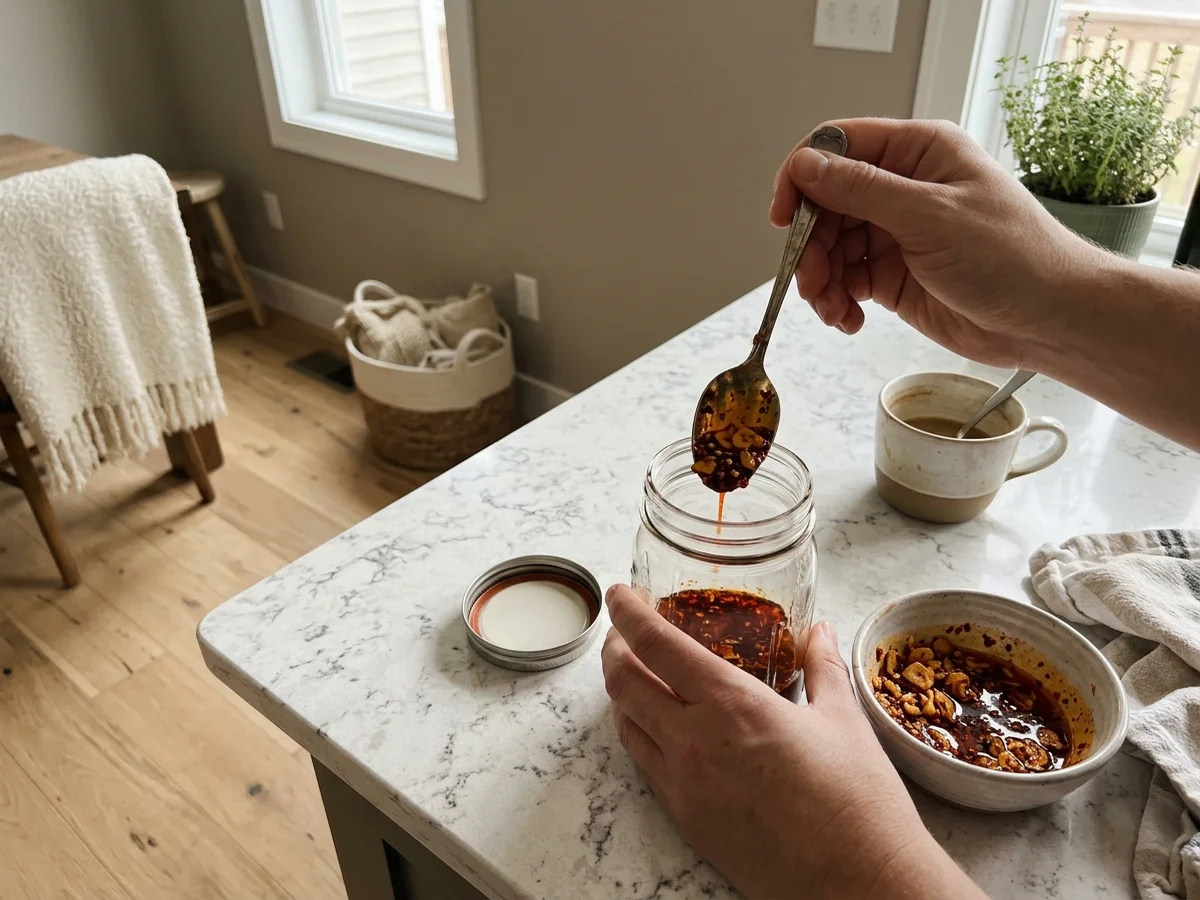
A little goes a long way. Spoon the crisp and a bit of the red oil over a fried egg, a bowl of plain rice, noodles or steamed greens, and the whole plate changes character. Use a clean, dry spoon each time and put the lid back on right away, so the jar is not left on the counter while dinner is served.
If you want to sell it
Minnesota's extension service says oil-based products like this cannot be sold as cottage foods because they need refrigeration for safety. It suggests two routes that do fit: a dry chili seasoning mix with instructions for making the oil at home, or an acidified hot sauce with a pH of 4.6 or lower. Rules vary by state, so check with your own food-safety agency before you sell anything.
Where our oil fits
Our garlic essential oil is for the workbench: soap and candle experiments in a trace, scent studies on a blotter strip. It is not for internal use and not food-labelled, so it stays out of the jar. Poison control sources explain that some essential oils are poisonous when swallowed (Essential oils: Poisonous when misused). For garlic flavor, use cloves, or a product sold as a food. Our flavoring article explains the difference, the infused oil method covers a plainer jar, and the mayu article is for darker, toastier tastes. Our storage article has the longer story on keeping things safe.
The crunch is the best part, and it is also the part that does not last, which is one more reason a small jar suits this recipe.
Make a small jar, keep it cold, and enjoy it quickly. That is the whole secret to a condiment you will want to finish.
Garlic Essential Oil
Garlic Essential Oil from our own shop, in sizes from 0.5 oz to bulk.
From $10.99
Shop Now →Sources & Further Reading
- Botulism Prevention, CDC
- How to Safely Make Infused Oils, Penn State Extension
- Chili oil and oil-based products, University of Minnesota Extension
- Easy Chili Crisp Recipe, Cooking For Peanuts
- Essential oils: Poisonous when misused, Poison Control