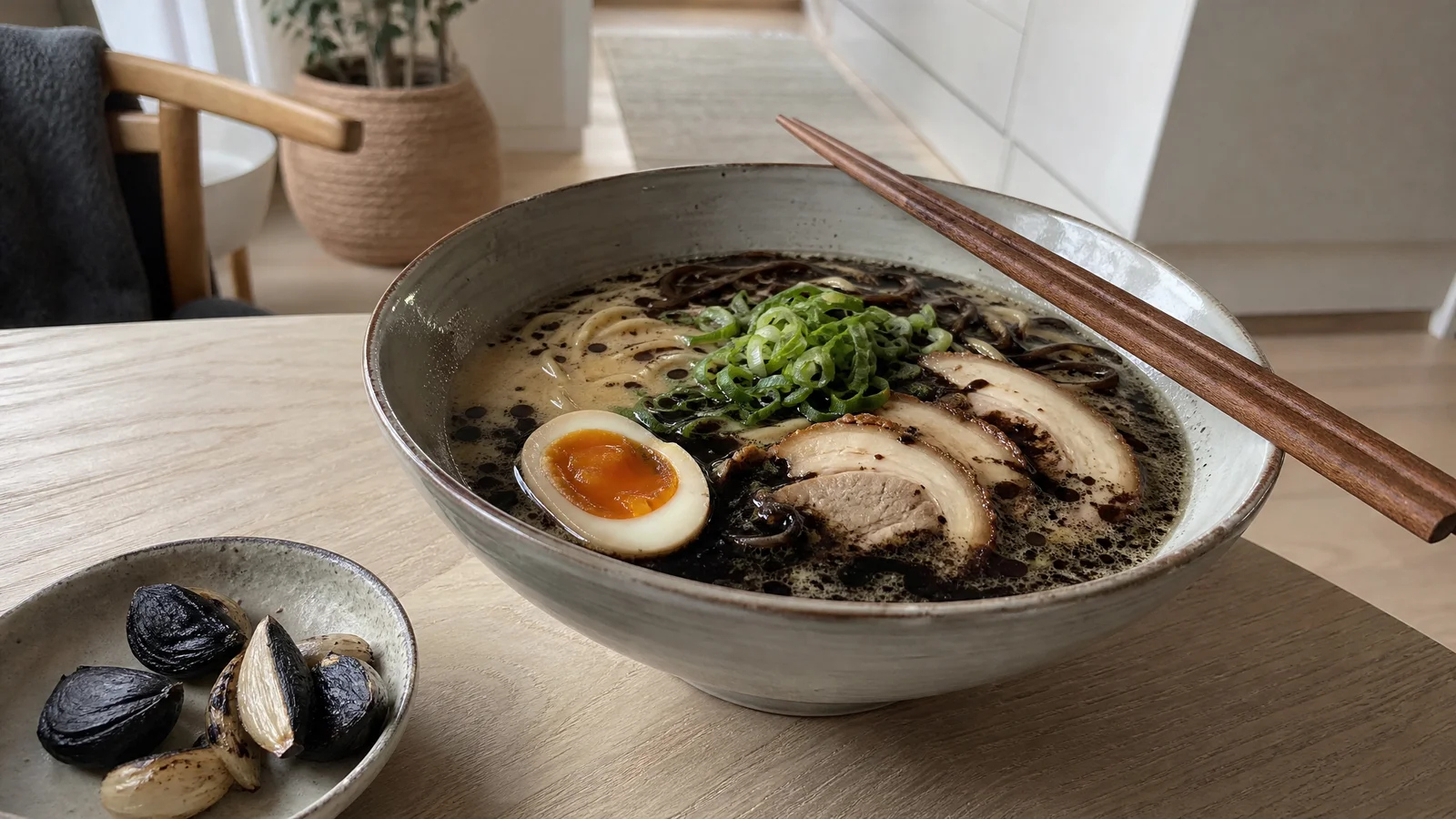
Mayu: How Black Garlic Oil Finishes a Ramen Bowl
The best ramen shops finish a bowl with a spoonful of something black and glossy that smells deeply of toasted garlic. That is mayu, and the colour comes from a careful trip to the edge of burnt. It is a kitchen preparation made from cloves and fat, and it has nothing to do with garlic essential oil, which does not belong in food. Here is how a published recipe builds it, and the one habit that decides whether a jar is safe to keep.
Garlic Essential Oil
Our own Garlic Essential Oil, in sizes from 0.5 oz to bulk.
From $10.99
Shop Now →One recipe, step by step
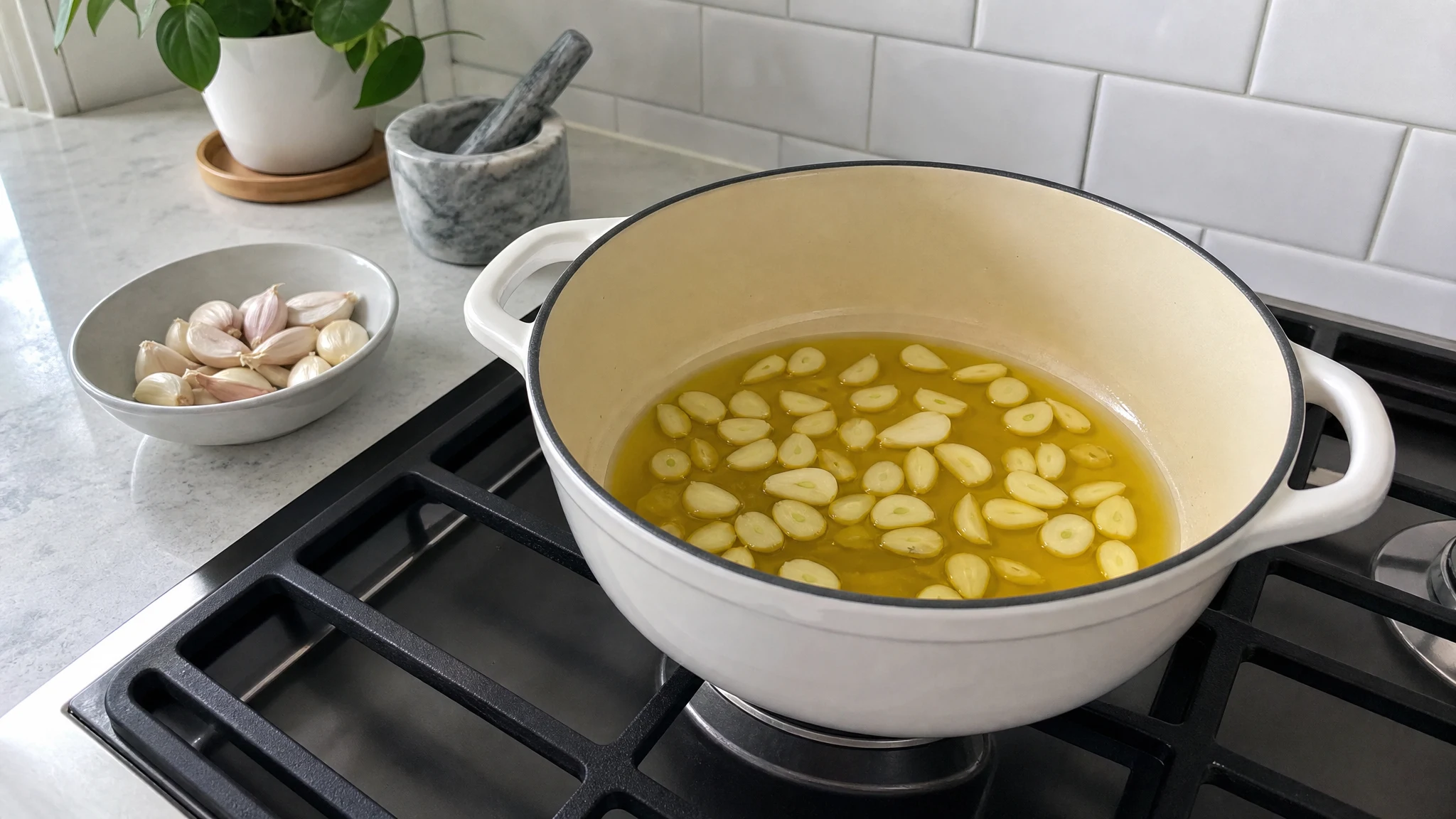
The Kumamoto-style recipe we looked at starts with 100 g of sliced garlic and 100 g of pork lard (Black Garlic Oil Tonkotsu Ramen (Kumamoto Style), Ramen Kaonashi). The lard melts on low heat, the garlic goes in, and the cook lifts out portions along the way: about a quarter when the slices are golden, another quarter when they are darker brown, and the rest just before they would burn. Everything is then ground together in a mortar, with a little of the burnt garlic from the pan, until the oil turns black.
The page does not explain the staging, so here is our reading of it. Pulling garlic out at three points leaves you with three stages of toasting, from pale and sweet to nearly bitter, and grinding them together gives a blend with layers, not a single note of char. The page's own tips point the same way: cook longer if the flavor is weak, and turn the heat down if it tastes bitter. It gives no times or temperatures for the stages, so watch colour and aroma, not a clock.
What to watch for at the pan
Garlic slices change fast, so use a light-colored, heavy pan where you can see the color. You will notice the slices go from white to pale gold, then amber, then brown, and the smell tells the same story: sweet and toasty first, then nutty, then sharp at the edge. When the aroma turns sharp, that is your cue to lift the pan or turn down the heat, which matches the recipe's own bitterness tip. Keep a spoon and a small plate ready, so each portion comes out the moment it is ready.
Scaling it down
The recipe is one part garlic to one part fat by weight, so a smaller batch is simple arithmetic.
| Batch | Sliced garlic | Fat |
|---|---|---|
| As published | 100 g | 100 g |
| Half | 50 g | 50 g |
| Quarter | 25 g | 25 g |
A quarter batch is a good size for a first try, and also the better choice for storage reasons below. Smaller batches leave less room between stages, so keep the heat low and stay close to the pan. Many home cooks use a neutral vegetable oil in place of lard; the source did not try that, but the ratio of garlic to fat is what matters for how much garlic you are frying.
Using the jar
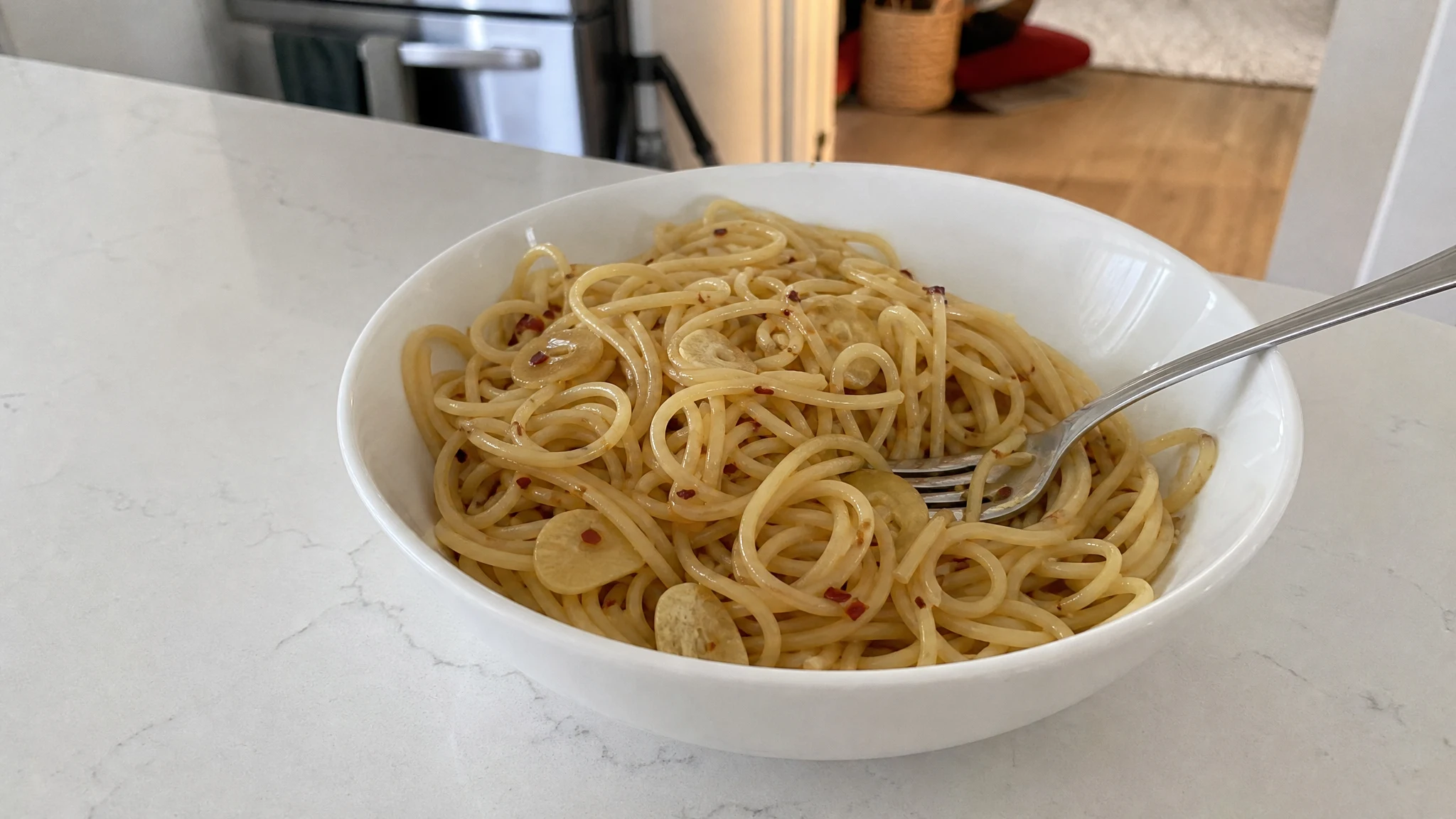
Mayu is a finishing touch, so think of it as a drizzle rather than a pour. A small spoonful swirled across the top of a hot bowl leaves a dark, glossy streak, and the smell reaches you before the first sip. It is also lovely over a plain bowl of rice. A quarter batch makes enough for several bowls, which is another reason to start small.
Why you keep it cold
Frying garlic until it is black is lovely for flavour, but no source we found says it makes garlic in oil shelf-stable. Penn State Extension explains that garlic and herbs are low-acid, that oil creates an oxygen-free setting that encourages Clostridium botulinum spores to grow at room temperature, and that those spores can make toxin (How to Safely Make Infused Oils). Its only mention of heat is warming the oil to 140 F for 5 minutes to speed an infusion, which is not the same as frying.
The CDC puts the everyday rule plainly: refrigerate homemade oils made with garlic or herbs, and throw them away after 4 days (Botulism Prevention). We would follow it. Make what the week will use, keep the jar in the fridge, and discard it on day 4 or if it looks or smells off. Anyone planning to jar mayu as gifts or to sell it is making a food-safety decision that belongs with a state food-safety agency or a county extension office.
If you like to cook with friends, mayu is a fun one to make together, since someone can watch the pan while someone else lifts out the portions. Have a tray of small dishes ready, because the garlic will not wait for you to look for a plate.
Keep the bottles straight
Three different things go by "black garlic oil". Mayu is fried garlic and fat. Fermented black garlic is an aged ingredient. And garlic essential oil is a distillate that we sell for aroma and workshop work; it is not for internal use, and poison control sources warn that some essential oils are poisonous when swallowed (Essential oils: Poisonous when misused). For the stove, reach for cloves. For the bench, see our kitchen versus workshop guide and the infused oil comparison.
If your appetite for crunchy garlic runs in the direction of a condiment, our chili oil article walks through that jar, and the storage article covers keeping things safely.
A spoonful of black garlic oil is one of ramen's great small pleasures, and it rewards patience at the stove more than any special ingredient.
Garlic Essential Oil
Garlic Essential Oil from our own shop, in sizes from 0.5 oz to bulk.
From $10.99
Shop Now →Sources & Further Reading
- Black Garlic Oil Tonkotsu Ramen (Kumamoto Style), Ramen Kaonashi
- How to Safely Make Infused Oils, Penn State Extension
- Botulism Prevention, CDC
- Essential oils: Poisonous when misused, Poison Control