Aglio e Olio: Slice, Stop at Golden, Save the Water
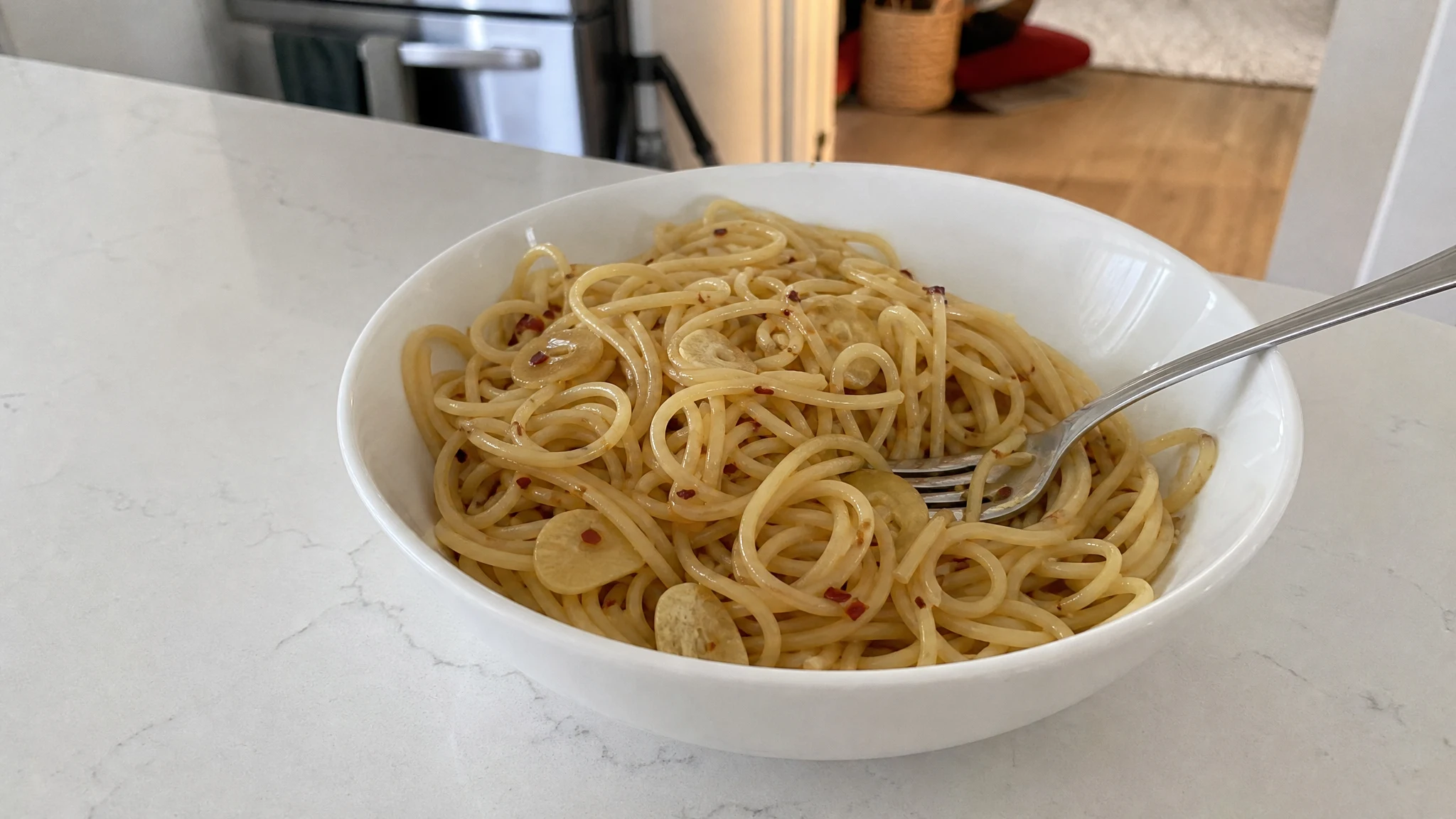
Aglio e olio is one of those dishes that looks like nothing and tastes like everything. Spaghetti, garlic, olive oil, a little chili, and a splash of the water the pasta cooked in. With so little in the pan, the three choices you make along the way are the whole recipe.
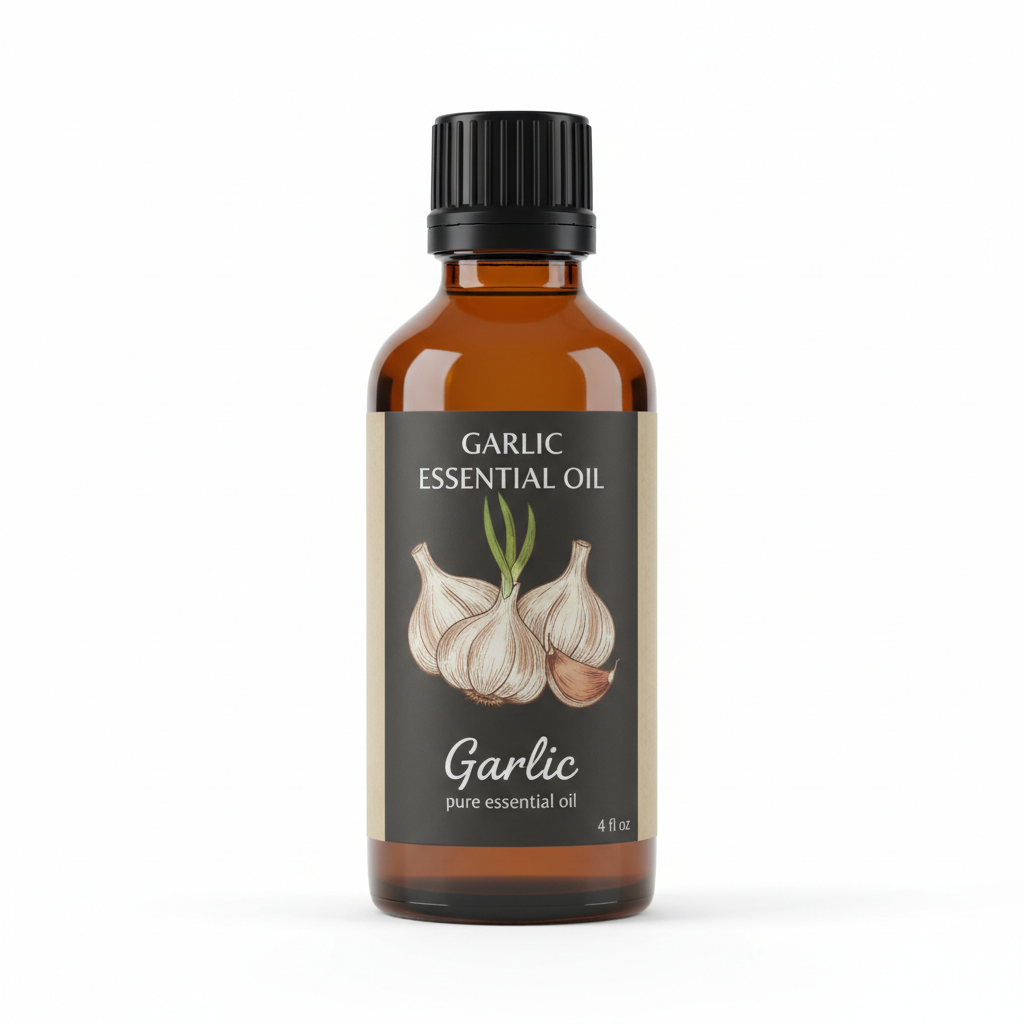
Garlic Essential Oil
Our own Garlic Essential Oil, in sizes from 0.5 oz to bulk.
From $10.99
Shop Now →Slice it, do not mince it
A widely shared version of the dish (Spaghetti Aglio e Olio, Damn Delicious) uses four cloves for eight ounces of spaghetti and says to slice them thinly, noting that slices taste sweet and nutty while minced garlic tastes harsher.
There is chemistry behind that cook's instinct. When garlic is crushed or chopped, an enzyme called alliinase is released and starts a chain of reactions that forms allicin and then a set of sulfur compounds. The more cell damage, the more of that has happened before the garlic ever reaches the pan. The same review notes that heating denatures alliinase, which tones down garlic's odor (Garlic and onions: Their cancer prevention properties, Nicastro, Ross and Milner, 2015). Reasoning from that, thin slices going into warm oil have seen less damage before the heat reaches them, while a minced clove has done much more of its reacting. The review does not compare slicing with mincing, so take that as a sensible reading of the chemistry rather than a measurement.
Set up the kitchen before the pan gets hot
This is a dish that moves in minutes, so the work happens before the flame. Put the sliced garlic on the board, the chili flakes in a small bowl, the parsley chopped and the cheese within reach. Set a colander in the sink and a mug beside the pot, ready to catch the pasta water. Once the oil is warm there is no time to hunt through drawers, and a calm start is half the pleasure of cooking it.
Stop at golden
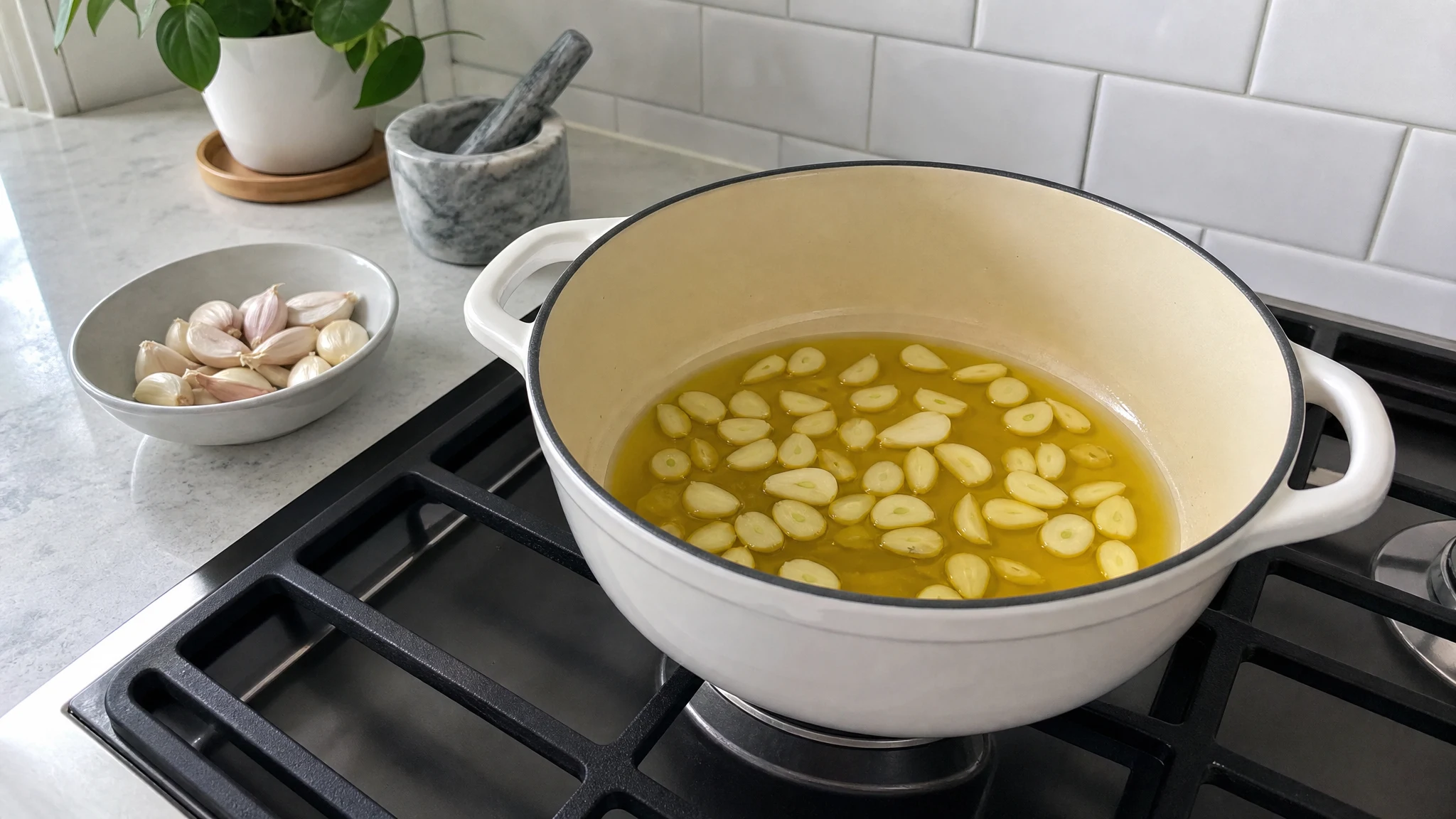
The recipe puts the garlic and red pepper flakes into four tablespoons of olive oil over medium heat for two to three minutes, stirring, until golden, and warns that burnt garlic turns bitter. That short window is the real lesson. Have the drained pasta and the cup of reserved water within reach before the garlic goes in, and the parsley chopped before the pan is hot. If the slices go dark, it is kinder to start again than to rescue the oil, because bitterness only dilutes with more oil, and that changes the dish.
Respect the pasta water
This is the step home cooks skip most often. The recipe reserves a cup of the cooking water before draining, then adds half a cup with the pasta and cheese over medium-high heat, stirring constantly and adding more a tablespoon at a time until the sauce turns glossy. The starch in that water helps oil and water cling together and coat the pasta. The recipe also salts the cooking water generously, at roughly a tablespoon and a half per pound of pasta, so the spaghetti is seasoned from the inside.
The recipe adds Parmesan a handful at a time and tops the plate with toasted breadcrumbs. Plenty of cooks leave both off, and since there is no single authority on the one true version, make it the way you like it. A bigger batch needs a wider pan so the garlic stays in a single layer.
What to watch for as the garlic cooks
Let your eyes and nose do the timing. Raw slices look pale and a little glossy. As they warm in the oil you will see tiny bubbles gather around each one, and the first edges turn a light straw color. The smell comes next: a sweet, toasty note that arrives before anything sharp. When that sweetness starts tipping toward something harsher, take the pan off the heat. Slices keep cooking in the hot oil for a few seconds after the burner is off, so it is better to stop a shade early than a shade late.
Which garlic goes in the pan
For this dish, use garlic cloves. Our garlic essential oil is an aromatic material, sold undiluted and not for internal use, so it has no place on a dinner plate. The National Capital Poison Center explains that some essential oils are poisonous when swallowed, and that anyone who has swallowed one should call 1-800-222-1222 (Essential oils: Poisonous when misused, National Capital Poison Center). Food law recognizes garlic oil as a flavoring agent, but 21 CFR 184.1317 asks that it meet the Food Chemicals Codex and be used at good manufacturing practice levels (21 CFR 184.1317, Garlic and its derivatives), which describes an ingredient made and documented for food. If you want a bigger garlic hit, stay with cloves or a food product labelled for the purpose, and ask a physician or pharmacist about anything to do with ingesting essential oils. Our flavoring article goes into more detail.
Leftovers and the pan oil
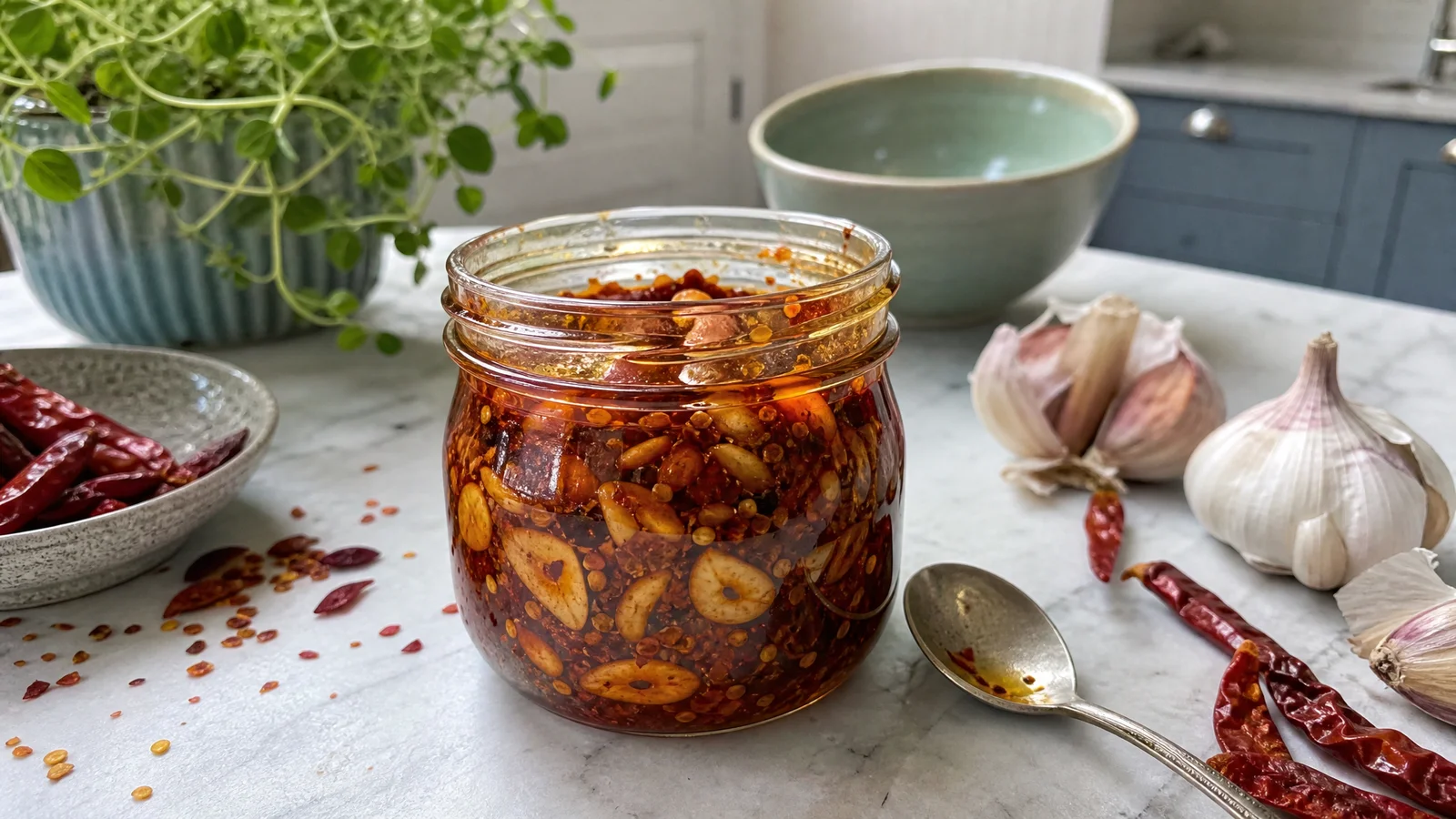
Aglio e olio is best eaten straight from the pan. What is worth knowing is that pouring leftover garlic oil from the skillet into a jar to keep it turns it into exactly the sort of homemade garlic oil the CDC says to refrigerate and discard after four days (Botulism Prevention, CDC). Our storage article explains why.
Serve it right away in warm bowls, with a little extra parsley on top. Aglio e olio does not wait well, and the glossy sauce is at its best in the first few minutes, so call everyone to the table before the pasta is drained.
For ingredients that flatter garlic beyond the chili and parsley, our pairings article is full of ideas, and the cooking and crafting guide sorts out which jobs belong to the kitchen and which to the workshop. Slice thin, stop at golden, and let the pasta water do the rest.
Garlic Essential Oil
Garlic Essential Oil from our own shop, in sizes from 0.5 oz to bulk.
From $10.99
Shop Now →Sources & Further Reading
- Damn Delicious. Spaghetti Aglio e Olio. damndelicious.net/wprm_print/spaghetti-aglio-e-olio
- Nicastro HL, Ross SA, Milner JA. Garlic and onions: Their cancer prevention properties. Cancer Prevention Research 2015;8(3):181-189. pmc.ncbi.nlm.nih.gov/articles/PMC4366009
- National Capital Poison Center. Essential oils: Poisonous when misused. poison.org/articles/essential-oils
- 21 CFR 184.1317, Garlic and its derivatives. law.cornell.edu/cfr/text/21/184.1317
- CDC. Botulism Prevention. cdc.gov/botulism/prevention