Garlic Spray for the Garden: What to Know Before You Mix
Garlic has a long reputation in vegetable beds, and it is easy to see why gardeners are drawn to it: it is cheap, it is already in the kitchen, and it smells like it means business. Before you reach for a spray bottle, though, it helps to know that a garlic spray and a bottle of garlic essential oil are two quite different things.
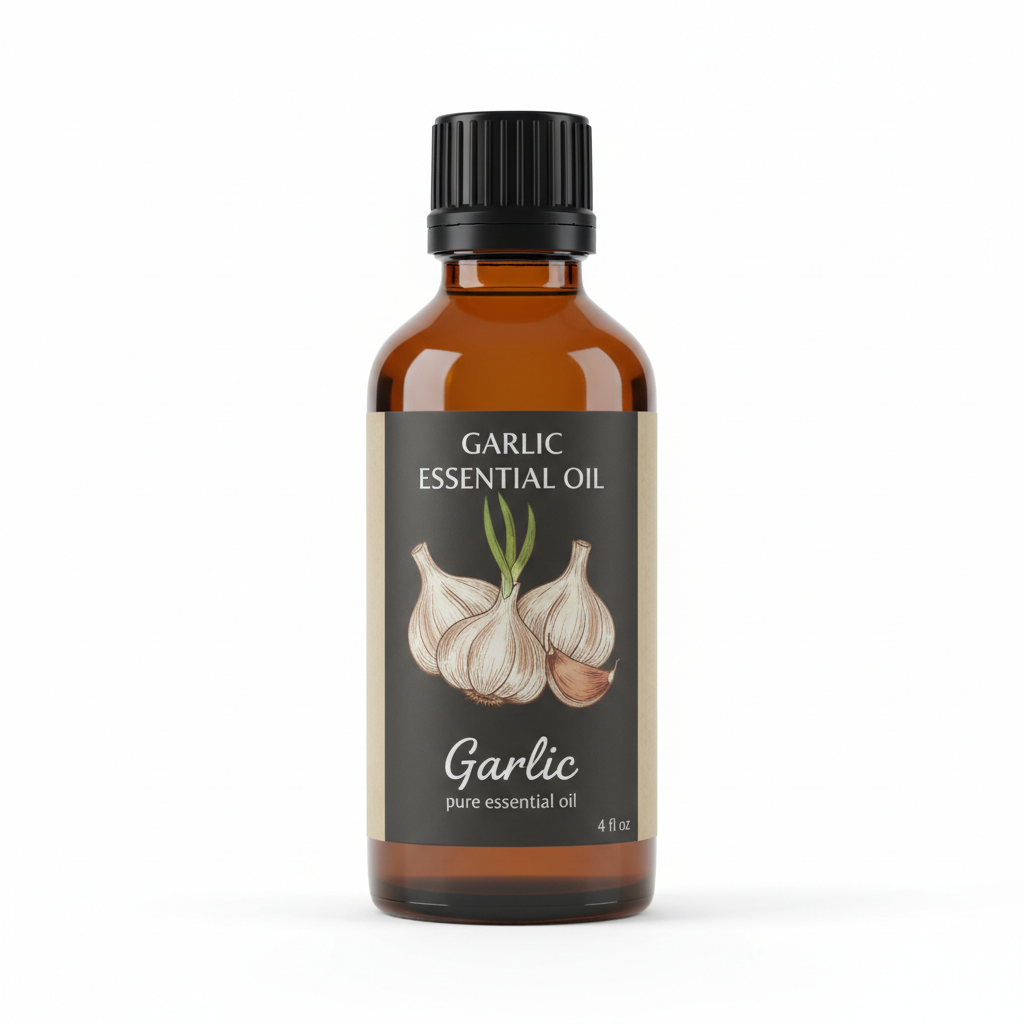
Garlic Essential Oil
Our own Garlic Essential Oil, in sizes from 0.5 oz to bulk.
From $10.99
Shop Now →Crushed cloves are one material, distilled oil is another
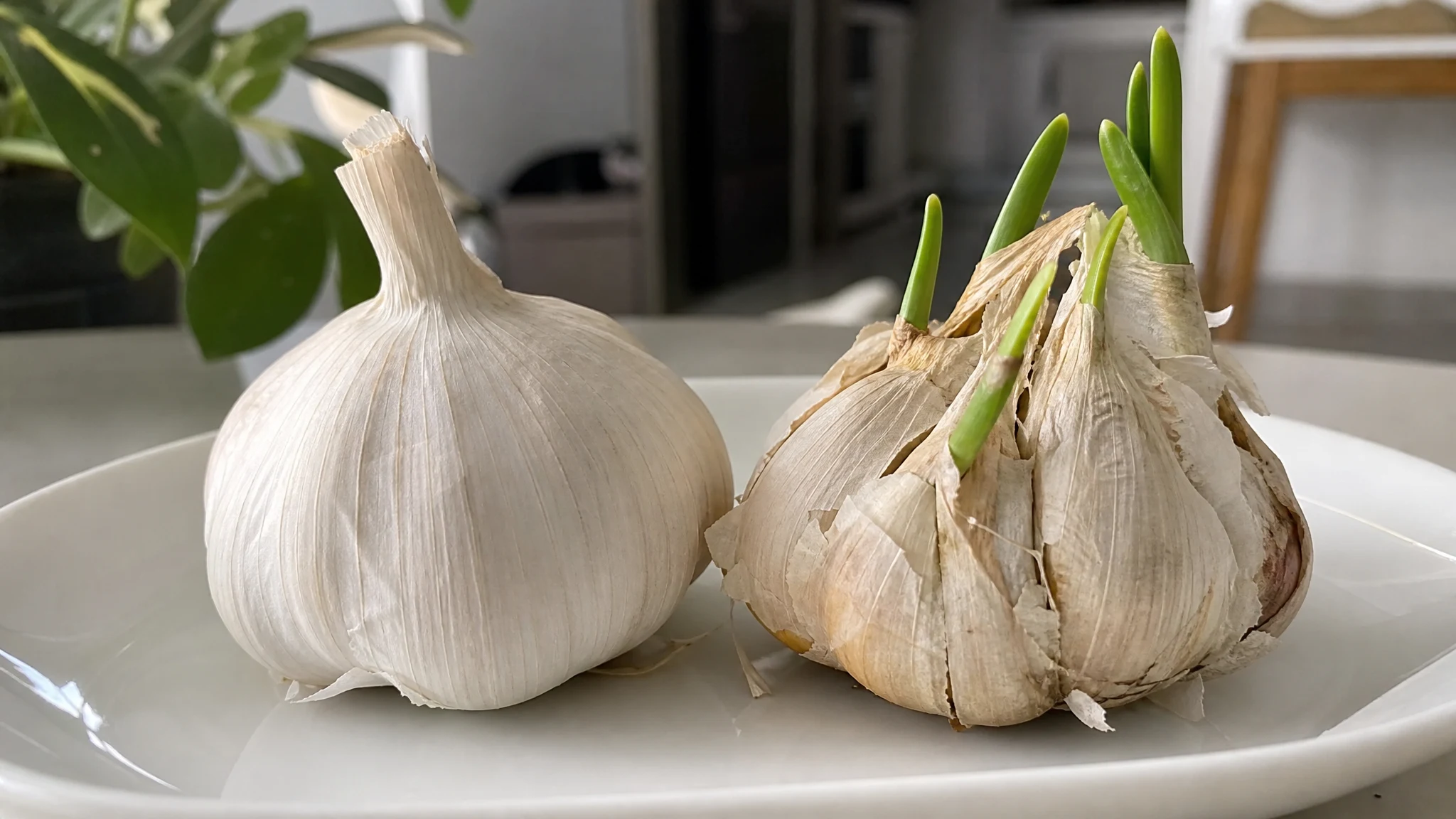
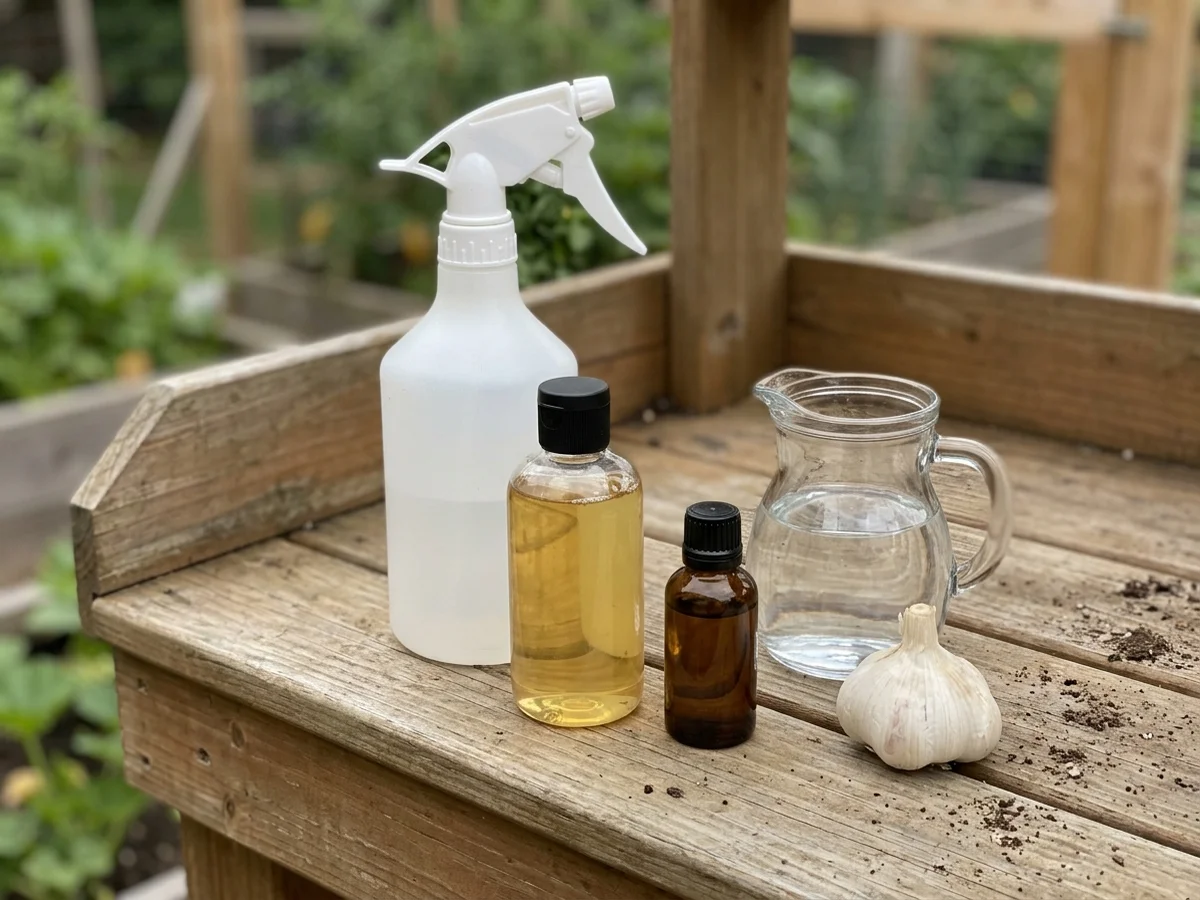
The traditional garden spray is made by crushing or blending cloves and steeping them in water. Crushing is the key step. It lets an enzyme called alliinase get to the garlic's sulfur compounds, which react to form allicin and then break down further into a family of sulfides (Nicastro, Ross and Milner, Cancer Prevention Research, 2015). That review is about nutrition, not gardens, but it explains why a freshly crushed clove behaves so differently from a bulb sitting whole in the pantry.
Our garlic essential oil is described on our product page as steam-distilled from crushed bulbs and sold undiluted. Distillation collects only the volatile part of the garlic. In a published comparison of three ways of distilling Spanish garlic bulbs, the industrial steam-distilled oil had no detectable allicin, and its main components were diallyl disulfide, allyl methyl trisulfide and diallyl trisulfide (Satyal et al., Foods, 2017). That was one sample from one origin, so it describes distilled garlic oil in general rather than ours. The takeaway is simple: a clove steep and a distillate are different mixtures, and what is said about one tells you little about the other.
Where we stand on pest control
We sell our garlic oil as an aromatic material for the workshop, and we make no pest claims for it. We do not recommend it for pest control, and we would rather say so plainly than leave you guessing. If you enjoy making your own garden sprays, we are glad to point you toward the people who can help you do it well: your county extension office and your state pesticide agency.
What gardeners are told to try first
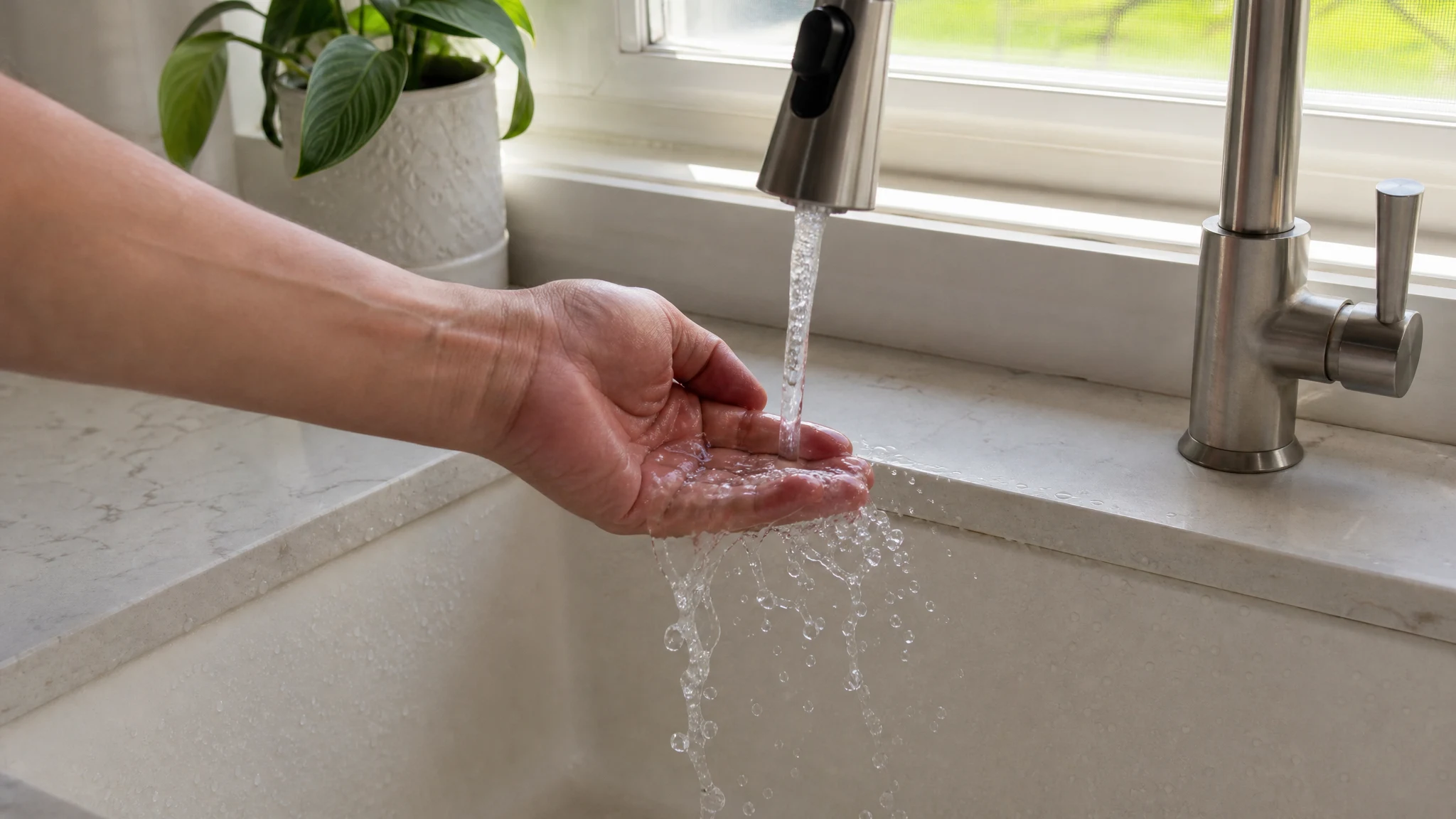
The University of California's pest note on aphids does not mention garlic at all. It suggests non-chemical steps first, including a strong stream of water to knock aphids off sturdy plants, and it calls insecticidal soaps and oils the best choices for most situations (UC IPM, Aphids). Those products are made and labelled for plants, which is a real advantage when you want to know what you are putting on your tomatoes.
The same page offers advice that is worth borrowing for any homemade spray that contains oil or soap. Do not use them on water-stressed plants or when the temperature is above 90 F, and test on a portion of the foliage several days before treating the whole plant, because some plants are sensitive. Our own suggestion, reasoned from that advice, is to hold a homemade mix to the same standard. If you want the aphid story in more detail, we have a separate article on it.
Gardeners are practical people, and it is natural to want a quick answer about what is allowed. The short version is that rules differ by state and by how a product is described, which is why a phone call to a county extension office is so valuable. They know the local pests, the local weather and the local rules, and they tend to be glad to be asked.
A word about the rules
US pesticide law treats a product sold with pest claims as a pesticide. The federal exemption for so-called minimum risk products lists garlic oil as a permitted active ingredient (40 CFR 152.25(f)), but exemption depends on six conditions, covering ingredients, labelling, claims and more. EPA also notes that states may still require registration (Conditions for Minimum Risk Pesticides, EPA). We walk through the conditions in our minimum risk article. Whether a backyard spray you make for your own plants falls under any of it is a question for your state agency or extension office.
Walk your beds first
Before any spray bottle comes out, take a slow walk through the garden in the morning. Look beneath the leaves, check the stem tips and notice which plants look unhappy. A lot of garden trouble comes from watering, light or crowding, and a sprayer will not fix those. The extension suggestions above start with simple, hands-on steps for a reason.
If you do experiment
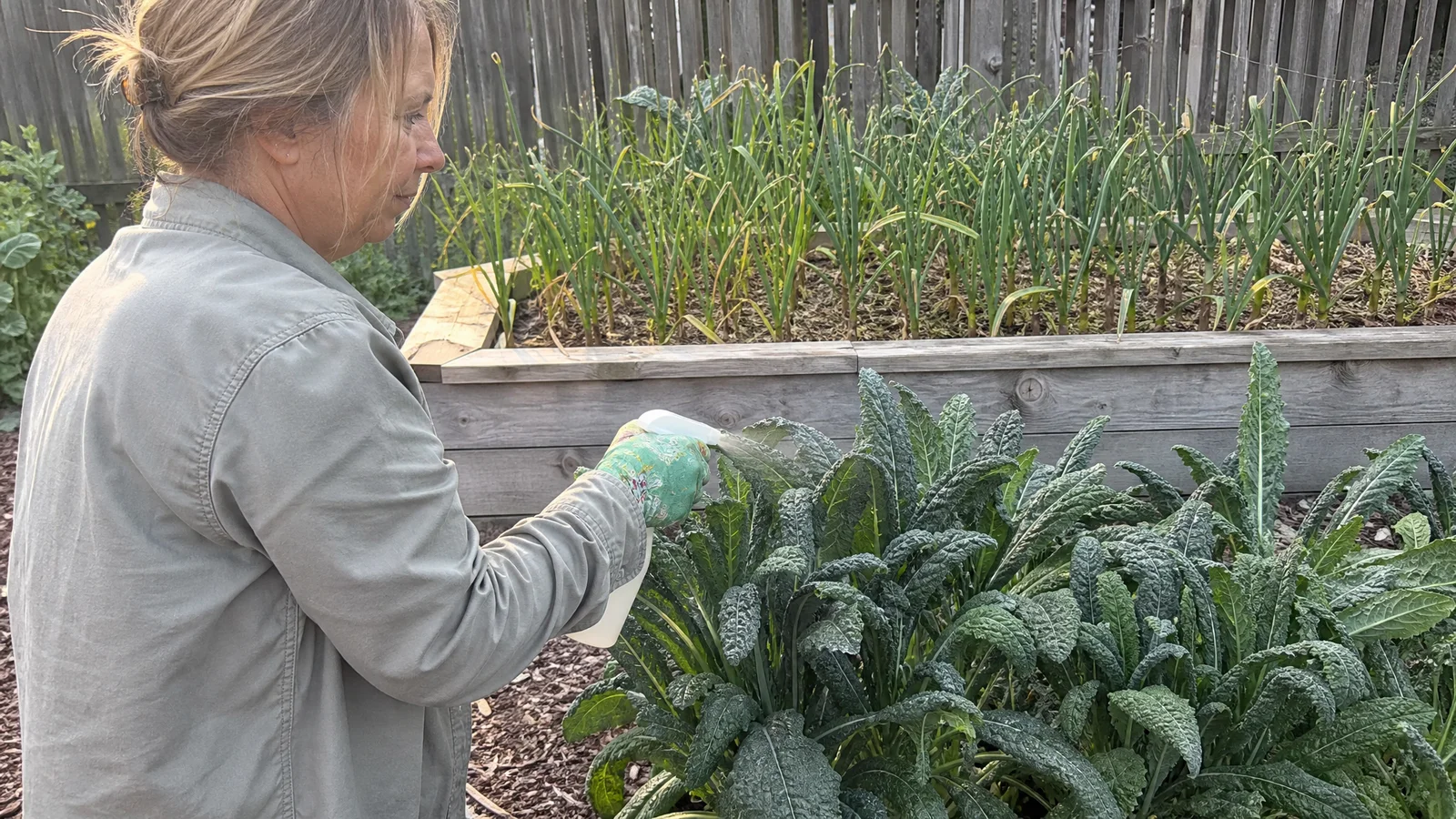
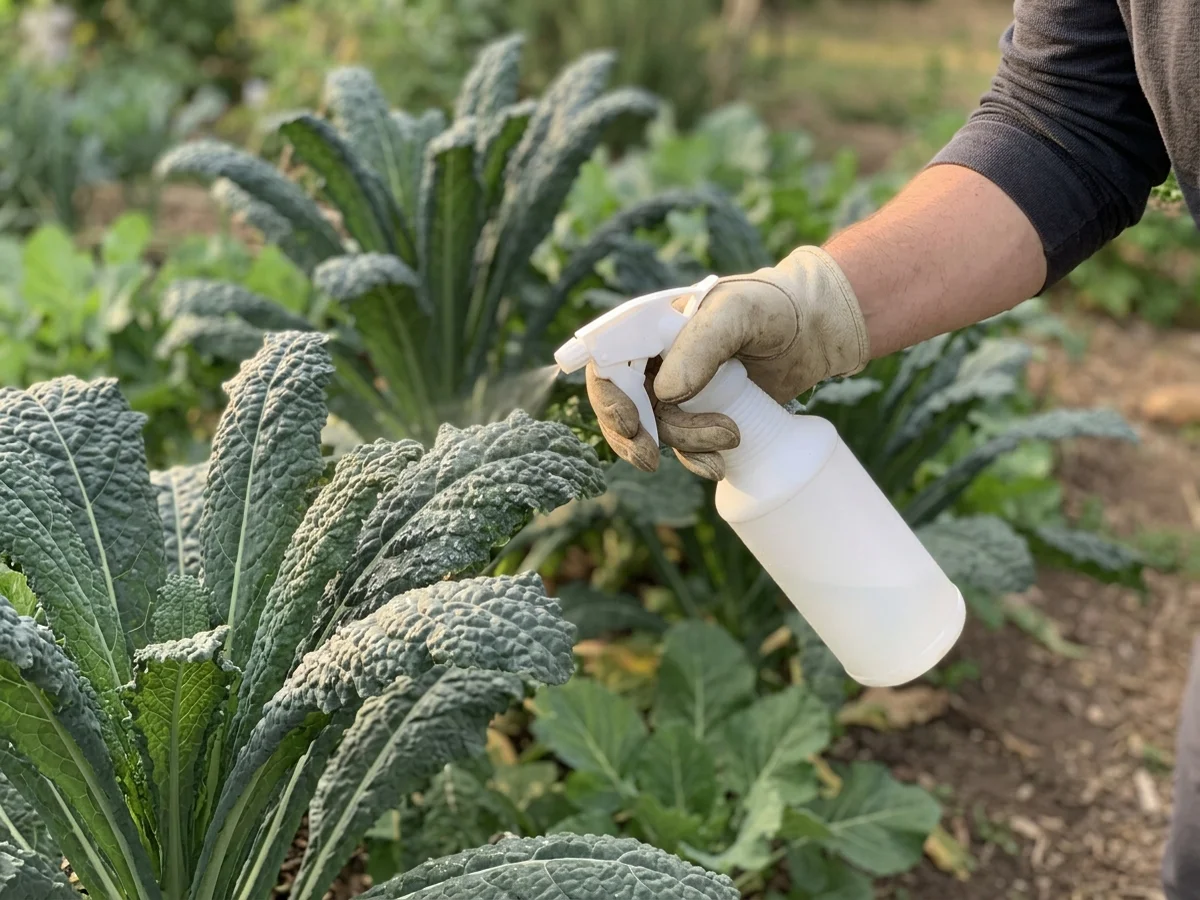
Change one thing at a time and keep an untreated plant or row for comparison, so you can tell the spray apart from the weather, the watering and the natural predators that show up on their own. Wear gloves, because a sprayer makes a fine mist that is easy to breathe in and get on skin, and our oil can irritate skin when used undiluted (more in the irritation article). Flowering plants raise their own question about visiting bees, which we cover here.
If you do make any mix at home, label the container clearly, keep it away from children and pets, and never reuse a food or drink bottle for it. A clear label is cheap insurance.
Start with water, watch what is actually on the leaves, and let a good garden do some of the work. The garlic can go back in the kitchen, where it has always been at its best.
Garlic Essential Oil
Garlic Essential Oil from our own shop, in sizes from 0.5 oz to bulk.
From $10.99
Shop Now →Sources & Further Reading
- Nicastro HL, Ross SA, Milner JA. Garlic and onions: Their cancer prevention properties. Cancer Prevention Research 2015;8(3):181-189. pmc.ncbi.nlm.nih.gov/articles/PMC4366009
- Satyal P, Craft JD, Dosoky NS, Setzer WN. The Chemical Compositions of the Volatile Oils of Garlic (Allium sativum) and Wild Garlic (Allium vineale). Foods 2017;6(8):63. pmc.ncbi.nlm.nih.gov/articles/PMC5575638
- UC IPM. Aphids. ipm.ucanr.edu/PMG/PESTNOTES/pn7404.html
- 40 CFR 152.25(f). law.cornell.edu/cfr/text/40/152.25
- US EPA. Conditions for Minimum Risk Pesticides. epa.gov/minimum-risk-pesticides/conditions-minimum-risk-pesticides