How to Store Garlic Oil: Essential Oil vs Cooking Oil
"Garlic oil" can mean two bottles that have almost nothing in common. One is a concentrated aroma material that slowly changes as it meets air. The other is a jar of cooking oil with garlic in it, which is food and needs food rules. Before you decide where either one lives, it helps to know which you are holding.
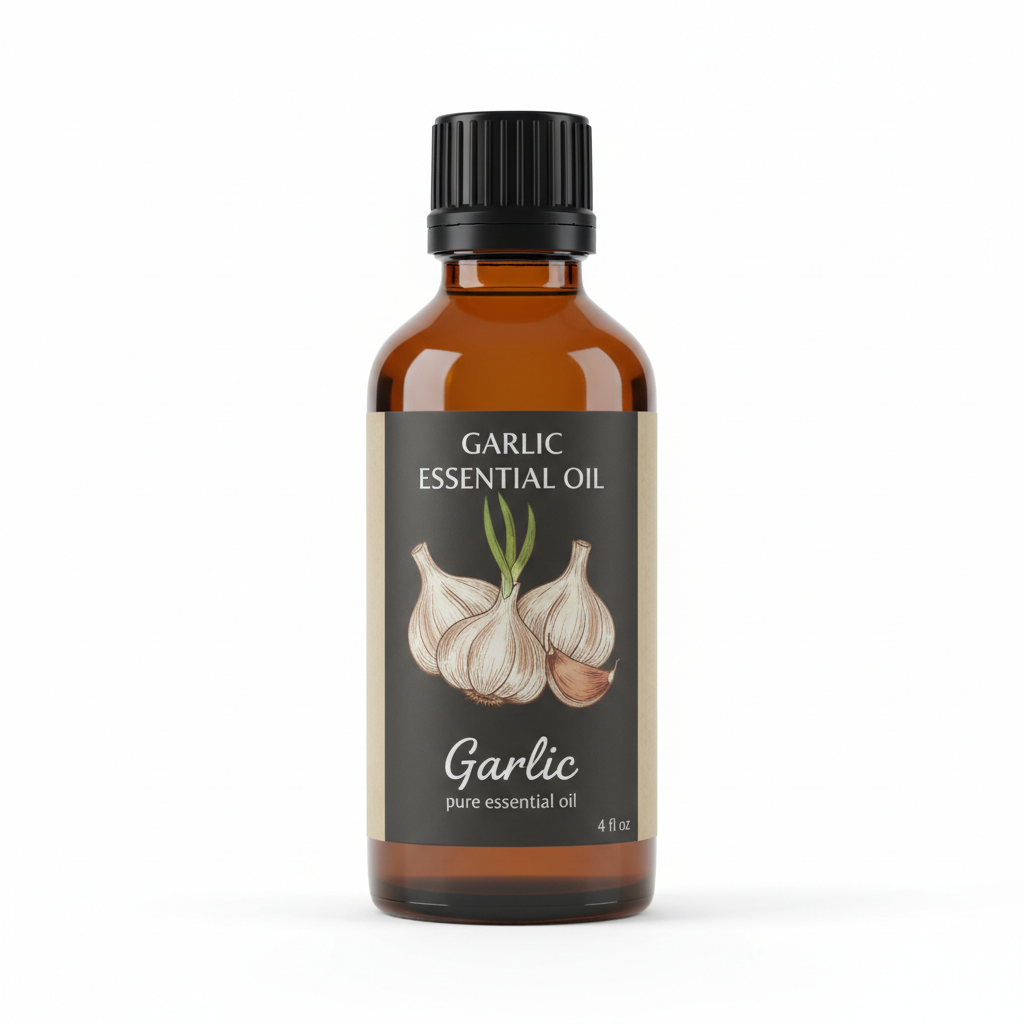
Garlic Essential Oil
Our own Garlic Essential Oil, in sizes from 0.5 oz to bulk.
From $10.99
Shop Now →The essential oil: cool, dark, capped
We recommend keeping our garlic essential oil tightly capped in a cool, dark place, away from other aromatics, and we describe its keeping time as typically 2 to 3 years under those conditions. It comes in amber glass, which does part of the work by cutting down light. The rest is up to the shelf you choose: a cupboard, not a windowsill, and not next to the stove.
The reasoning is the same one the Tisserand Institute gives for essential oils in general. Heat, light, moisture and air all push an oil toward oxidation, and the more air in a bottle, the faster that happens (Tisserand Institute, oxidation). That is why we suggest decanting a working amount into a small airtight bottle if you buy one of our larger sizes. The big container stays sealed and rarely sees fresh air, and the small one gets used up. Our guide to buying garlic oil in bulk covers that in more detail. The same source says refrigeration can roughly double an oil's useful life, and a companion piece suggests a refrigerator as one good option for a cool, dark spot (Tisserand Institute, keeping oils cool). Both are general guidance for essential oils rather than measurements on garlic.
A few habits follow from that, and they are our practical conclusions rather than findings:
- If you keep a bottle in the fridge, let it reach room temperature before opening so condensation does not get inside.
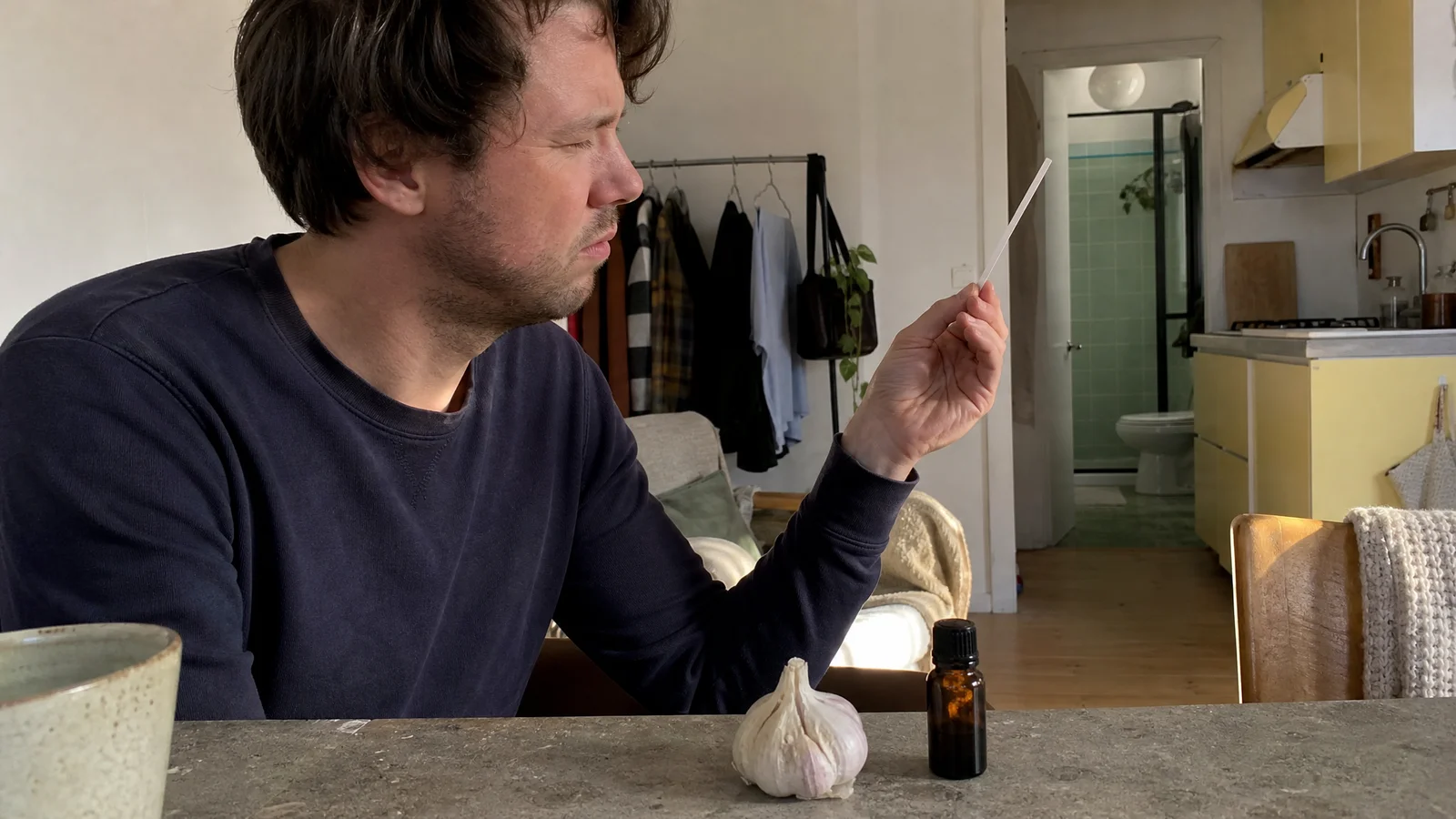
- Write the date you opened each bottle on it. A strong smell like garlic makes it hard to judge freshness by nose, so a date is more reliable.
- Keep it in a closed container of its own, labelled, and away from food. Our oil is not for internal use.
The Tisserand Institute also notes that oxidized oils are more likely to irritate skin. Since garlic oil is already one we suggest diluting well, an old bottle is a good one to retire rather than blend. For any lot you have questions about, including how old it is, ask us in writing through our contact page.
Setting up a shelf you will actually use
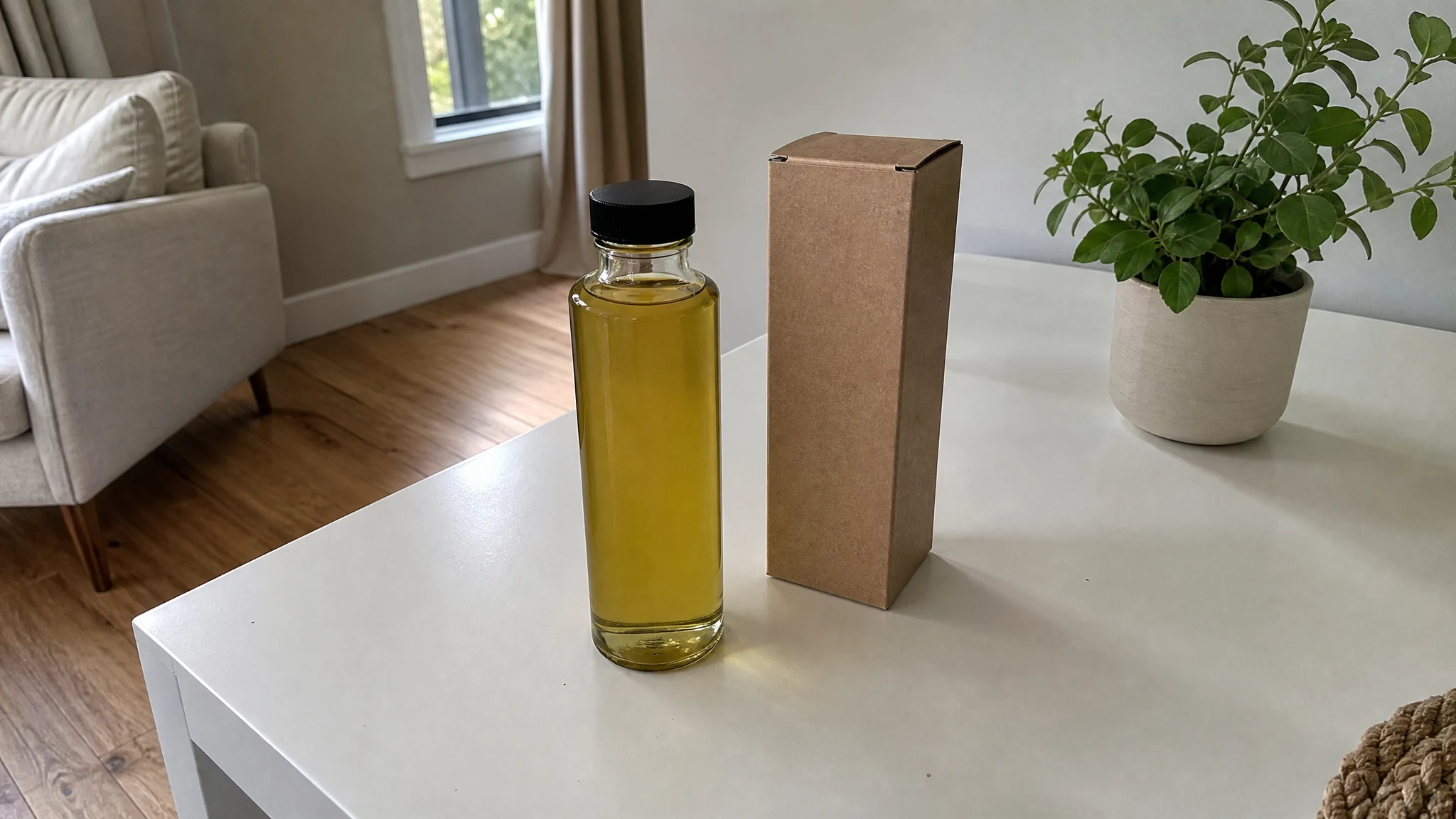
The best storage plan is the one you will follow every time, so keep it simple. Pick a drawer or cupboard that is out of direct light, away from the stove and the dishwasher, and a little off the beaten path. Keep the oil in its box or a small lidded container with the bottle upright. Put a strip of masking tape on the container and write the date you opened the bottle.
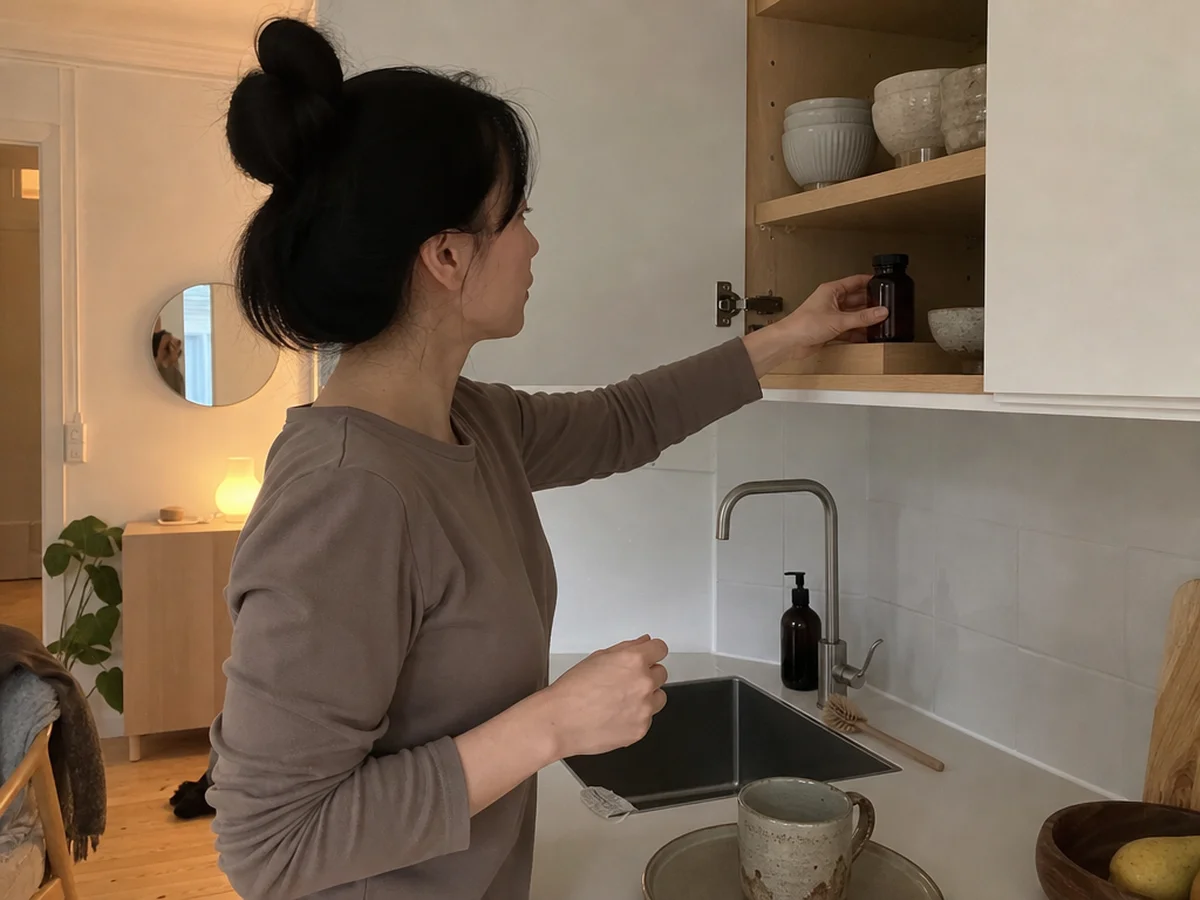
Because garlic is so strong, it is wise to keep it away from your other aromatics. Other oils, soaps and candles stored nearby can pick up the smell, and a lidded container helps to keep everything in its own lane. When you take the bottle out, set it on a tray, work quickly, wipe the neck and cap it again right away.
Out of reach, always
The National Capital Poison Center says essential oils must be locked up, out of the sight and reach of children and pets, and that swallowing one can be dangerous (Poison Control, essential oils). A high shelf or a lockable box is the simple answer. If you want to read more, we have separate guides on dogs and cats, on pregnancy and children, and on general safety.
Garlic in cooking oil: a different clock
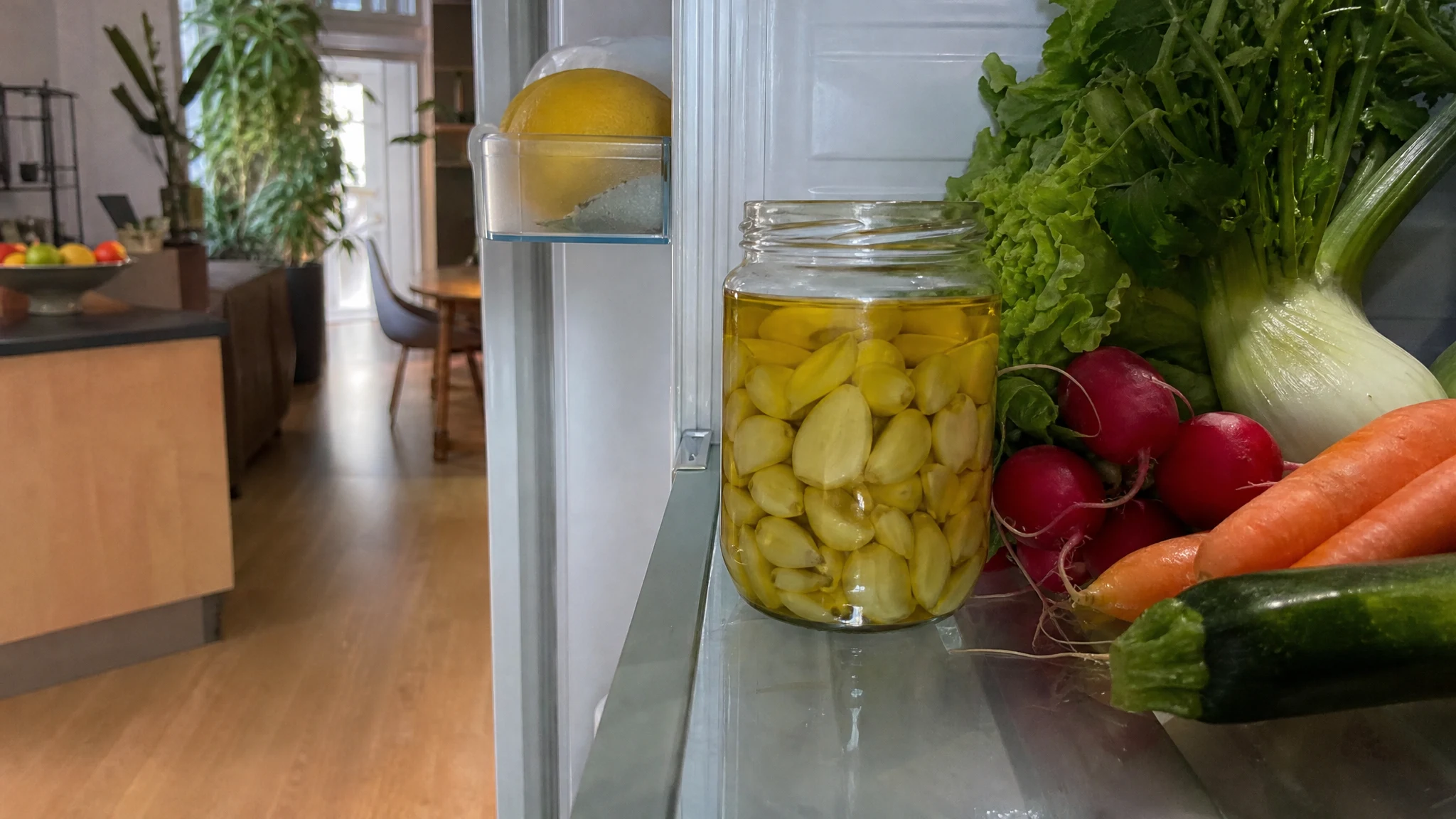
Garlic stirred into oil is a food, and its storage rule is blunt. The CDC lists chopped garlic in oil as a source of botulism and says to refrigerate homemade oils made with garlic or herbs and throw them away after 4 days. It adds that you cannot see, smell or taste the toxin (CDC, Botulism Prevention). Penn State Extension explains why: garlic and herbs are low in acid, and oil around them creates an oxygen free setting that encourages spores to grow at room temperature (Penn State Extension, infused oils).
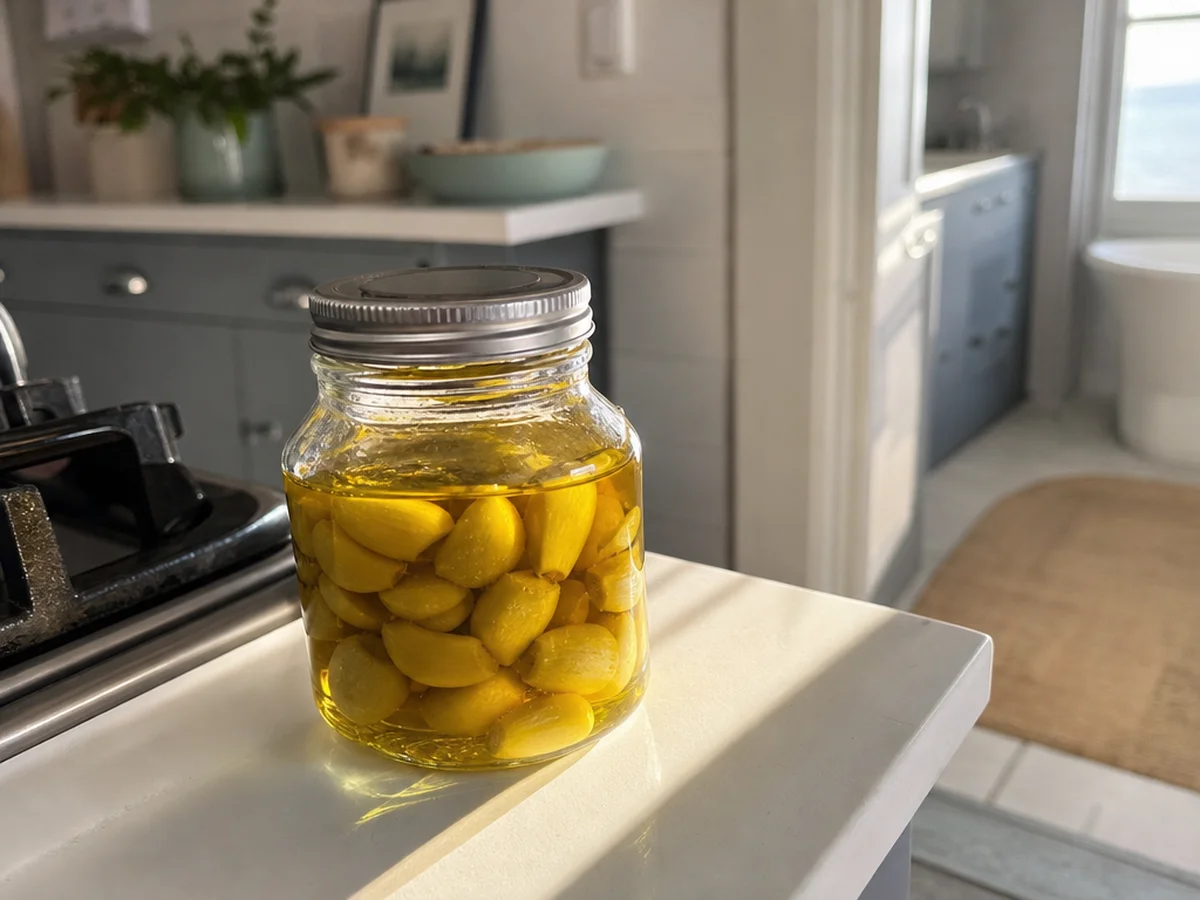
For a bottle of garlic oil you bought, the same extension page says to check the label for acidification or another microbial inhibitor before trusting a room temperature shelf. Even then, they say quality holds up better refrigerated. If you make your own, the extension page gives a full acidified method, and our infused oil article walks through it. The two kinds of bottle are compared side by side in our essential oil versus infused oil comparison.
A tidy shelf and a dated label make a bigger difference than any trick. When you look at a bottle and know what it is, when you opened it and where it belongs, a lot of small worries disappear. It is the kind of simple routine we like, and it keeps a strong oil behaving like a well-mannered guest.
If you are not sure how old a bottle is, trust your records over your nose. Garlic is so assertive that it can smell fine to you long after you would like to have retired it, which is exactly why the opening date on the label matters so much.
The short version fits on a sticky note: essential oil cool, dark, capped and locked up; food oil cold and short-lived.
Garlic Essential Oil
Garlic Essential Oil from our own shop, in sizes from 0.5 oz to bulk.
From $10.99
Shop Now →Sources & Further Reading
- Tisserand Institute. Is my bottle of essential oil oxidized or no longer good to use? tisserandinstitute.org/learn-more/oxidized
- Tisserand H, Tisserand Institute. Keep essential oils cool! tisserandinstitute.org/learn-more/keep-essential-oils-cool
- National Capital Poison Center. Essential oils. poison.org/articles/essential-oils
- CDC. Botulism prevention. cdc.gov/botulism/prevention
- Penn State Extension. How to safely make infused oils. extension.psu.edu/how-to-safely-make-infused-oils