Garlic History: From Central Asia to Every Kitchen
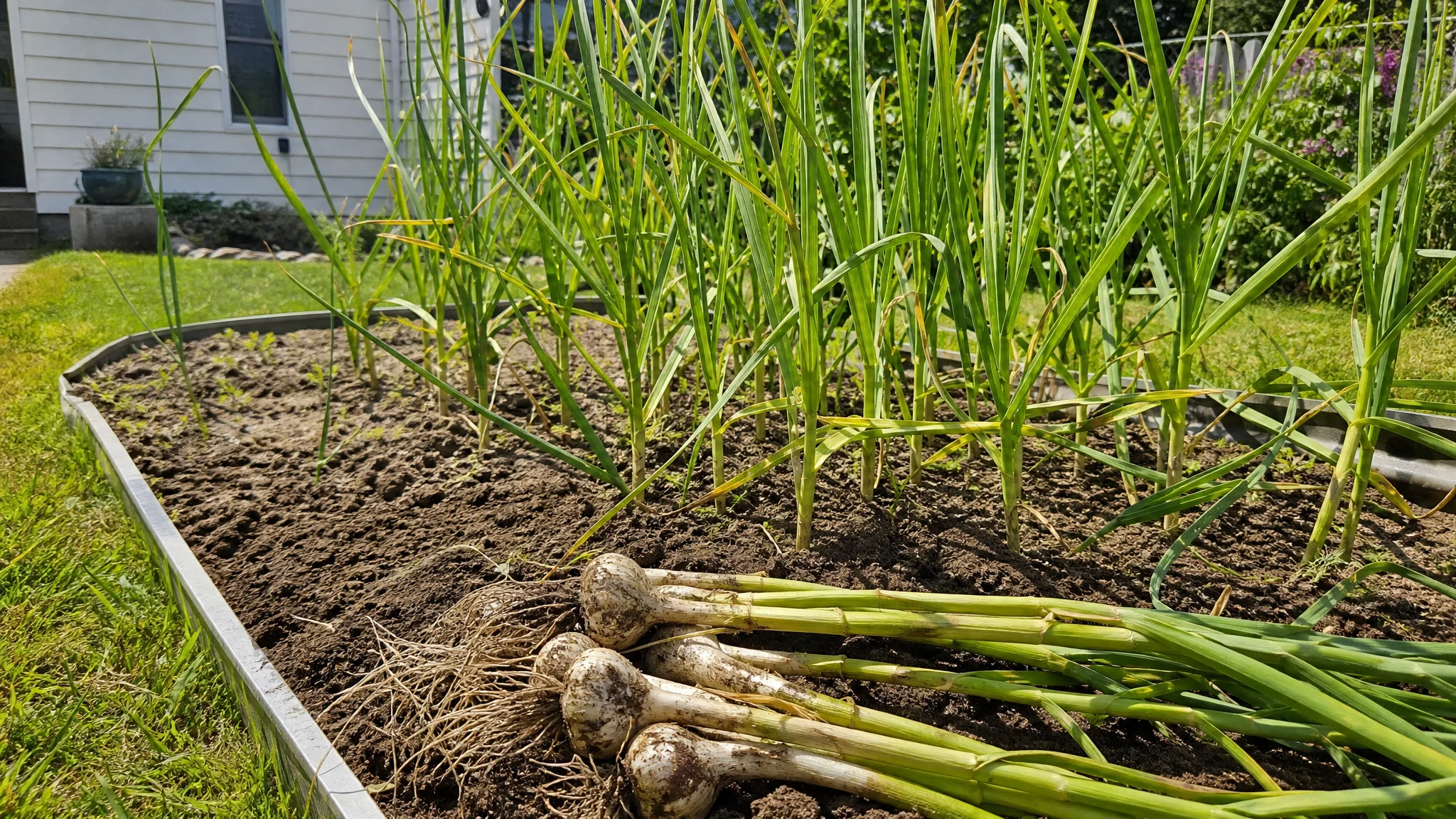
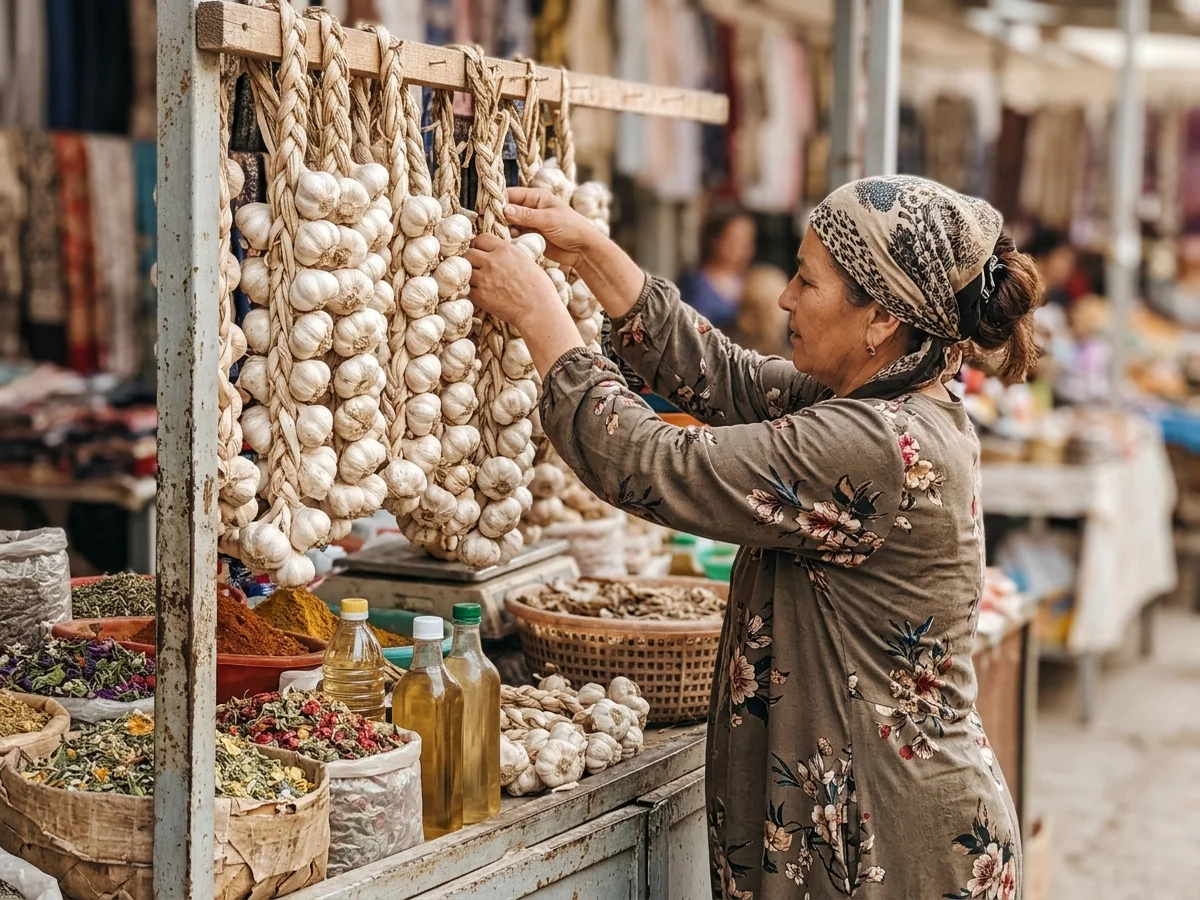
Every clove of garlic is a small clone of the plant it came from. That one fact explains a surprising amount of garlic's history: when a traveler carried cloves, that traveler carried the very same plant. It also explains why a crop grown from cloves rather than seed ended up on nearly every continent.
Garlic Essential Oil
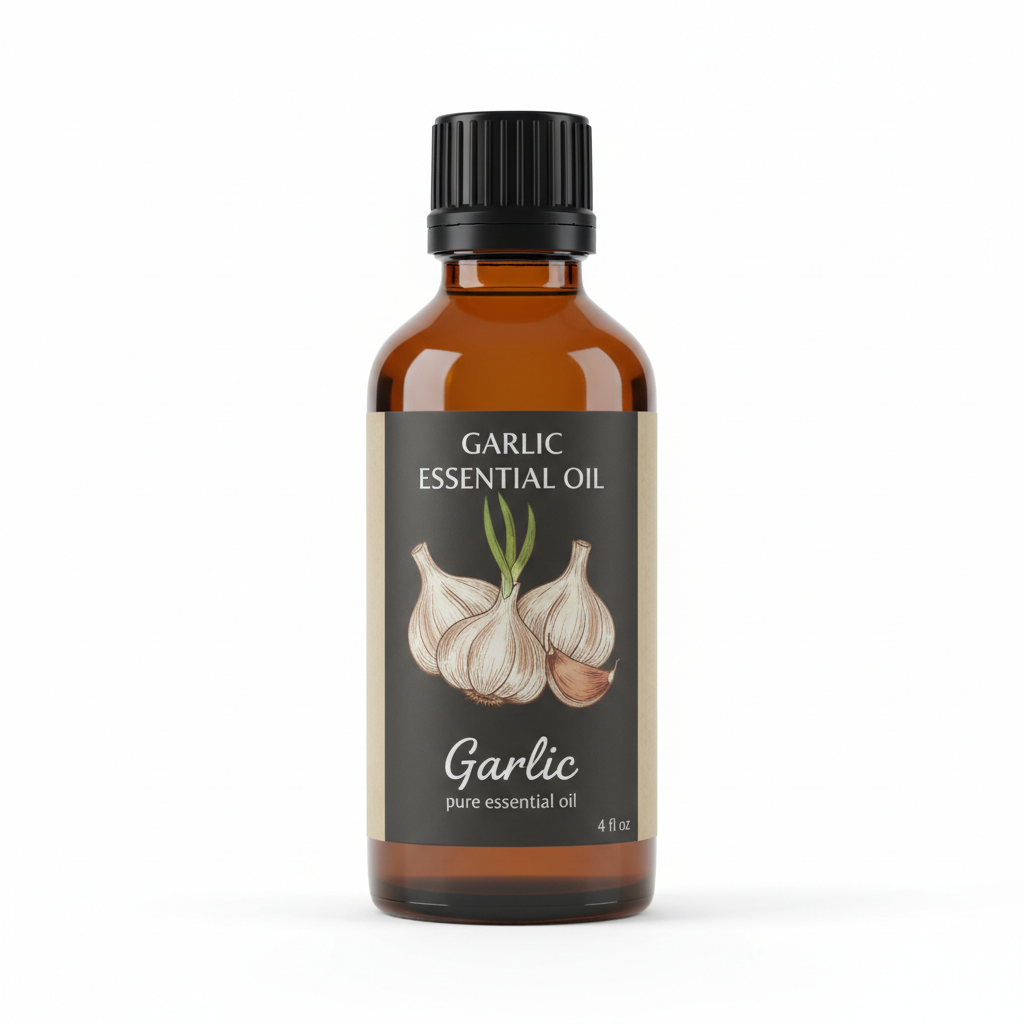
Our own Garlic Essential Oil, in sizes from 0.5 oz to bulk.
From $10.99
Shop Now →A plant that moved with people
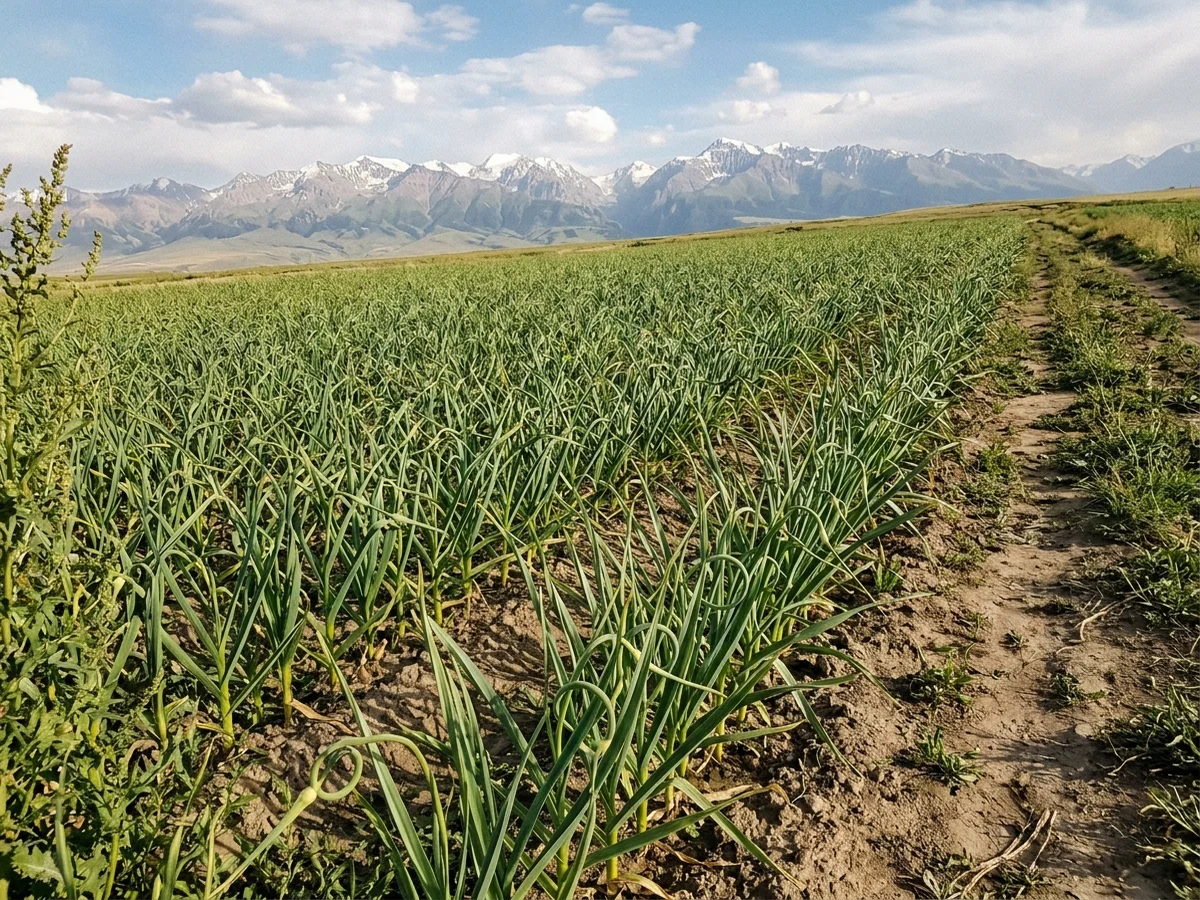
The Plant Resources of Tropical Africa entry on Allium sativum says garlic is believed to have come from Central Asia, with a second center of diversity in the Caucasus, and that it seems to have spread from there six or seven times. The seed-producing cultivars of Central Asia, called the Longicuspis Group, are described as the ancestral group from which the others evolved. Cloves are the usual way to propagate garlic, and bulbils from the flower head only very rarely (Messiaen and Rouamba, PROTA, 2004). We could not find a source that gives one reliable date for when garlic was first domesticated, so we will not offer one.
Why a clone travels so well
Think about what it means to carry a few cloves in a pocket. No seed to save, no flower to coax, no season to wait out. Plant a clove in decent soil and the plant that comes up is the one you carried. It is easy to imagine why a traveler would value a crop that arrives already packed for the trip, though that is our imagining and not a record.
What the old records say
The same entry reports garlic being grown in ancient Egypt by 1600 BC. NCCIH notes that ancient writings from Egypt, Greece and India describe its use for a range of health problems (NCCIH, Garlic). A 2014 review adds that the Ebers Papyrus and the so-called magical papyri mention garlic extracts, and that the Hippocratic writings discuss it too. It also corrects a popular myth: the Mesopotamian clay tablets of about 2600 BC, often said to mention garlic, list other plants instead (Borlinghaus et al., Molecules, 2014).
These records tell us what people wrote down about the bulb and its extracts. They do not tell us how well anything worked, and nothing here is a claim about our oil. They are also records of garlic the vegetable, not of a distillate, which needs a still.
The 1940s: the smell gets a name
The 2014 review says Cavallito and Bailey isolated and described allicin, the compound behind garlic's pungent odor, in 1944, and that Stoll and Seebeck worked out its structure in 1948 (Borlinghaus et al., 2014). The mechanism is lovely in its simplicity. Garlic holds a stable compound until a clove is crushed, chopped or chewed. Then an enzyme is released and allicin forms, and heating the garlic disables that enzyme (Nicastro, Ross and Milner, 2015). Our smell chemistry article follows the trail further.
A small experiment for your own kitchen
You can notice the allicin story with your own nose. Hold a whole clove up to your face: the smell is quiet, almost shy. Now press it flat under a knife and smell again. The change is immediate and much louder, and that is the crushing-releases-an-enzyme idea showing up in real time. Wash your hands afterwards, since the scent clings.
Where the oil joins in
Here is the twist for anyone holding a bottle: allicin does not survive the still. In a 2017 study of bulbs from Las Pedroñeras, Spain, allicin was only a trace (under 0.05%) in two hydrodistillations and was not detected at all in an industrial steam-distilled oil. Sulfides such as diallyl disulfide and diallyl trisulfide dominated (Satyal et al., Foods, 2017). So the smell of garlic essential oil is the smell of what allicin turns into, which is a different thing from the smell of a crushed clove on a board, though your nose will call both garlic. Our oil is described on our product page as steam-distilled from crushed bulbs, and it is a young craft next to the thousands of years of the bulb.
If you open a bottle of ours, you meet the youngest chapter of this long story: a yellow liquid, as our Certificate of Analysis describes it, with a pungent, savory, strong smell. It is a long way from the clove in the pocket, and we find that gap rather lovely.
If you want to experience a little of that history, plant a clove or two in a pot or garden bed in the right season and watch what comes up. It is a quiet, hands-on way to follow the same path the travelers followed.
A habit worth keeping
When you read that garlic "has been used for thousands of years," three questions are worth asking. Which text, and who dated it? Which preparation does it mean: the bulb, a poultice, an extract? And is it describing use, or proving a result? Asked of garlic, the answers usually point to the bulb and its extracts, which is a long, well-documented story all by itself. The oil is a newer chapter, and we think it is more interesting for being honest about that. For more on our oil, our introduction to garlic essential oil is a good next stop, and how it is made covers the still.
Garlic Essential Oil
Garlic Essential Oil from our own shop, in sizes from 0.5 oz to bulk.
From $10.99
Shop Now →Sources & Further Reading
- Messiaen CM, Rouamba A. Allium sativum (PROTA), 2004. plantuse.plantnet.org
- NCCIH. Garlic. nccih.nih.gov/health/garlic
- Borlinghaus J et al. Allicin: chemistry and biological properties. Molecules 2014. pmc.ncbi.nlm.nih.gov/articles/PMC6271412
- Nicastro HL, Ross SA, Milner JA. Garlic and onions: their cancer prevention properties. Cancer Prev Res 2015;8(3):181-189. pmc.ncbi.nlm.nih.gov/articles/PMC4366009
- Satyal P, Craft JD, Dosoky NS, Setzer WN. The chemical compositions of the volatile oils of garlic (Allium sativum) and wild garlic (Allium vineale). Foods 2017;6(8):63. pmc.ncbi.nlm.nih.gov/articles/PMC5575638