What Is Garlic Essential Oil? A Look Inside the Bottle
Imagine collecting everything that floats off a pile of crushed garlic when steam passes through it. You would not get a fragrant, flowery oil. You would get a few drops of something amber, savory and intensely sulfurous, which is exactly what garlic essential oil is. It is made from the bulb, it smells unmistakably of garlic, and a surprisingly small bottle represents a great deal of garlic.
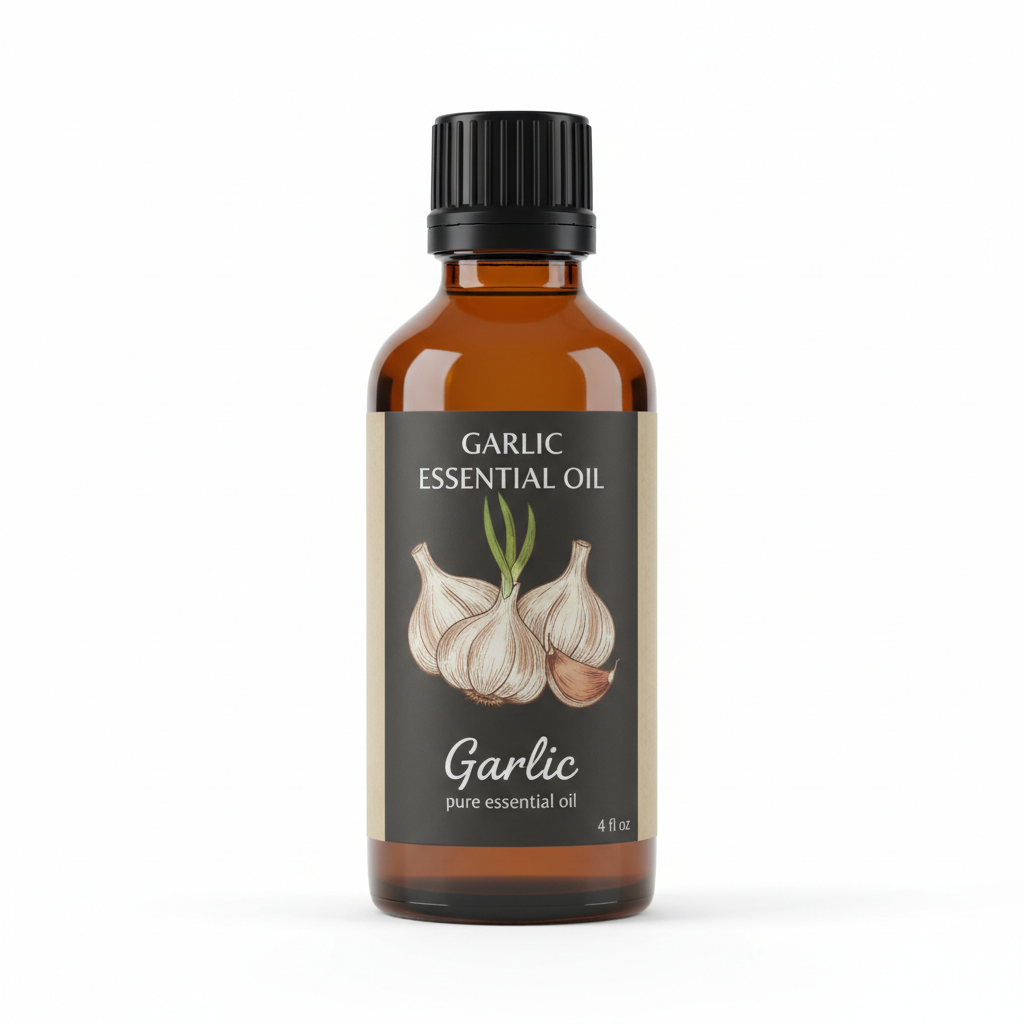
Garlic Essential Oil
Our own Garlic Essential Oil, in sizes from 0.5 oz to bulk.
From $10.99
Shop Now →What is in the bottle
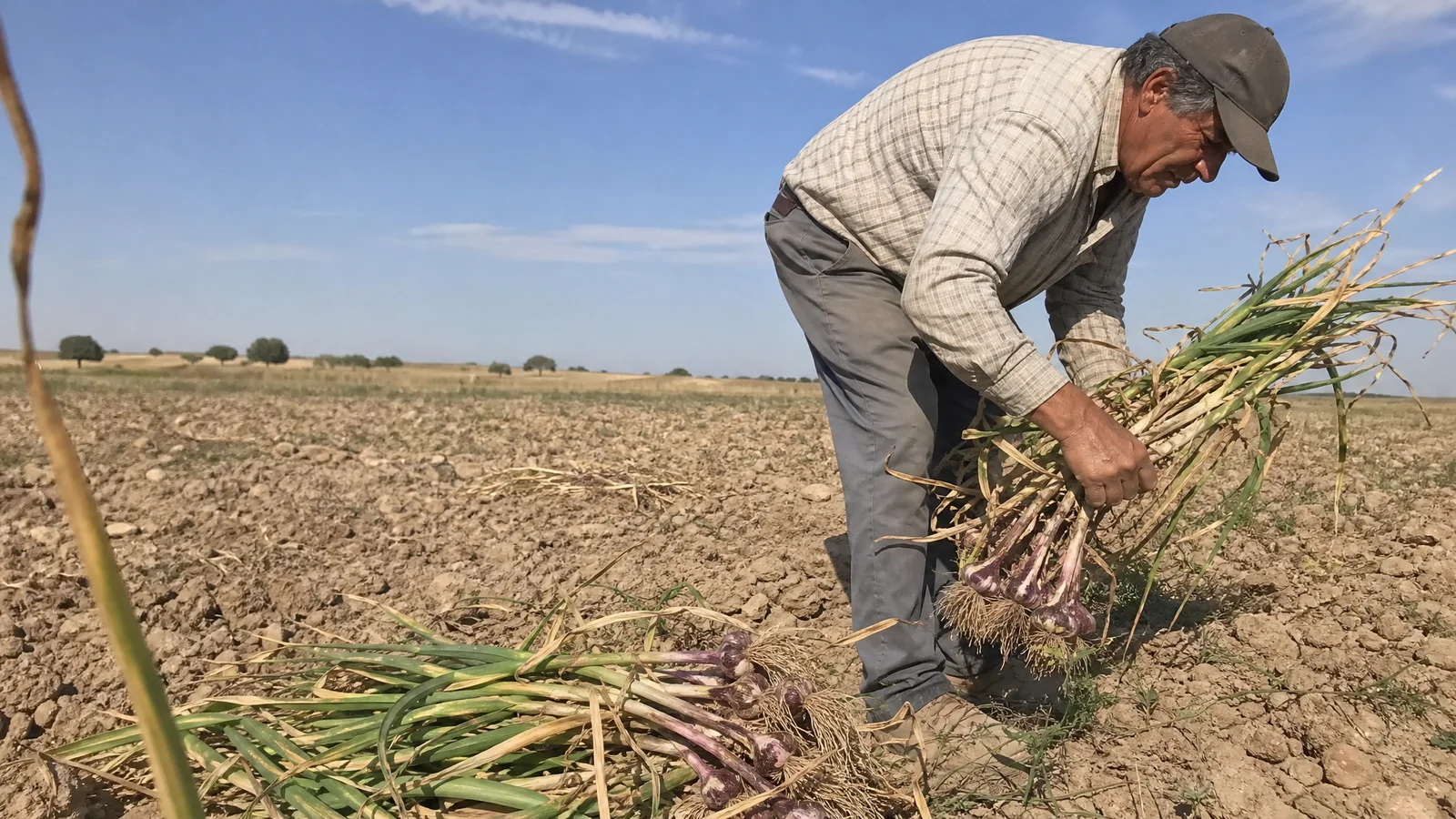
Garlic oil is almost entirely sulfur compounds. In one study, researchers distilled chopped garlic bulbs from Las Pedroñeras in Spain three different ways and got yields of 0.20%, 0.22% and 0.18% by weight, which works out to roughly 1.8 to 2.2 g of oil per kilogram of bulbs. In the industrial steam-distilled sample, diallyl disulfide was the largest component, followed by allyl methyl trisulfide and diallyl trisulfide. Allicin, the compound that forms when a raw clove is crushed, was not detected in that steam-distilled oil (Satyal et al., Foods, 2017).
That is a nice thing to understand. The oil is not the smell of a fresh clove captured in a bottle; it is what remains once heat and steam have rearranged the clove's chemistry. The same paper lists oils reported from Egypt, Serbia, Tunisia, France, India and China with the same few compounds in different proportions, so those figures describe a type of oil, not a specification for every bottle. Our sulfur explainer tells the story of the smell, and the glossary defines the terms.
Why a small bottle holds so much garlic
One US fluid ounce is about 29.57 ml, and at the relative density of 1.075 on the Certificate of Analysis we publish for one batch, that is about 31.8 g of oil. Using the 0.18% yield above, that is the oil of about 17.7 kg of bulbs. With the 0.22% yield it is about 14.5 kg. That is arithmetic from one paper's yields, not a statement about how any particular bottle was produced, but it gives you a real sense of scale. It is why a drop can carry the character of many whole cloves and why we count in drops.
What you will notice when you open it
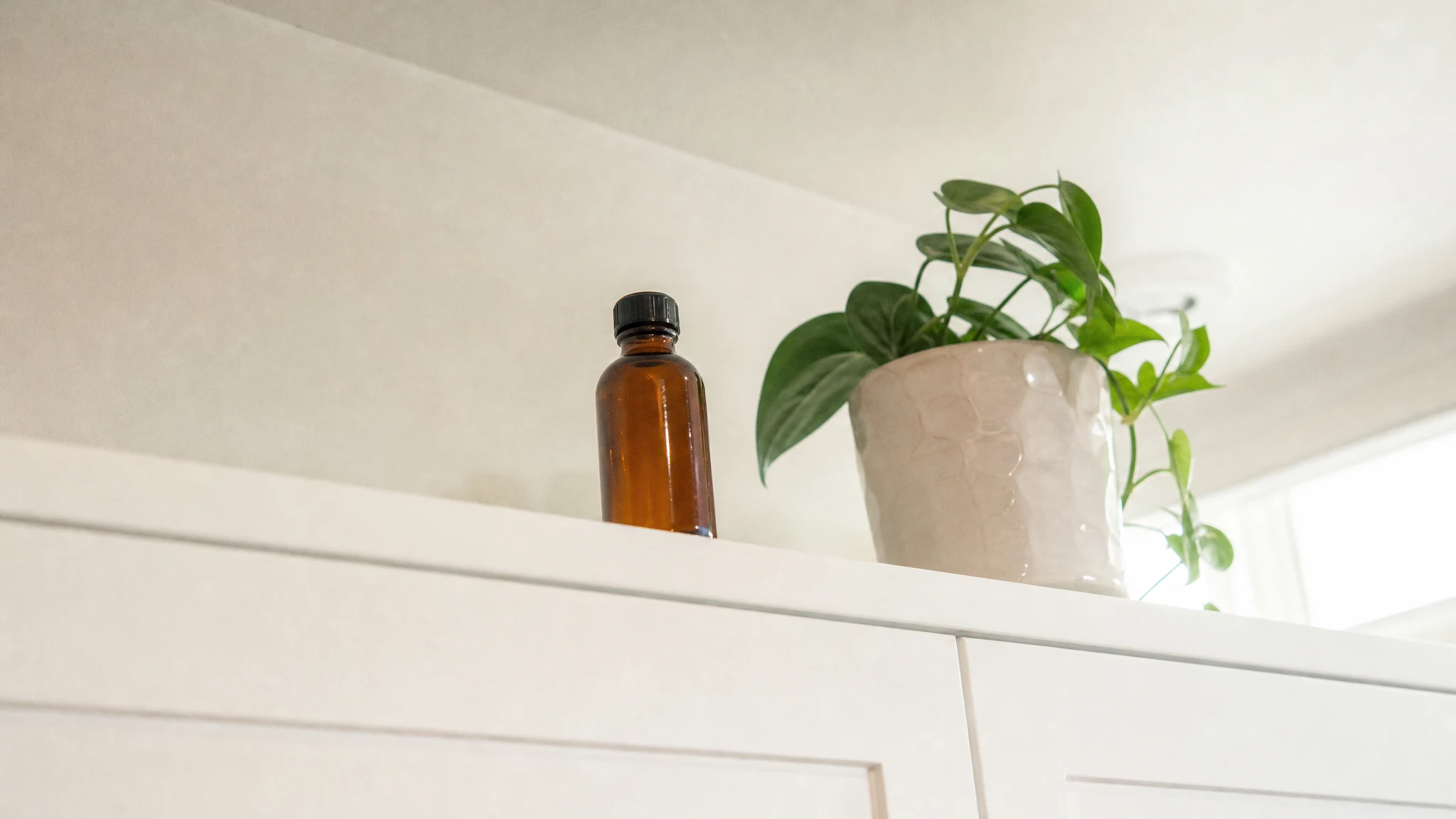
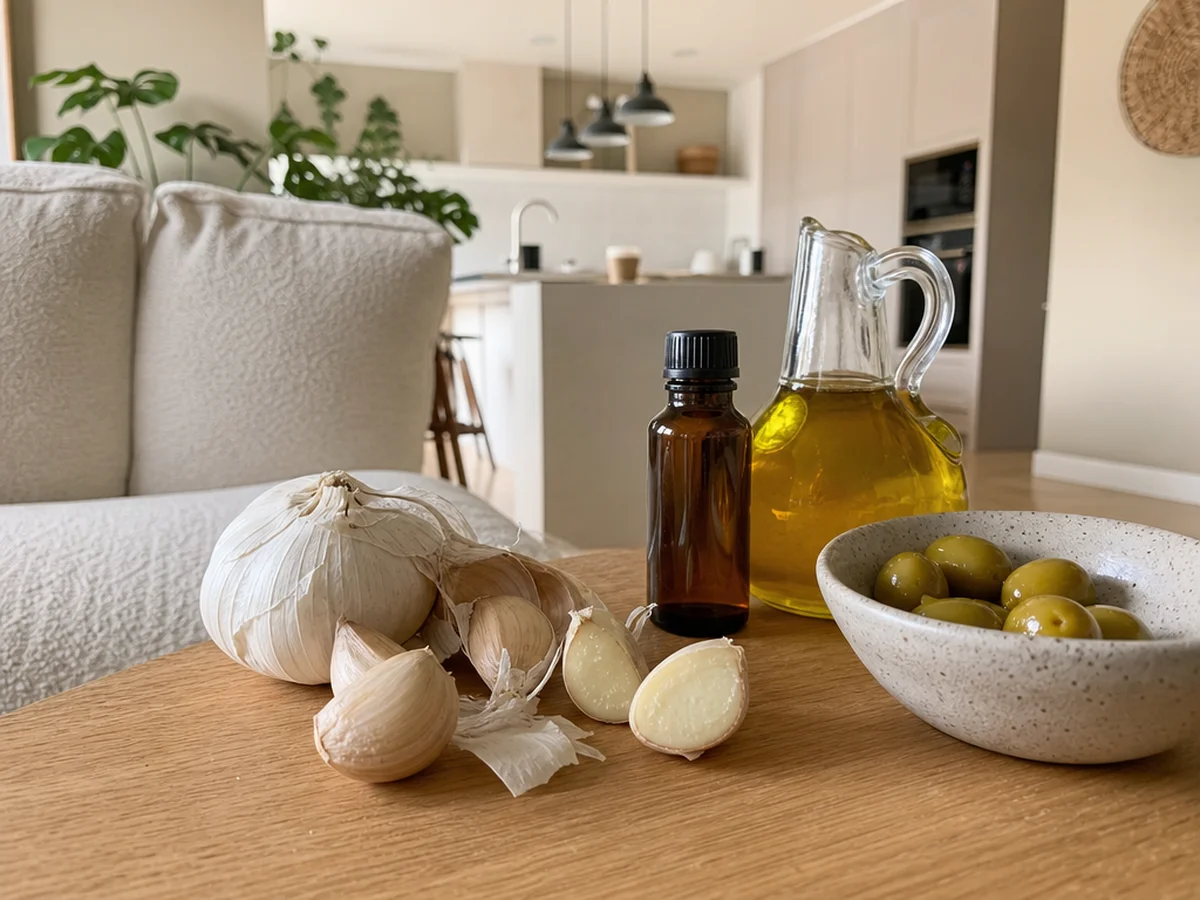
The first thing is the smell, and it arrives quickly. It is pungent, savory and sulfurous, with a depth that sits underneath the sharpness. It is nothing like the sweet smell of roasted garlic from a kitchen. The liquid itself is thin and runs freely, with a yellow tint that you can see through the amber glass when you hold the bottle to a light.
Give it a minute and a safe distance, then notice how the smell changes. The first sharp note settles, and a heavier, more rounded character stays behind. That lingering quality is why it is described as a base note. It blends well with black pepper, ginger, basil, oregano, rosemary and onion, which makes for savory, herbal scent studies on blotter strips. Keep the cap handy, because this is a smell that fills a room faster than you expect.
What we sell, and how to read the label
We sell one product, Garlic Essential Oil from Allium sativum, described as steam-distilled from crushed bulbs and sold undiluted with no additives, in amber glass, in ten sizes from 0.5 oz to 400 lb. The aroma is pungent, savory and sulfurous with lasting depth, and it sits at the base of a blend. Our certificate lists a relative density of 1.075 and a refractive index of 1.566 at 20 C, each within its printed range, for the batch it covers. If you need a compound profile, ask us in writing through the contact page and tell us which lot you are considering.
On an ingredient list the oil goes by Allium Sativum Bulb Oil, which the Cosmile Europe database lists as an oil with fragrance and skin-conditioning functions (COSMILE Europe). The flavor industry catalogues garlic oil too, as FEMA 2503 (FEMA). The same material can sit on two different lists, so what matters is the documentation that goes with your intended use. Our label reading guide walks through it.
Four things that all get called garlic
| Product | How it is made | Where it belongs |
|---|---|---|
| Garlic essential oil | Distillate of crushed bulbs | Aroma and workshop work, diluted for skin |
| Garlic-infused oil | Garlic steeped in a carrier oil | Cooking, with food-safety limits |
| Aged garlic extract | Garlic aged and processed | Supplements, taken by mouth |
| Garlic powder capsule | Dehydrated garlic | Supplements, taken by mouth |
The distillate and the aged extract sit at opposite ends of the garlic spectrum, and the extract comparison shows how. A study of garlic in capsules is not a study of this oil, and the infused oil comparison shows why kitchen garlic oil is a different purchase with a different hazard.
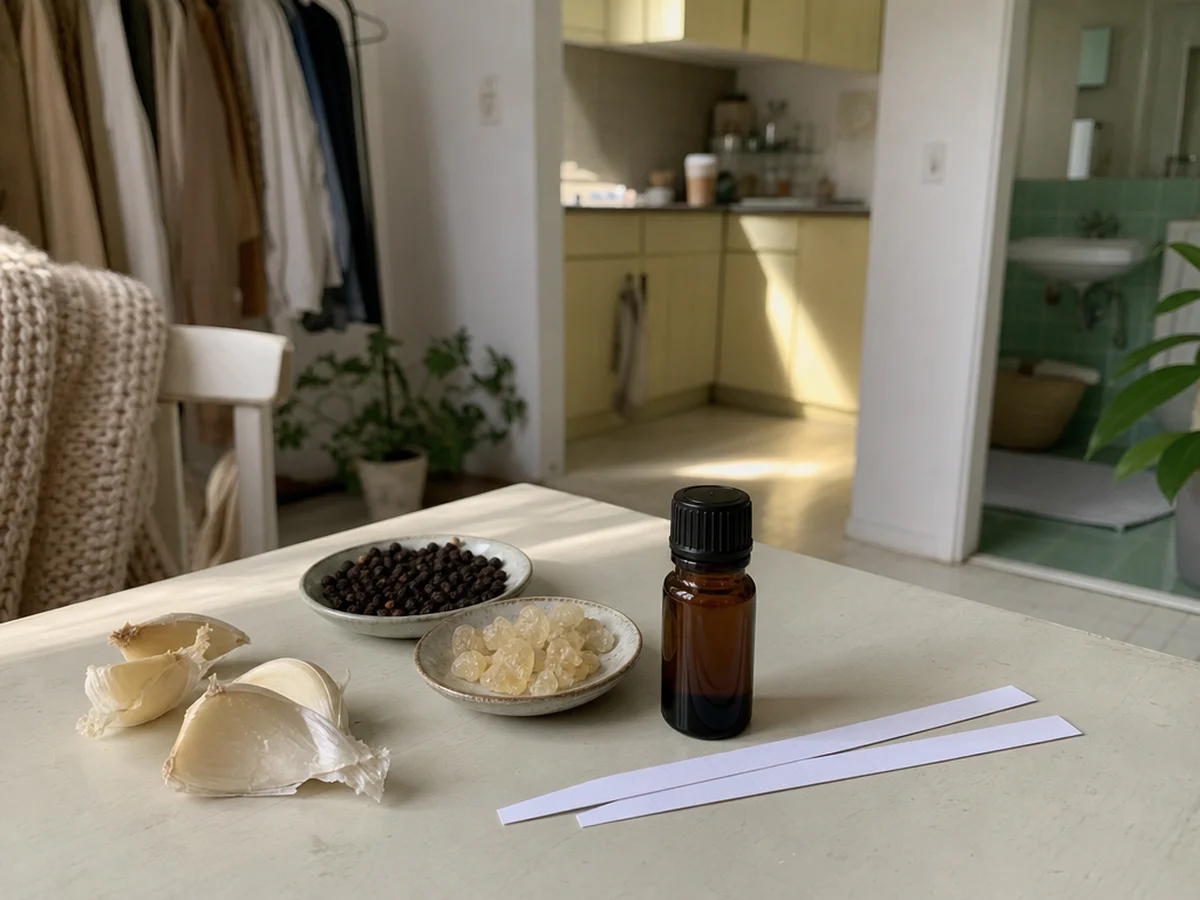
If you are new to strong aroma materials, a gentle way to begin is with a single blotter strip, a well-ventilated room, and one drop at most. Write down what you notice, wash your hands and put the bottle away. It is a respectful way to get acquainted, and you will come away with a feeling for why the oil goes so far.
How the rules sort it
For aromatherapy-type products, FDA says the intended use decides whether something is a cosmetic or a drug, and claims about disease are drug claims (Aromatherapy, FDA). EPA says products with pest claims fall under pesticide rules (Conditions for Minimum Risk Pesticides), and food law has its own entry for garlic oil as a flavoring (21 CFR 184.1317). We sell ours as an aroma and workshop material, not for internal use, and we make no claims beyond that. Our EPA article explains the pest side.
If you only remember one thing, let it be this: garlic oil is a very small amount of very concentrated aroma, best explored a drop at a time.
Garlic Essential Oil
Garlic Essential Oil from our own shop, in sizes from 0.5 oz to bulk.
From $10.99
Shop Now →Sources & Further Reading
- The Chemical Compositions of the Volatile Oils of Garlic (Allium sativum) and Wild Garlic (Allium vineale), Satyal et al., Foods, 2017
- ALLIUM SATIVUM BULB OIL, COSMILE Europe
- GARLIC OIL (ALLIUM SATIVUM L.), FEMA
- Aromatherapy, FDA
- Conditions for Minimum Risk Pesticides, US EPA
- 21 CFR 184.1317, Garlic and its derivatives