Garlic and Backyard Chickens: What Feed Studies Used
Ask a backyard flock keeper about garlic and you will hear strong opinions, usually about the feed bucket. The research behind those opinions is more specific than the folklore: the poultry studies put garlic powder into the diet, in measured percentages, and none of them used essential oil. That one detail changes how everything else should be read.
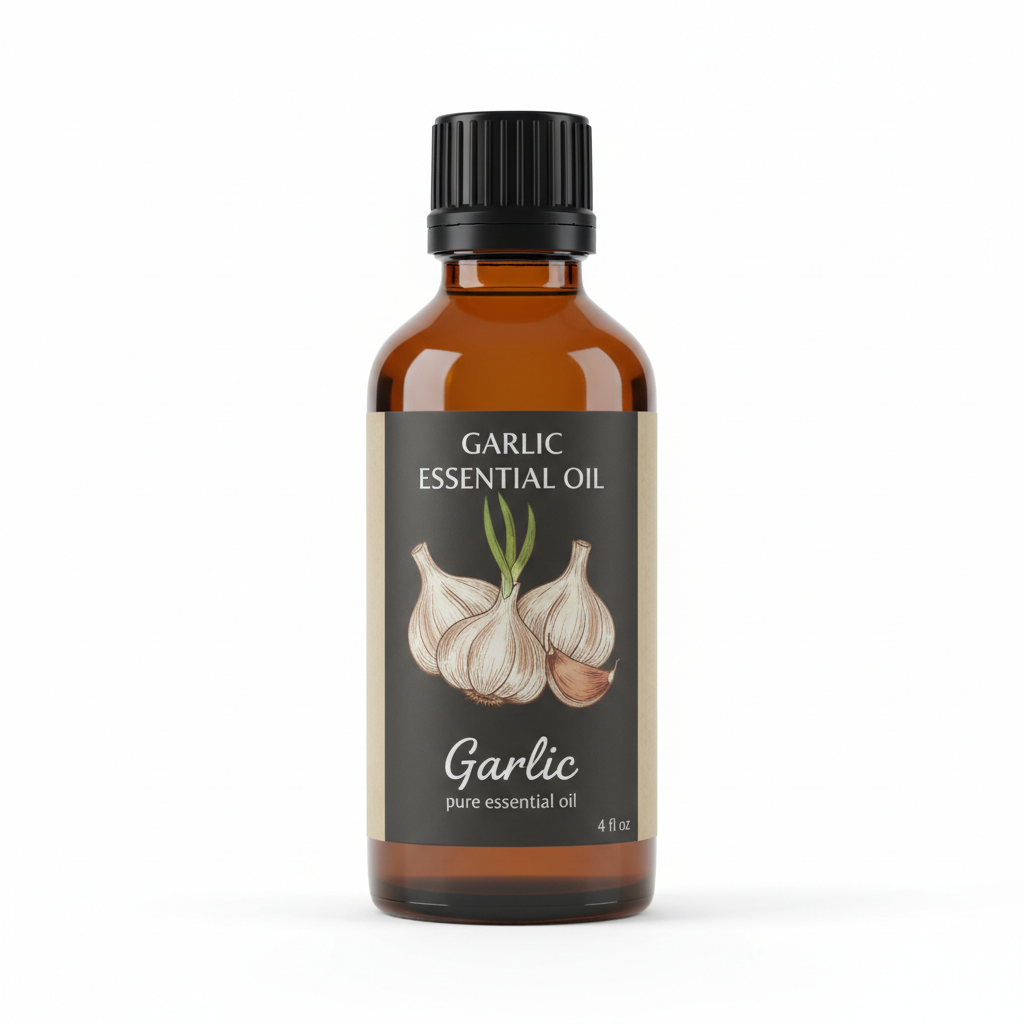
Garlic Essential Oil
Our own Garlic Essential Oil, in sizes from 0.5 oz to bulk.
From $10.99
Shop Now →What was actually in the feed
In a classic 1997 experiment, chicks were fed a commercial garlic powder at 1.5, 3 and 4.5% of their diet from hatching to 21 days. Plasma and liver cholesterol came out lower in the garlic birds, while growth and feed efficiency stayed the same (Konjufca, Pesti and Bakalli). That is a result about cholesterol in broiler meat, and it used a bulk ingredient measured by the kilogram of feed.
A more recent trial gave broilers a mixture of garlic, onion and apple cider vinegar at 2.5, 5 and 7.5% of the diet after a viral challenge. The lowest level was well tolerated, while the 7.5% level temporarily cut feed intake and weight gain (Abdulkareem and colleagues). Because it was a blend, nobody can say how much of any effect belonged to the garlic. What the pair of studies does show is that the useful range was narrow, and that more garlic was not better.
Powder, a mixture, a bulk ingredient: that is the pattern. The studies are about feed formulation, which is a livestock nutrition question and belongs with a poultry nutritionist or veterinarian.
Why oil is a different conversation
Garlic essential oil is what is left when the bulb's volatile sulfur compounds are steam-distilled and concentrated. The Certificate of Analysis we publish for one batch of our oil lists a relative density of 1.075 and a refractive index of 1.566 at 20 C. A bottle that holds about 16 g of oil is a long way from a few grams of powder per kilogram of feed, and no poultry study connects the two. So we do not offer any conversion, and we would not trust anyone who does. Our garlic oil is an aroma and workshop material, not for internal use, and it is not meant for birds, feed or water.
There is a good reason for the caution. Veterinary references describe how the sulfur compounds in the allium family damage red blood cells, and the Merck Veterinary Manual notes that garlic is 3 to 5 times more toxic than onion. Its page names cats, dogs, cattle, pigs, goats and sheep, and does not give figures for poultry. Concentrated oil is exactly the form where that kind of margin is easiest to lose.
Why the folklore sticks around
Garlic stories survive because they are easy to tell and easy to try. A flock keeper hears that a neighbor adds some to the feed, the birds seem fine, and the story gets one more teller. What the story leaves out is the dose, the form and everything else that changed that month. The studies are useful because they write those details down, and reading them is a pleasant way to stay curious without taking anyone's word for it.
Mites in a dish are not mites on a hen
The other claim you will meet is that garlic oil kills red mites. There is a real laboratory result behind it: in a 2025 test, garlic oil at a 10% concentration killed poultry red mites on contact within 24 hours (Ran and colleagues). The mites were exposed in a dish, though, and the study looked at mites, not at hens or a coop. It is a promising lab observation, which is a long way from a coop treatment.
We do not make pest claims for our oil, and a flock with mites, bloody droppings or sudden losses is a job for a veterinarian or your state poultry diagnostic lab. If you make your own garden or coop sprays, read the federal and state rules first; our post on the EPA minimum risk rule explains how they work.
Keeping the bottle out of the coop routine
If you keep chickens and also keep a bottle of garlic oil, store them apart. Keep the bottle capped and in a closed cabinet, well away from feed bins, scoops and waterers. The oil's scent lingers on hands and cloth, so wash up after handling it, and do not reuse a feed scoop or cloth that has touched it. This is simple housekeeping, not a treatment plan, and it keeps our oil where it belongs: on the workshop shelf.
If you are curious about feed for your flock, a short list helps when you talk to a poultry vet or a feed supplier:
- What you feed now, and how much.
- The age of your birds and what they are kept for.
- Any garlic product you are considering, with the label in hand.
Where that leaves a curious keeper
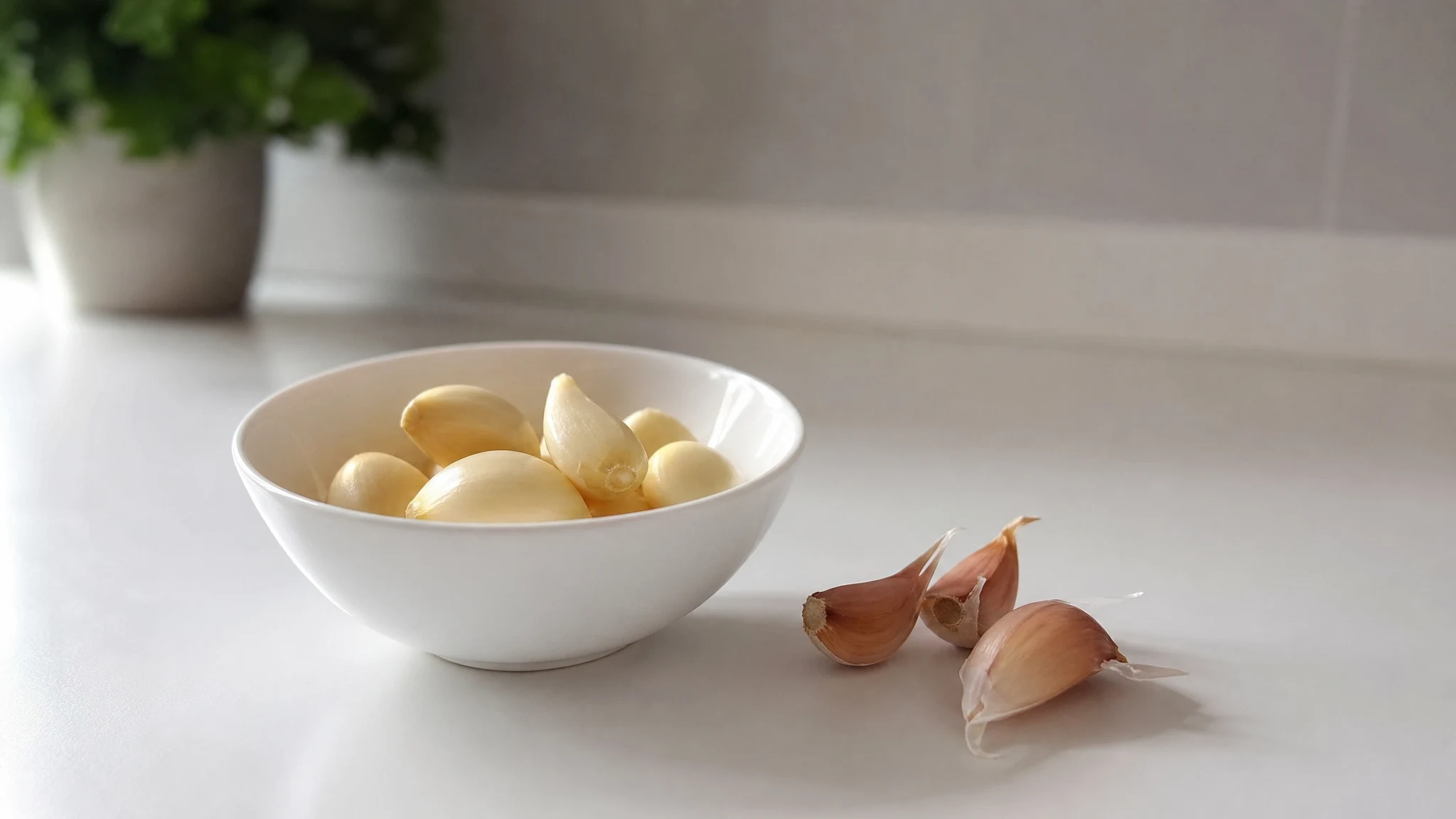
If you are curious about garlic as a flock treat, the bulb, the powder or a feed product made for poultry are the forms the research used, and a feed supplier or vet can say what suits your birds. If you are curious about the oil itself, we think it is most interesting as a material in its own right: its sharp, savory, sulfurous aroma is unlike anything else on the shelf. Garlic oil versus garlic extract explains how oil, extract and powder differ, the smell chemistry shows where that aroma comes from, and garlic oil and horses covers another animal question.
The studies make one thing clear: for animals, the form and the dose decide everything, and neither can be guessed from a bottle label.
Garlic Essential Oil
Garlic Essential Oil from our own shop, in sizes from 0.5 oz to bulk.
From $10.99
Shop Now →Sources & Further Reading
- Konjufca VH, Pesti GM, Bakalli RI, 1997. Modulation of cholesterol levels in broiler meat by dietary garlic and copper. Poultry Science. PubMed 9276889
- Abdulkareem ZA et al., 2023. Effects of garlic, onion, and apple cider vinegar as a herbal mixture on performance and blood traits of broilers inoculated with chicken infectious anemia virus. Heliyon. PubMed 37449102
- Ran C et al., 2025. In vitro acaricidal activity of spice essential oils against the poultry red mite (Dermanyssus gallinae). Poultry Science. PubMed 40543263
- Merck Veterinary Manual. Garlic and Onion (Allium spp) Toxicosis in Animals. merckvetmanual.com