Garlic Essential Oil Uses: Blotter Strips to Soap
Open a bottle of garlic essential oil and the whole room knows about it. One drop carries the smell of a great many cloves, and that single fact decides almost everything about how the oil gets used. It is a scent material for the workshop bench, and it rewards people who like to measure in drops.
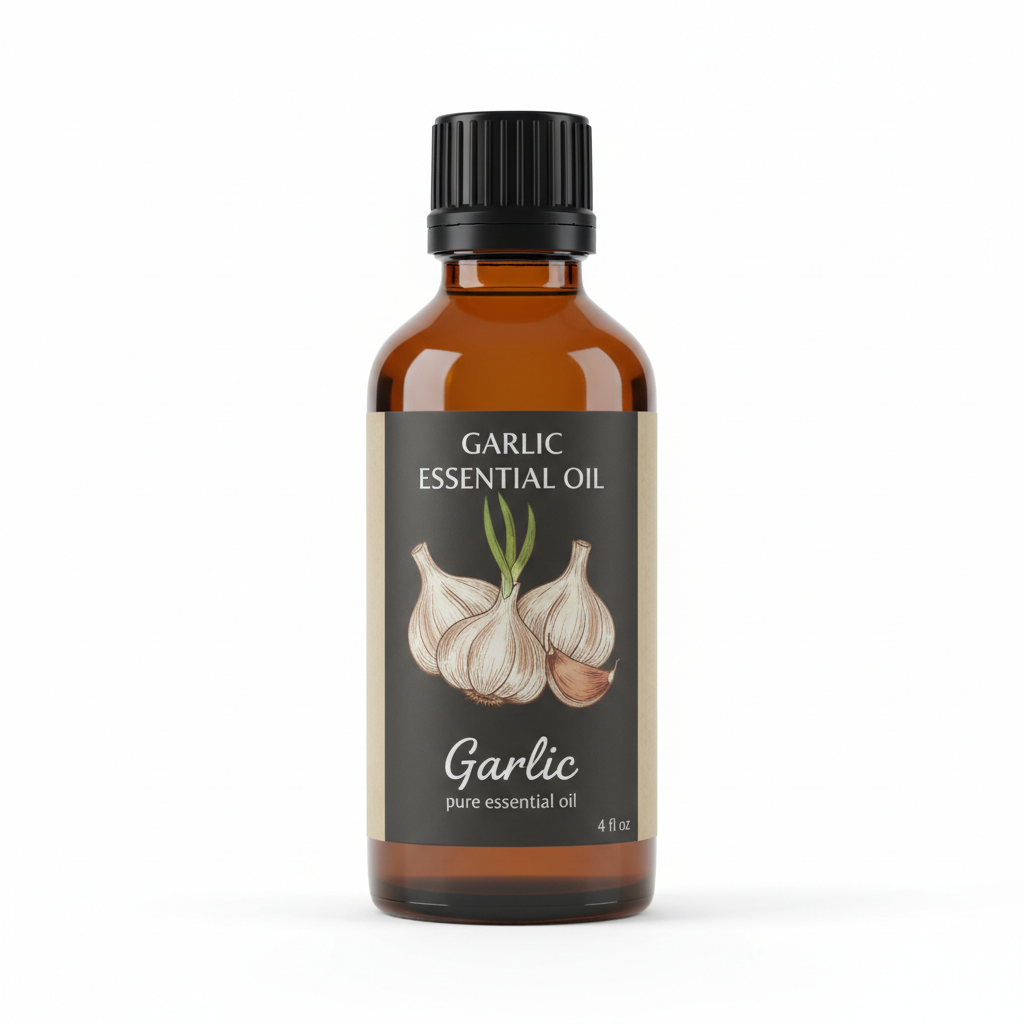
Garlic Essential Oil
Our own Garlic Essential Oil, in sizes from 0.5 oz to bulk.
From $10.99
Shop Now →Start with a blotter strip
The simplest use is also the most revealing. Put one drop on a paper blotter strip, wave it about, and come back to it over the next hour. Our oil is described on our product page as pungent, savory and sulfurous, with lasting depth, and the strip lets you follow how it develops as it dries. Because nothing touches skin, it is also the lowest-exposure way to learn whether you want this smell in your life.
From there you can set the strip beside others. Onion oil is the obvious companion, and ginger or black pepper oils make interesting neighbors, since those are the scents we list as blending well with garlic. We sell only the garlic oil, so those partners come from other suppliers, with their own handling notes. If the onion comparison appeals, we put the two side by side in our garlic and onion oil comparison.
Soap and candle trials
Soap makers and candle makers are the natural customers for a strong, savory aroma, and the key word on our product page is "trace". To make a trace tangible, here is the arithmetic, using the relative density of 1.075 on the Certificate of Analysis we publish for one batch and the usual rough convention of 20 drops to the milliliter:
- 500 g of soap at 0.1% holds 0.5 g of oil, about 9 drops.
- The same soap at 0.5% holds 2.5 g, about 47 drops.
- At 2% it holds 10 g, about 186 drops, which for garlic is a very large dose indeed.
The Tisserand Institute puts general dilution for wash-off products at 2% to 4%, but that guide covers essential oils as a family and says nothing garlic-specific, so for this oil the low end is where a first batch belongs. We would begin at 0.1%, let the soap cure, and judge it before scaling. For candles, we do not have a verified fragrance-load figure, so check your wax supplier’s guidance and test in small pours. Our buyer’s guide for candle and soap studios goes into sizes and workflow.
A light balm to judge scent strength
A heavily diluted balm is a good way to judge how the aroma sits once it is blended into a base. Our dilution guidance is 0.5% to 2% in a carrier oil with a patch test first, and our recommendation is to begin at 0.5%. In a 50 g balm that is a quarter of a gram of oil, around five drops. Garlic is famous for lingering, so smell the result a day later before deciding on a stronger version. The NIH’s National Center for Complementary and Integrative Health notes that raw garlic applied to skin can cause severe irritation and chemical burns; that is about the whole vegetable, not a diluted distillate, but it is a good reason to patch test and to keep the first batch small. Our guides to garlic oil on skin and dilution basics take it from there.
Diffuser drops, with the windows open
For a diffuser we suggest a single drop and plenty of ventilation. Pets and small children share your air, so read our diffusing article first. The oil should stay locked away from children and animals; the National Capital Poison Center says essential oils belong out of sight and reach, and its number is 1-800-222-1222.
Keeping a scent notebook
A notebook beside the bench pays off quickly. For each strip or trial, note the date, what you added, and how it smelled after ten minutes and again the next day. Months later, when you are wondering whether a second bottle smells the way the first one did, you will have something to compare it with besides memory. It also makes it easy to keep tiny amounts honest, because a number written down is harder to fudge than a drop remembered.
Jobs for garlic itself
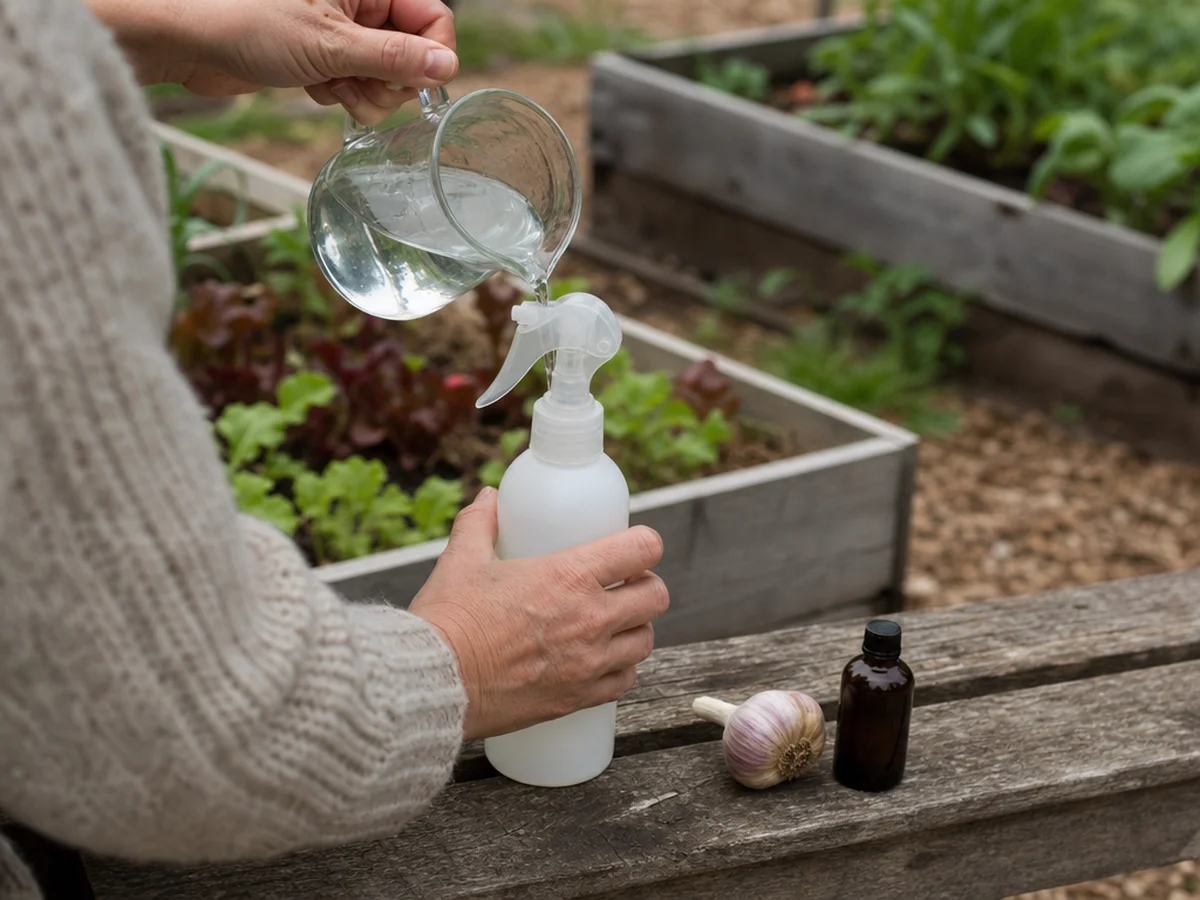
Some uses are better served by the bulb. Our oil is not for internal use, so cooking is a job for fresh garlic or a product labelled as food, and a physician or pharmacist is the person to ask about swallowing anything. Homemade garlic in oil has its own rule too: the CDC says to refrigerate it and discard it after 4 days. Garden sprays are another case: our product page makes no pest claims for the oil, so anyone mixing a spray should read the EPA’s minimum-risk pesticide rules and check with a county extension office, which we cover in our EPA article. Pets and livestock are a veterinarian’s territory.
Why one drop goes so far
In one study of Spanish bulbs, steam distillation yielded 0.18% oil. Reasoning from that, a single gram of oil stands for roughly 555 g of bulbs, and a fluid ounce, about 31.8 g at the density on our certificate, represents something like 17 kg. That is the best explanation for the bottle’s intensity, and for storing it well: tightly capped, cool and dark, away from other aromatics, with working amounts decanted into a smaller airtight bottle. Air in a half-empty bottle speeds oxidation, according to the Tisserand Institute, and an aged bottle is better kept to scent studies than to skin work.
So the short version is a bench, a blotter strip and a patient nose. Start there and the rest of the oil’s uses make themselves clear.
Garlic Essential Oil
Garlic Essential Oil from our own shop, in sizes from 0.5 oz to bulk.
From $10.99
Shop Now →