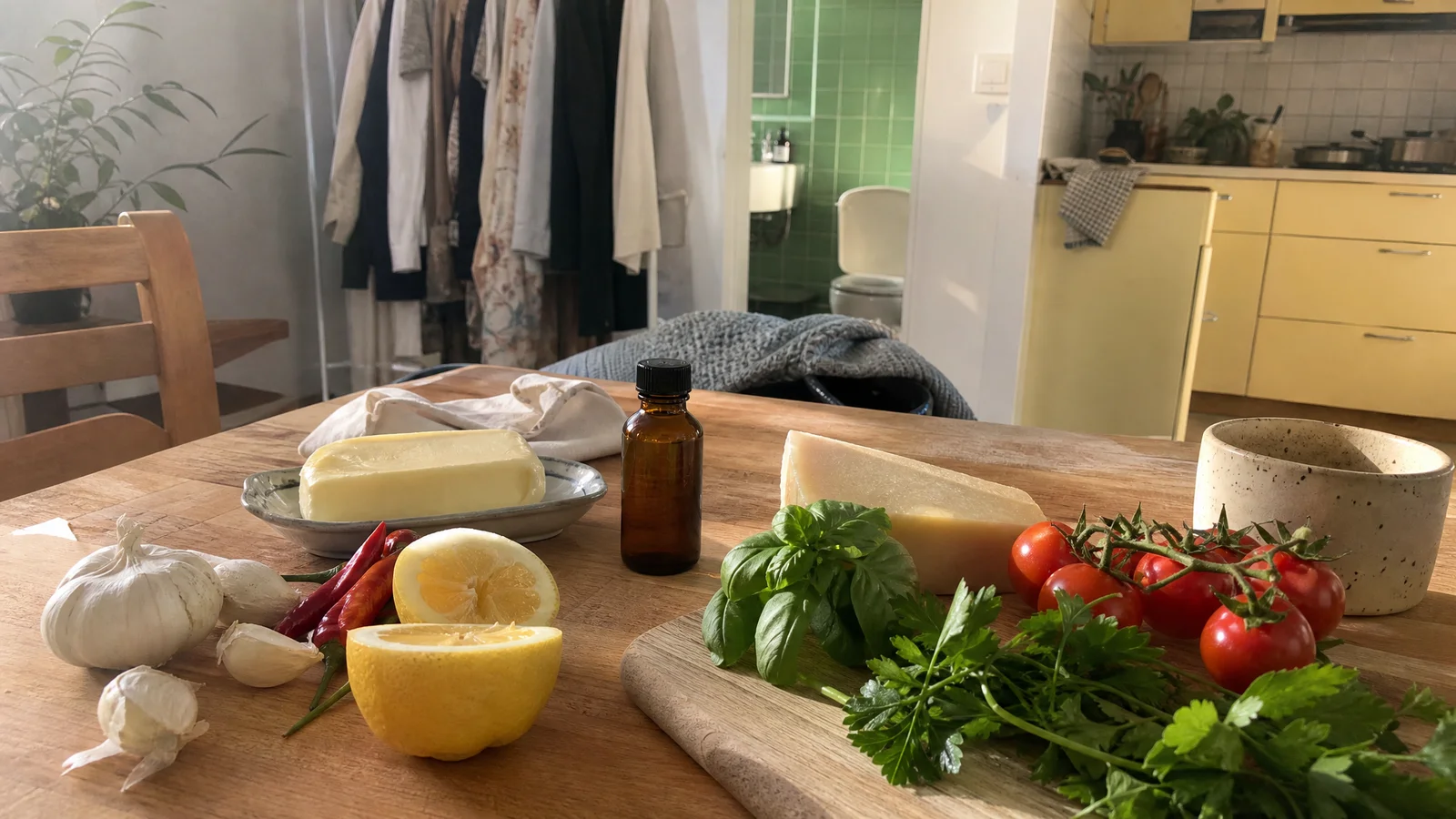
Garlic Flavor Pairings: What Mellows It and What Lifts It
Anyone who has stirred garlic into yogurt knows the sauce tastes rounder than raw garlic ever does on its own. That is not just a cook’s impression. Food chemists have measured it, and the numbers explain why some partners flatter garlic and others amplify it. Here is what we take from the research, and where garlic’s aroma goes when it leaves the cutting board.
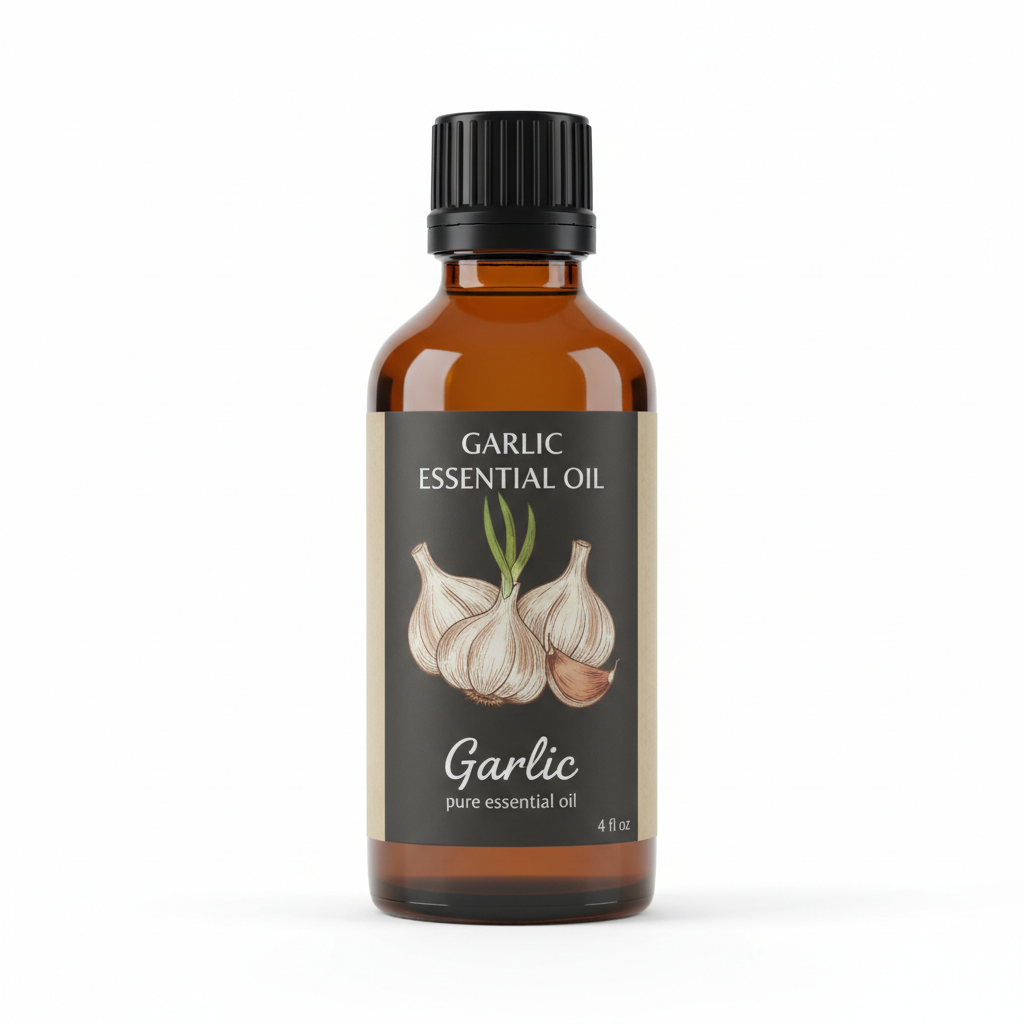
Garlic Essential Oil
Our own Garlic Essential Oil, in sizes from 0.5 oz to bulk.
From $10.99
Shop Now →Dairy is garlic’s great diplomat
In a 2023 study, researchers placed 6 g of thinly sliced garlic in a sealed bottle with 100 mL of a test material and measured the vapor above it. Raw garlic gave off a lot of allyl mercaptan, diallyl disulfide and two related sulfur compounds, the molecules behind that unmistakable smell. Whole-milk yogurt cut those four compounds by 99%. With garlic fried at 125 C, the reduction was 82% to 94%. Whey protein did most of the work in the raw garlic, butter fat helped more as its share went up, and warming the yogurt or raising its pH weakened the effect.
It was a closed-bottle measurement, not a tasting panel and not a breath test, so it tells us about vapor and not about how a dish tastes. Still, the practical reading is easy: garlic in a yogurt sauce, a buttery pasta or a cream-based dish is a genuine pairing, because dairy proteins and fats take the edge off the sulfur. If you want the garlic to stay loud, go easy on the dairy or add it late.
Heat and timing change the whole conversation
The same study found that frying lowered those four compounds by 75% to 99%, though all of them stayed above their odor thresholds, which is why fried garlic is still unmistakably garlic. A review of garlic chemistry explains part of the reason: crushing garlic releases an enzyme called alliinase, which sets off the reactions that build the smell, and heating denatures that enzyme. Reasoning from both papers, a pairing choice is also a timing choice. Raw garlic in a vinaigrette, garlic fried gently for a pasta, and garlic stirred in at the end of a cook are three different flavors, even with the same cloves.
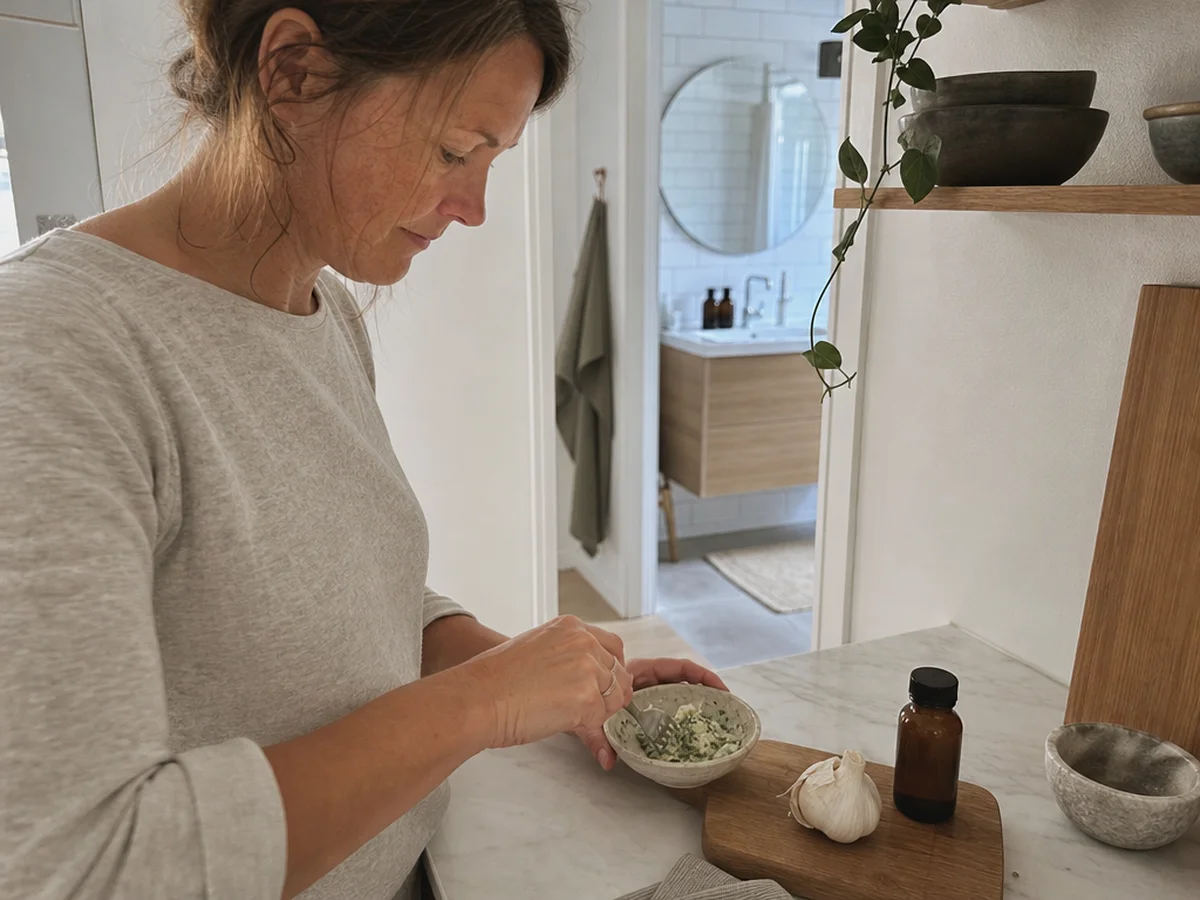
Our article on why garlic smells the way it does follows the chemistry from clove to distillate.
Do shared flavors make good partners?
A popular idea says ingredients that share flavor compounds taste good together. A 2011 analysis tested it on 381 ingredients and 56,498 recipes. North American and Western European cooking leaned toward recipes whose ingredients share compounds. East Asian and Southern European cooking leaned away from it. Garlic itself was not the paper’s subject, but the finding is a useful reminder that pairing is partly culture and habit, so any single universal list of garlic partners reflects a tradition and not a rule. We find that freeing: the best partner for garlic is the one your own cooking already loves.
Building a pairing by taste
The best way to learn is in small steps. Taste a little garlic by itself, either raw or cooked, and pay attention to what you notice. Then add one partner at a time: a spoonful of plain yogurt, a bit of butter, a squeeze of lemon. Notice what gets rounder and what gets sharper. Do it again with the garlic cooked at a different time, and your own sense of what you like will soon be better than any list.
A word about the bottle
Everything above is about garlic as an ingredient. Our Garlic Essential Oil is not for internal use, so for flavor reach for fresh garlic or a product labelled as food, and ask a physician or pharmacist about any question on swallowing essential oils. If you are making garlic in oil at home, the CDC says to refrigerate it and throw it away after 4 days. Our guides to aglio e olio and rosemary and garlic oil cover that side of the kitchen.
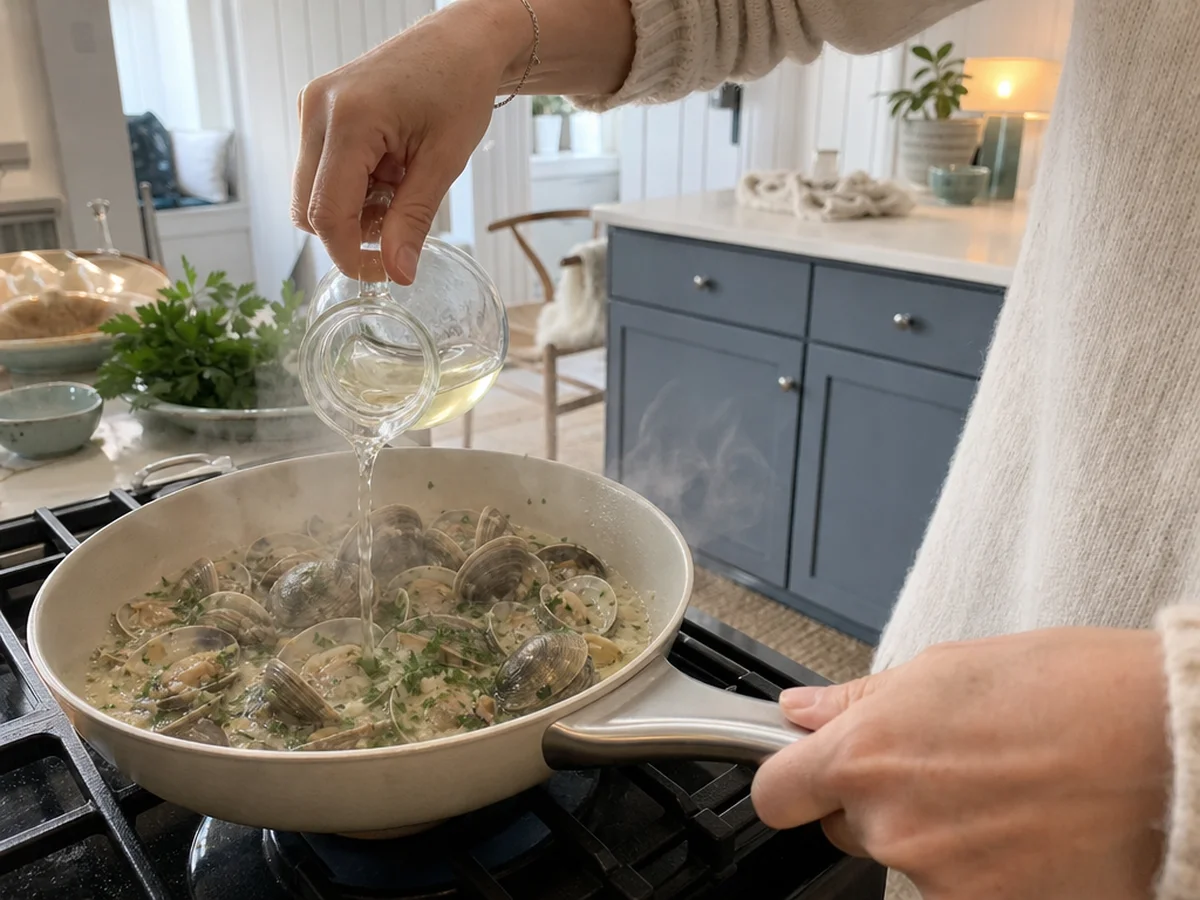
Where the oil does pair: on a scent strip
For the bottle on the shelf, pairing is about aroma. We describe the oil as pungent, savory and sulfurous with lasting depth, and we list black pepper, ginger, basil, oregano, rosemary and onion as scents that blend well with it. A drop on a blotter strip next to one of those lets you judge the combination without committing to anything. Those partner oils come from other suppliers, since we sell only garlic. Onion is the closest relative, and our garlic and onion comparison shows how the two differ. For soap and candle studios planning a larger trial, the candle and soap guide is the place to start.
Cooks have always known that garlic is a team player. It can be the loud voice in a dish or the quiet one that makes everything else taste more like itself, and learning to hear that difference is one of the great small joys of cooking. A little curiosity at the stove goes further than any chart.
On the scent strip, use a pencil to label each strip, wave it gently under your nose and write a few words about what you notice. Come back later to see which combination still smells good when the first rush has faded.
Whichever side you are on, the lesson is the same: garlic changes with what surrounds it, so taste and smell your pairings side by side and trust what you find.
Garlic Essential Oil
Garlic Essential Oil from our own shop, in sizes from 0.5 oz to bulk.
From $10.99
Shop Now →