Rosemary Garlic Oil for Bread: A Safer Way to Do It
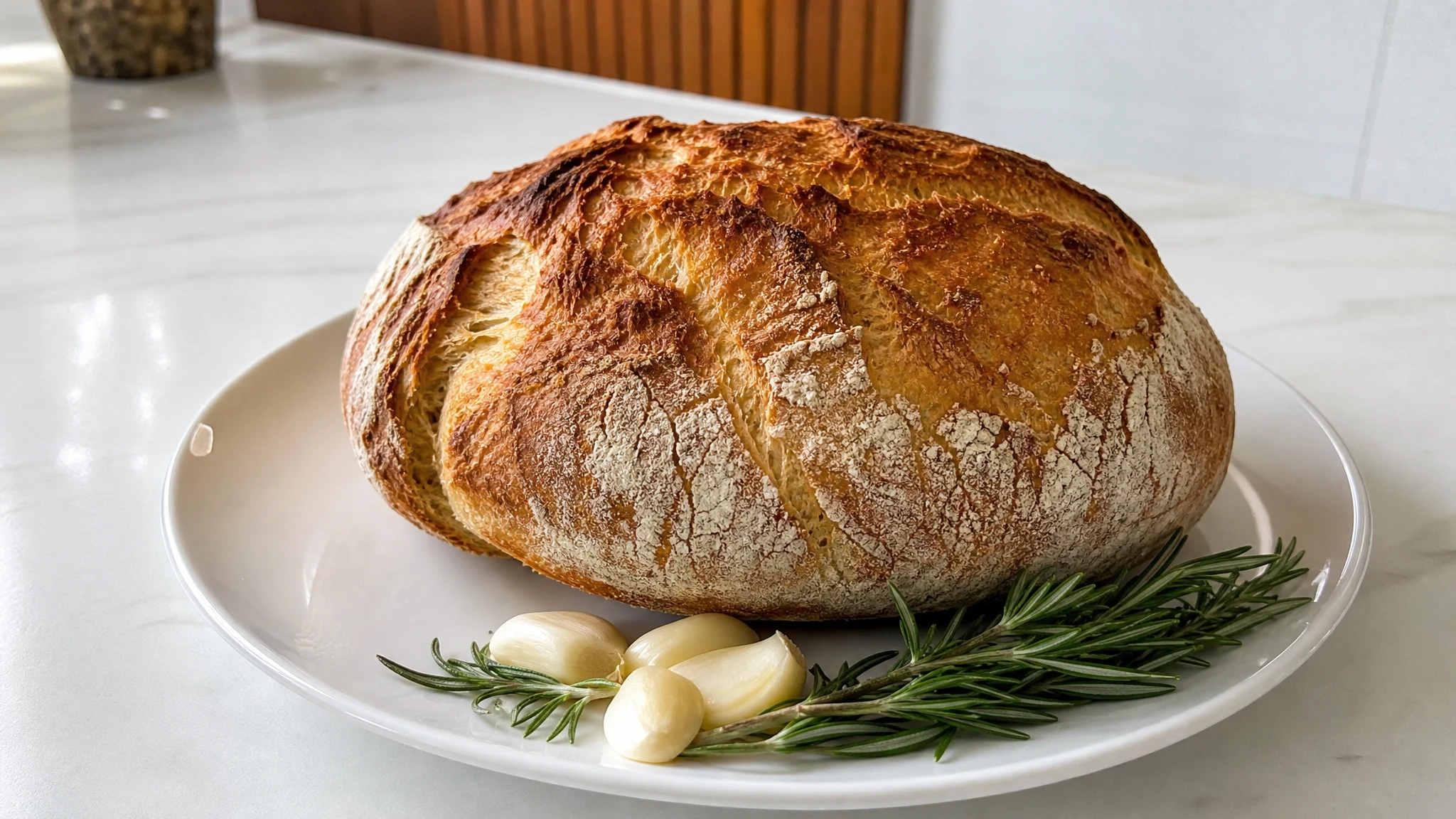
A saucer of olive oil with rosemary and garlic beside a warm loaf is one of the great small pleasures of the table. The surprise is that the jar version, rosemary and garlic left to steep in oil on the counter, is exactly the kind of thing food-safety agencies ask people to treat carefully. Happily, you can have the flavor on the bread without keeping anything risky around.
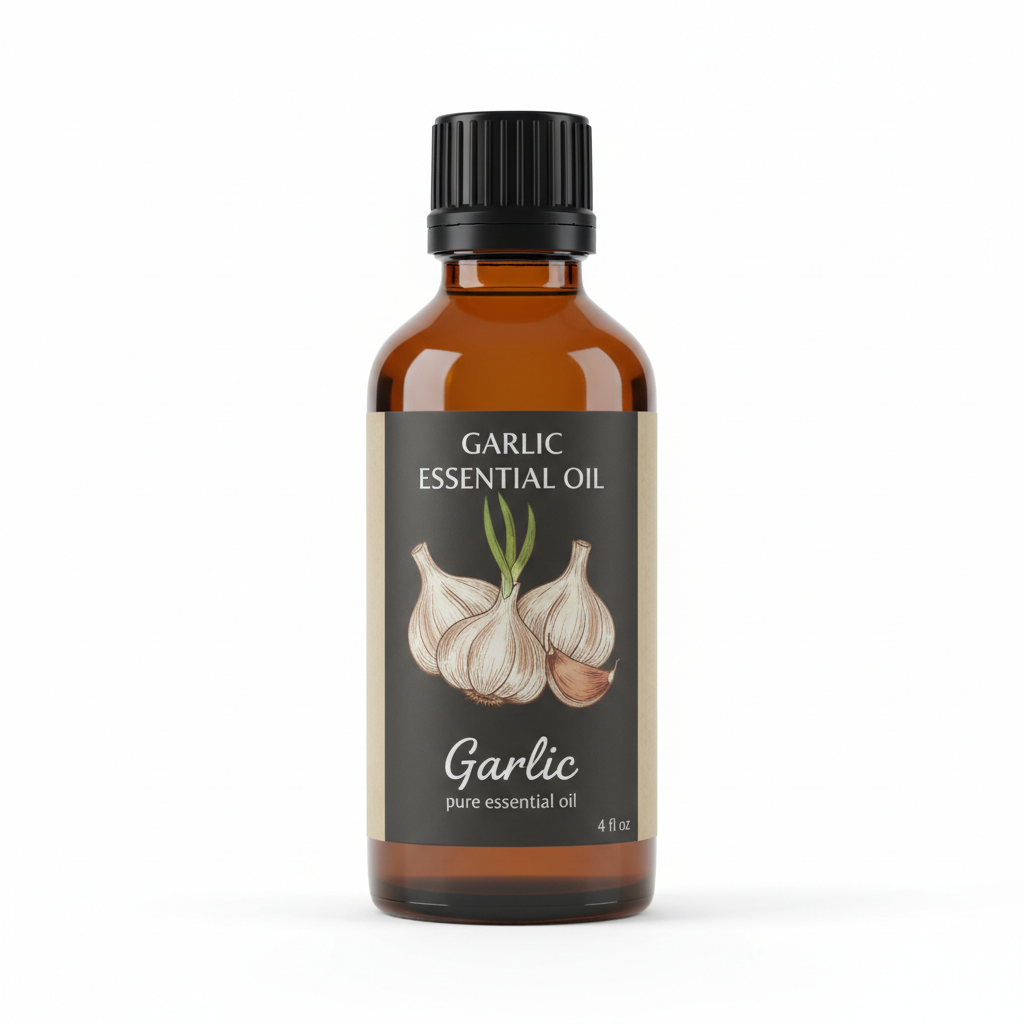
Garlic Essential Oil
Our own Garlic Essential Oil, in sizes from 0.5 oz to bulk.
From $10.99
Shop Now →Why the jar needs care
The CDC names chopped garlic in oil as a source of botulism and says: "Refrigerate homemade oils made with garlic or herbs. Throw the oils away after 4 days." Penn State Extension explains that garlic and herbs are low-acid, and an oil layer is an oxygen-free environment that encourages spores. Since the toxin cannot be seen, smelled or tasted, the rule is about time and temperature, not how the oil looks.
What the extension method looks like
Penn State's guide to safe infused oils treats garlic and herbs as two separate procedures. For garlic, you cut it to about a quarter inch and soak it in a 3% citric acid solution (1 tablespoon of citric acid per 2 cups of water) at 1 part garlic to 3 parts solution. For herbs such as rosemary, basil and oregano, the herbs soak on their stems in a larger volume of solution, at least 24 hours. After that the acidified material goes into oil at 1 part to 10 parts and infuses at room temperature for 1 to 10 days.
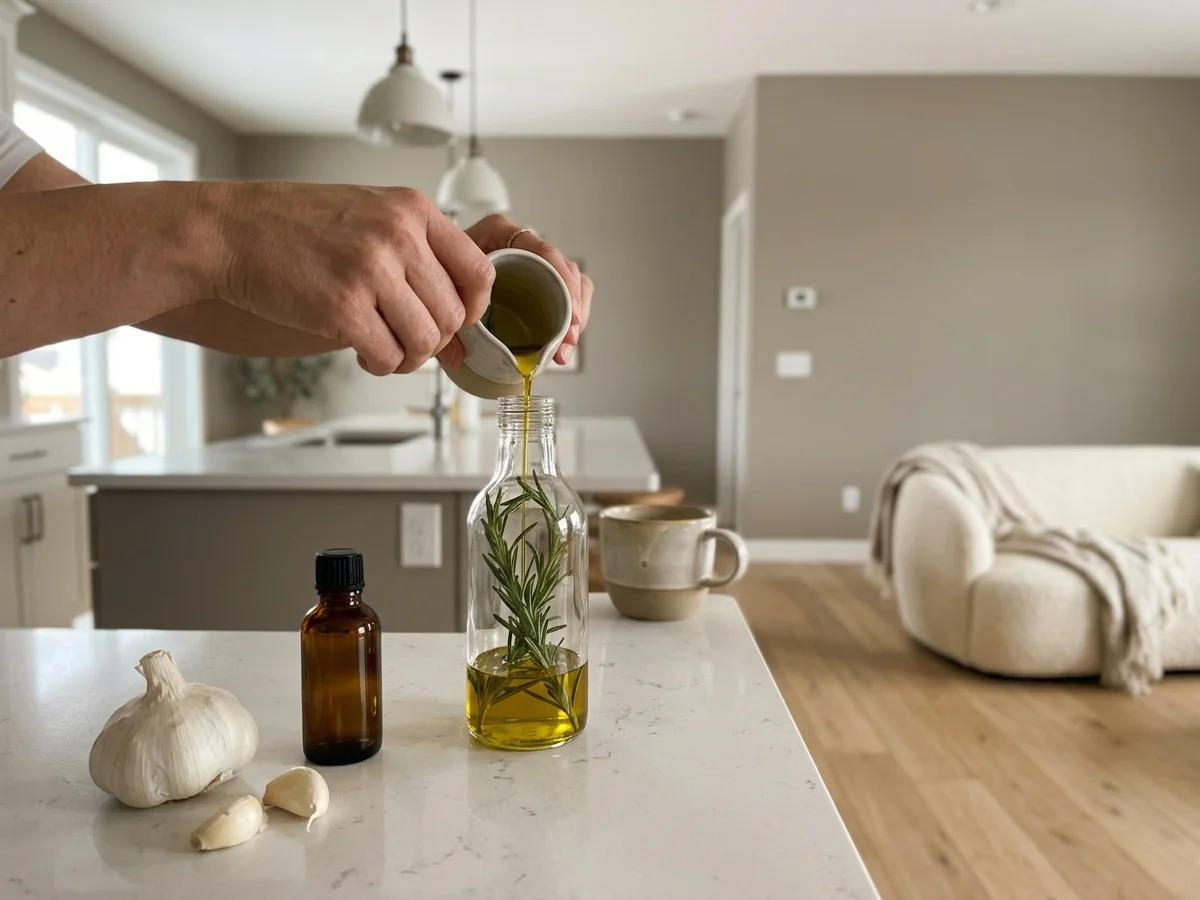
Two lines from the page matter for the classic combined jar. It says you cannot mix the garlic with the herbs because the ratio of infusion differs, and it says not to add a new sprig of fresh herb to the finished oil because it will not be acidified. It also warns that less concentrated solutions or shorter soaking times can result in an unsafe product. The page does not describe blending two finished oils, so if you would like to try that, your county extension office is the place to ask.
A simpler route to the same flavor
Here is how we would build the plate, as a suggestion drawn from those sources.
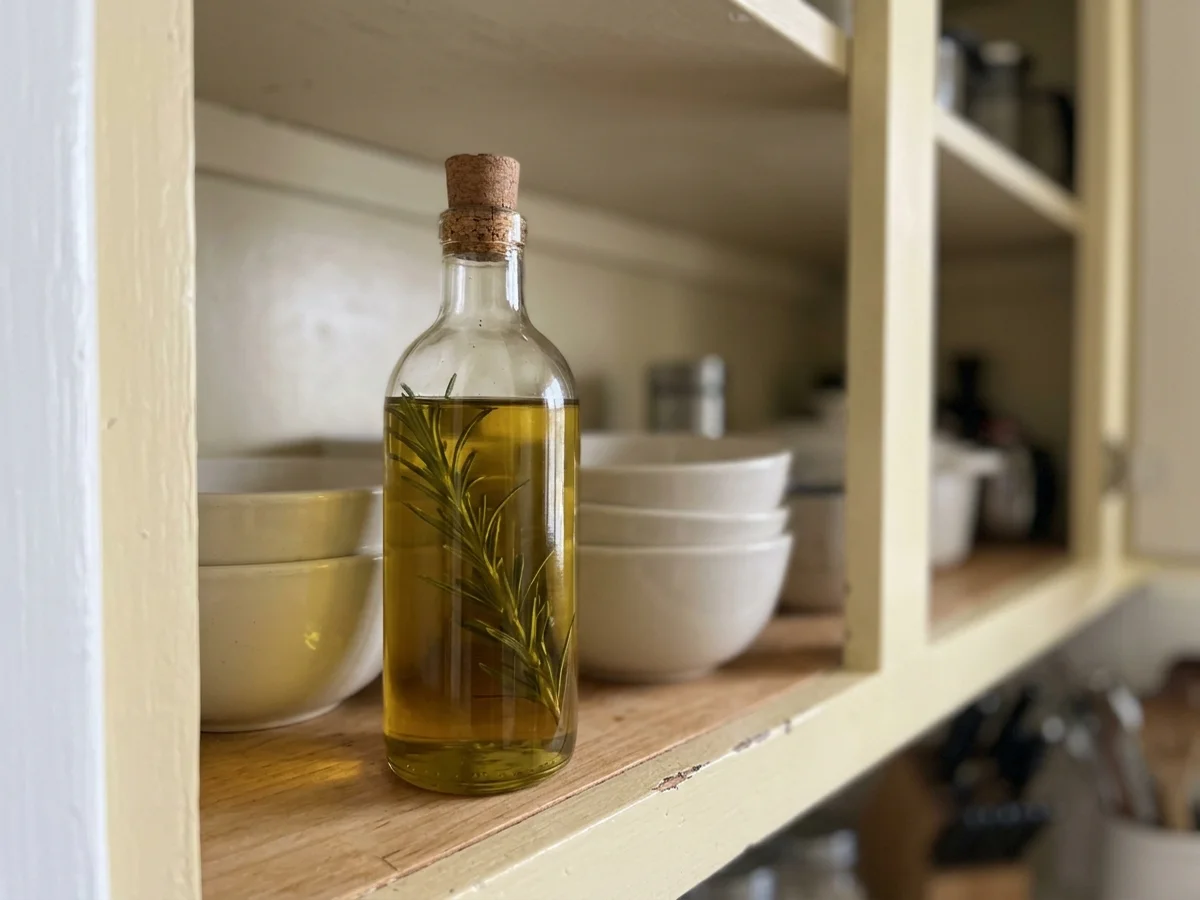
- Make the oil with dried rosemary only. Penn State gives refrigerator storage of up to three months for dried-herb oils; follow its page for the method.
- Keep garlic out of that jar entirely.
- When the bread comes out, rub a cut clove of fresh garlic over the toast, or put a little minced garlic on the plate, and spoon the rosemary oil over the top. The garlic never sits in oil.
- Make only as much dipping oil as will be eaten. The CDC's general rule is to leave perishable food out no more than 2 hours, or 1 hour above 90 F, so a small saucer is a good size.
- Discard what is left, and do not pour it back into the bottle.
The same thinking works for gifts: a jar given as a present carries its refrigerator rules with it, so write them on the label, or give the dried rosemary and a loaf instead.
Making the plate feel special
Presentation is half the pleasure of a dipping plate, and you can make it feel generous without any of the risk. Warm the bread just before serving so it is soft inside with a crisp edge. Tip a little rosemary oil into a shallow dish and tilt it so the oil pools toward one side. Add a pinch of flaky salt and a few cracks of black pepper. Set a peeled clove and a small grater or fine knife beside the dish so everyone can add a touch of fresh garlic to their own piece.
Notice how the room smells when the warm bread meets the rosemary. It is a lovely, herbal, comforting aroma, and the fresh garlic adds its sharp brightness on top. Serve the plate right away and let people help themselves.
Buying it ready-made
If you would rather buy a bottled rosemary and garlic oil, the label is your guide. Penn State advises checking that a commercial product says it has been acidified or contains other microbial inhibitors, and a label silent on the subject is a good reason to ask the maker.
Aroma lovers sometimes ask whether the same flavors can show up in a scent study. They can, in the right place. Rosemary and garlic are listed among the oils that blend well, and the pairing is lovely on blotter strips: herbal and savory together. That is a workshop activity, though, kept far from the dinner table, and we always keep the bottles separate from anything food-related.
Where our oil fits
We sell one product, a garlic essential oil that our product page describes as steam-distilled from crushed bulbs and sold undiluted. It is labeled not for internal use, so it is not an ingredient for bread. The National Capital Poison Center notes that some essential oils are poisonous when swallowed, and the Poison Help line is 1-800-222-1222 if anyone swallows one. For kitchen flavor, fresh garlic is the thing, and for a ready-made garlic oil, look for a food product.
Our oil has its own place on the workshop bench; see essential oil versus infused oil for the difference, and our storage article and garlic-only infused oil for the kitchen side. If you like a little heat on your bread, the chili oil article is next.
Good bread, good rosemary, a fresh clove and a short-lived saucer of oil: that is a lovely table, with nothing left on the shelf to worry about.
Garlic Essential Oil
Garlic Essential Oil from our own shop, in sizes from 0.5 oz to bulk.
From $10.99
Shop Now →Sources & Further Reading
- Penn State Extension. How to safely make infused oils (updated Apr. 4, 2024). extension.psu.edu/how-to-safely-make-infused-oils
- CDC. Botulism prevention (page dated Feb. 26, 2026). cdc.gov/botulism/prevention
- CDC. Preventing food poisoning (Nov. 24, 2025). cdc.gov/food-safety/prevention
- National Capital Poison Center. Essential oils. poison.org/articles/essential-oils