Garlic on Cuts and Wounds: Lab Dish vs Real Skin
The story of garlic and wounds has a real scientific beginning. Crush a clove, and a compound called allicin forms within seconds, and in a laboratory dish it can stop a surprising range of bacteria from growing. It is easy to see how that became "put garlic on a cut." The leap from the dish to the skin is where the story needs slowing down.
Garlic Essential Oil
Our own Garlic Essential Oil, in sizes from 0.5 oz to bulk.
From $10.99
Shop Now →What allicin does in a dish
A well-known review found that purified allicin was active against a wide range of bacteria, including multidrug-resistant strains of E. coli, and that the main effect came from allicin reacting with thiol groups in bacterial enzymes (Ankri and Mirelman, 1999). It is fascinating chemistry, and it is about allicin in its pure form, not about a distilled essential oil, which is a different mixture.
The mechanism is the useful clue. A compound that reacts readily with thiol groups in bacterial enzymes will also meet thiol-containing proteins in skin. That is our reasoning, not a finding from the review, but it fits what clinicians describe.
What happens on skin
A systematic review of case reports collected 39 patients from 32 articles who suffered burn injuries from raw garlic applied to the skin, mostly second-degree, and the authors advise against applying fresh garlic to skin and mucosa (Hitl and colleagues, 2021). One report describes a three-month-old infant with a second-degree burn (Rafaat and Leung, 2000), and the NCCIH says fresh raw garlic may not be safe on skin and can cause severe irritation and chemical burns.
A cut has already lost its protective barrier. Adding a concentrated sulfur-rich material to it, particularly a very concentrated one like an essential oil, is a combination we would not recommend. Our post on garlic burns goes into the details.
Why a lab result is only a starting point
In a dish, bacteria float in a liquid and meet a measured amount of a compound, with nothing else in the way. A cut is a very different place. It has blood, tissue fluid, bits of fabric or dirt, and living cells busy with repair. A compound that does something striking in a dish has to cross all of that and still behave the same way in a living body. Researchers know this well, which is why they call such results leads and not answers.
What first-aid sources describe
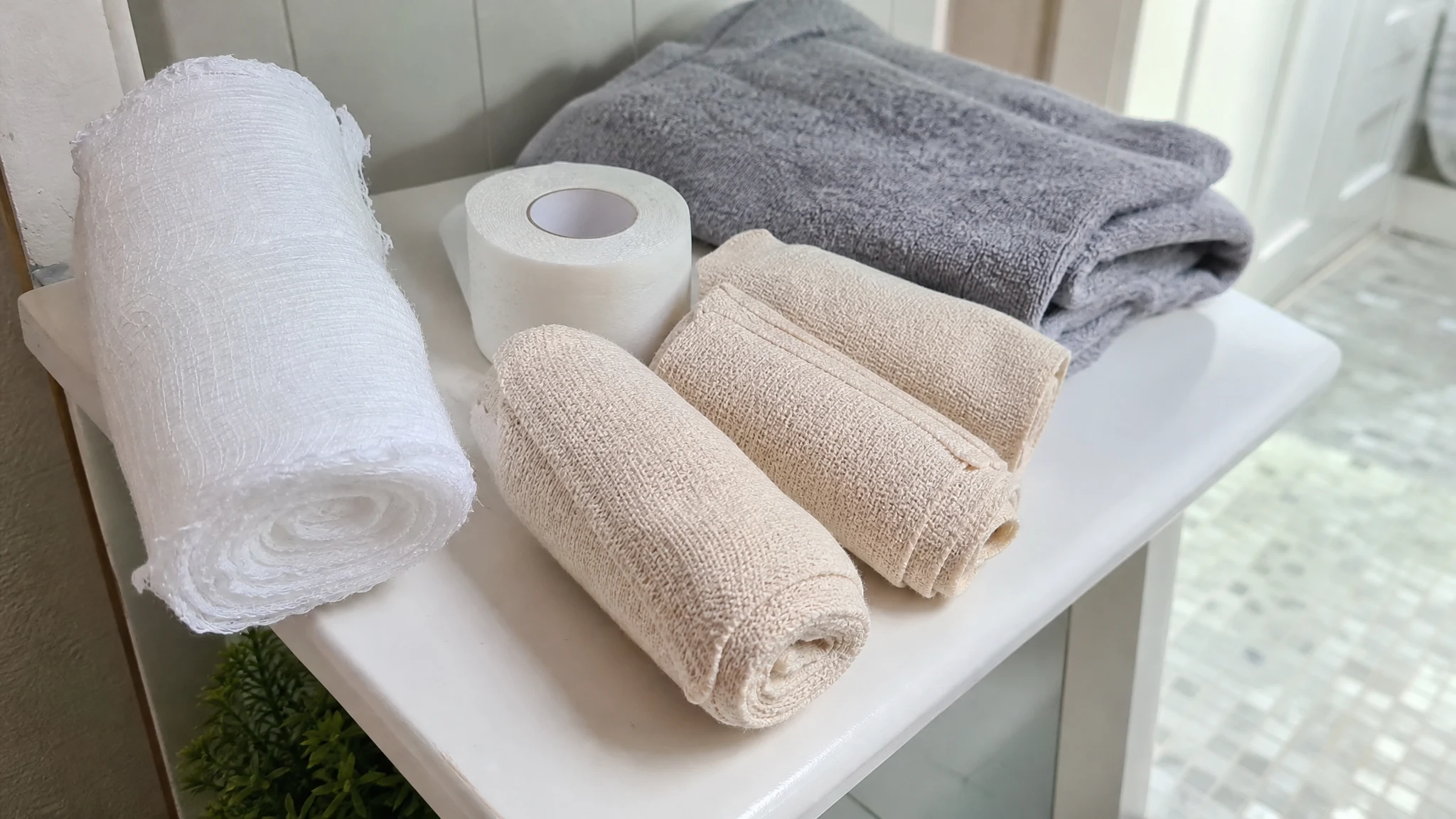
The good news is that ordinary cuts have a simple, well-tested routine. The American Academy of Dermatology suggests washing your hands, rinsing the cut with cool or lukewarm water and mild soap, pressing with a clean cloth or gauze for one to two minutes until bleeding stops, applying petroleum jelly, covering with a sterile bandage that is changed daily, and keeping tetanus vaccination up to date if the cut came from a dirty or rusty object.
The AAD says to seek medical attention right away for a cut longer than three-fourths of an inch, deeper than a quarter inch, or that will not stop bleeding, and to call your doctor promptly if pus or increased redness, swelling or pain appears. If you have put garlic on a cut and it burns, blisters or oozes, rinse it with cool water and mild soap and have it looked at, and do not wait if the person is a child.
A simple first-aid shelf
A tidy cupboard answers most small cuts without anything exotic. The American Academy of Dermatology list suggests a few basics worth keeping together:
- Mild soap and clean water
- Clean cloth or sterile gauze
- Petroleum jelly
- Sterile bandages in a few sizes
- A note of when your last tetanus shot was due
Put them in one box where everyone in the house knows to find it. When a small cut happens, there is no rummaging, and you can focus on the routine.
Why we write about this at all
We love garlic, and we know that people who love it are the ones most likely to hear and pass on a kitchen remedy. That is exactly why we like to lay out what the research did and did not show. It is more fun to be curious about garlic than to be nervous about it, and the kitchen is where it does its best work.
Where our oil fits
Our garlic oil is an undiluted aroma and workshop material, not for internal use, and we make no wound or antiseptic claim for it. For skin contact we recommend 0.5% to 2% in a carrier oil after a patch test, and we would not use it on broken skin at all. If you want the broader skin picture, garlic oil on skin and skin irritation are the place to go, and our antimicrobial research post shows how to read lab claims generally.
It is natural to reach for whatever is nearest in a moment of surprise, and the kitchen is full of things that look handy. A little planning is the answer. If the box is on the shelf and everyone knows where it lives, the cupboard of herbs and spices can stay a cupboard of herbs and spices, and the moment passes calmly.
For children, the same idea holds. A parent with a plain routine and a ready box is much better placed than one improvising at the counter, and a short call to a nurse line or doctor is always an option when something looks beyond the box.
When in doubt about a cut, a nurse or doctor is always the right call, and the box on the shelf is there to make that call easy.
A good first-aid kit from the pharmacy does this job well, and garlic is happiest in the kitchen.
Garlic Essential Oil
Garlic Essential Oil from our own shop, in sizes from 0.5 oz to bulk.
From $10.99
Shop Now →Sources & Further Reading
- Ankri S, Mirelman D, 1999. Antimicrobial properties of allicin from garlic. Microbes and Infection. PubMed 10594976
- Hitl M et al., 2021. Garlic burn injuries, a systematic review of reported cases. Am J Emerg Med. PubMed 33571752
- Rafaat M, Leung AK, 2000. Garlic burns. Pediatric Dermatology. PubMed 11123784
- National Center for Complementary and Integrative Health. Garlic. nccih.nih.gov
- American Academy of Dermatology. How to treat a minor cut. aad.org