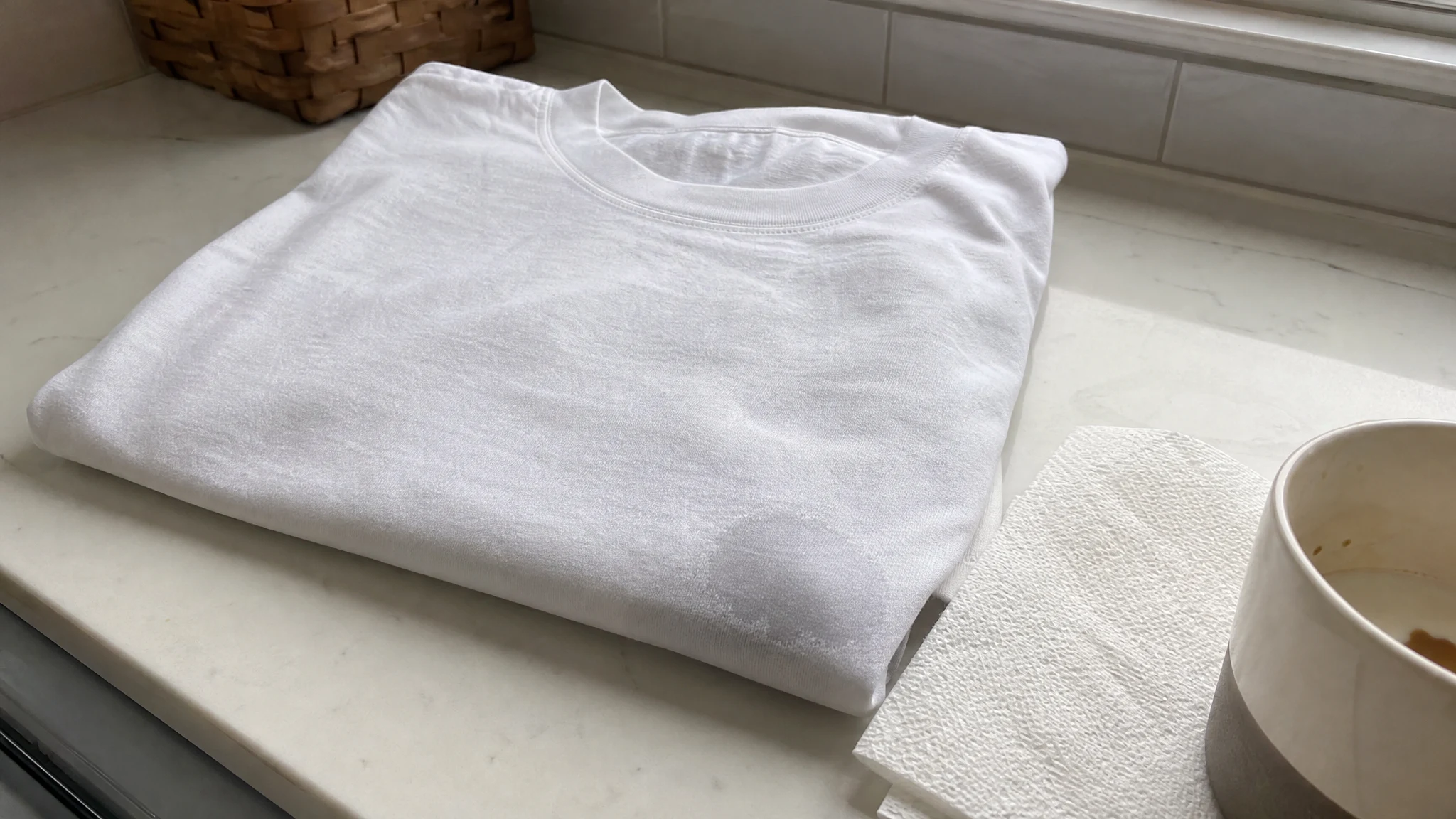
Garlic Oil on Fabric: Blot First, Then Tackle the Smell
Garlic oil on a favourite shirt is two problems at once. There is the mark, which is just oil soaking into cloth, and there is the smell, which has a way of outlasting the mark. The oil lingers on skin, hands, cloth and in a room for far longer than people expect, so it pays to deal with both in the right order.
Garlic Essential Oil
Our own Garlic Essential Oil, in sizes from 0.5 oz to bulk.
From $10.99
Shop Now →The mark is a grease mark
An essential oil is an oil, and oil does not dissolve in water. That is why a plain rinse does little and why the standard fabric-care advice for oily stains leans on detergent. We are not making a claim about how dark any particular mark will turn out, because that depends on the cloth. The point is to treat it quickly, and to treat it as a grease stain.
The order we would follow
- Blot, do not rub. Press a paper towel onto the spot to lift what sits on the surface, and slide a dry towel under the fabric if you can. Rubbing pushes oil deeper.
- Pretreat. The University of Georgia's family and consumer sciences guide for oil-based stains says to treat the garment with a pre-wash spot and stain remover, then launder. Where you are using detergent instead, it describes rubbing it into the dampened stain.
- Wash as warm as the label allows. The same guide washes in hot water, and it starts with a rule worth repeating: read the care label before trying any stain removal method.
- Check before the dryer. Heat can set what is left, so air-dry the garment and look at it in daylight. If the mark or the smell remains, repeat the pretreatment and wash again. The guide suggests sponging with a dry-cleaning solvent if a stain persists.
That is one reliable source for oil-based stains in general, and its worked example is butter and margarine, not essential oil. Applying it to garlic oil is our reasoning, and it is sound because the material on the cloth is the same kind of oil.
Then the smell
A garment can look clean and still smell of garlic. A second wash is the first thing to try, and fresh air is the second. Hang the garment outdoors or by an open window before it goes anywhere near the dryer. For skin, boards and cloth in the kitchen, our guide to garlic smell on hands, boards and cloth has the longer menu.
When to stop and call a professional
Silk, wool, leather, suede and anything labelled dry-clean-only are not for the home treatment above. Take them to a dry cleaner, tell them it is an essential oil, and bring it in as soon as you can; a fresh mark is easier to deal with than an old one. The same goes for upholstery and a good rug. A cleaning professional is also the right call for a mattress or a sofa cushion.
If it reached skin first
Skin comes before fabric. Poison Control's first aid advice is to remove contaminated clothing first, then rinse the skin with running water for at least 15 minutes, using mild soap for material that sticks, and to call 1-800-222-1222 if you have questions (Poison Help, first aid). Garlic is documented to irritate skin, which is why our garlic burn article looks at the case reports.
Setting up so it does not happen
Work over a tray lined with paper towels, wear an old shirt or an apron, cap the bottle straight after pouring, and wipe the neck. Our oil is a single concentrated bottle, and a trace goes a long way, as our dilution guide shows. The tidiest stain is the one that never lands.
Most cloth forgives a quick response. Blot, pretreat, wash, air-dry, and let the professionals handle the delicate pieces.
Garlic Essential Oil
Garlic Essential Oil from our own shop, in sizes from 0.5 oz to bulk.
From $10.99
Shop Now →Sources & Further Reading
- Remove Stains From Oil-Based Foods, University of Georgia College of Family and Consumer Sciences
- First aid for poisonings, Poison Help