Grilling With Garlic: Flavor Tips and Food Safety Basics
The best garlic on a grill is the kind that meets the food at just the right moment: a few thin slices tucked under a chop, or a minced clove stirred into a marinade the night before. The bottle of garlic essential oil we sell is a different thing entirely. It is a strong aroma material, labeled not for internal use, so we do not give amounts for cooking with it. Here is how we would approach garlic at the barbecue, and what the food-safety agencies say about the rest.
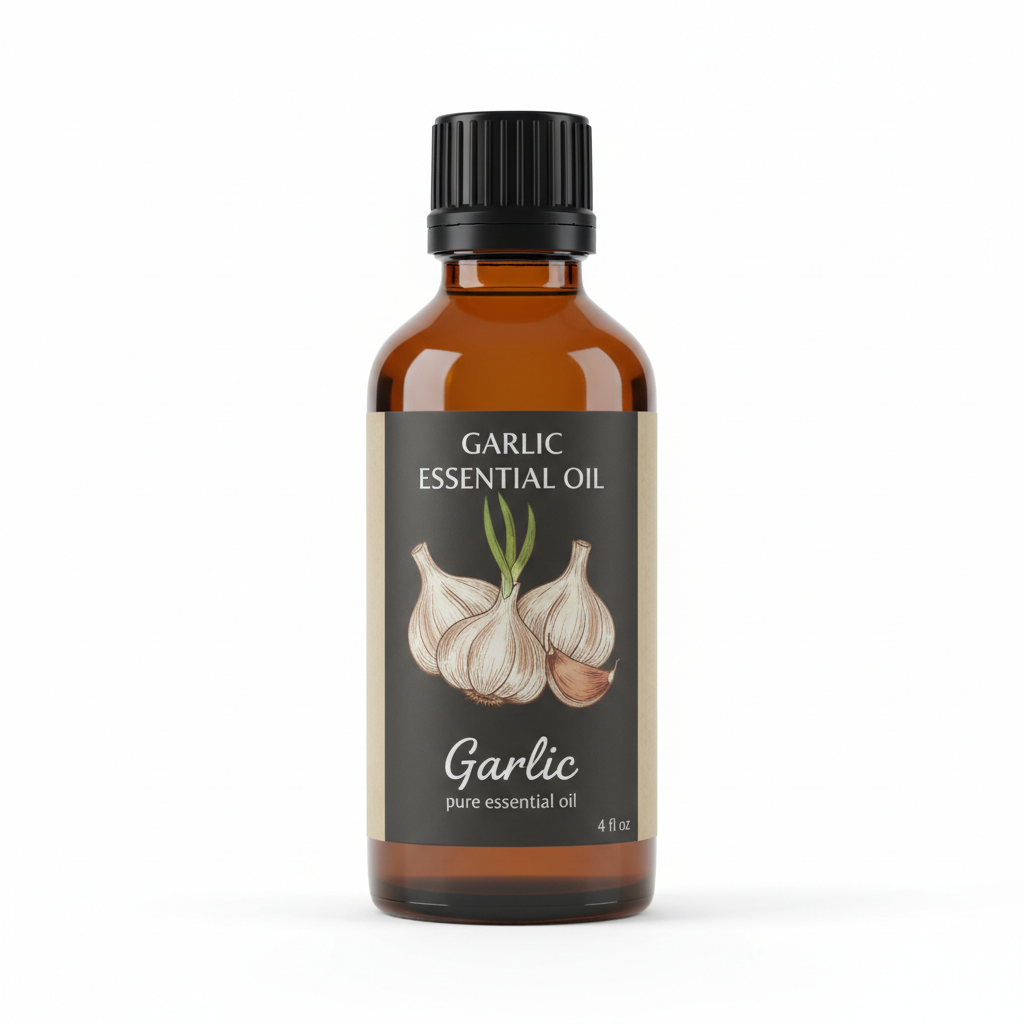
Garlic Essential Oil
Our own Garlic Essential Oil, in sizes from 0.5 oz to bulk.
From $10.99
Shop Now →Why heat changes garlic
Garlic's sharp, sulfurous aroma comes from compounds that form when the clove is cut or crushed. A review in Cancer Prevention Research by Nicastro and colleagues notes that heating results in denaturation of alliinase, the enzyme that starts the process, and links that to less allicin and a milder odor.
A 2023 study in Molecules by Kaur and Barringer measured it. Thin slices of garlic stir-fried in canola oil at 125 C had 75 to 99% less of the four main garlic volatiles in the air above them than raw slices, though the compounds were still above their odor thresholds. Reasoning from that, garlic that sits on a hot grate for the whole cook will taste mellower and different from garlic added toward the end. Which you prefer is a cook's choice, and both have their fans. Our smell chemistry article follows the sequence in more detail.
Little moves that make garlic taste better
A few kitchen habits make a noticeable difference once the grill is hot, and none of them requires anything beyond what is in your fridge:
- Slice garlic thin rather than mincing it fine if you want it to survive the heat. Finer pieces brown and turn bitter sooner.
- Add garlic to the pan or the foil packet near the end of the cook when you want a brighter bite.
- Roast a whole head wrapped loosely in foil on a cooler part of the grill for a soft, sweet spread you can mash onto bread or vegetables.
- Use a separate cutting board and clean knife for raw meat and for the garlic you plan to add at the end.
Pay attention to the smell as the garlic cooks. You will notice it shift from sharp and raw to sweeter and nutty, and a moment later toward bitter. That moment is your cue.
Marinades are happiest when they are fresh
A marinade built on fresh garlic does its job best made the day you use it and kept cold. Garlic stored in oil is the part that deserves a little respect. The CDC lists chopped garlic in oil as a source of botulism and gives a plain rule: "Refrigerate homemade oils made with garlic or herbs. Throw the oils away after 4 days."
Penn State Extension explains the reasoning: garlic and herbs are low-acid, and an oil layer is an oxygen-free environment that encourages spores. Its acidified method calls for 1 part chopped garlic to 3 parts of a 3% citric acid solution, then 1 part of that acidified garlic to 10 parts oil. If you would rather keep things simple, make only what you will use and skip the stored garlic oil altogether. Our infused oil article and our piece on storing garlic oil safely go further.
If you want a ready-made garlic oil for the kitchen, look for one sold as a food, and check that its label says it has been acidified or contains other microbial inhibitors, as Penn State advises. We sell only our garlic essential oil, so that one comes from your grocery.
The grill rules worth keeping handy
A few lines from the CDC's food-safety page (November 2025) are worth pinning up by the grill:
- Keep raw or marinating meat, poultry, seafood and eggs separate from all other foods.
- Do not leave perishable food out more than 2 hours, or 1 hour when it is above 90 F.
- Whole cuts of beef, veal, lamb and pork reach 145 F with a 3-minute rest, fish 145 F, ground beef and pork 160 F, and poultry 165 F.
- A food thermometer is the only reliable way to check doneness.
The National Cancer Institute adds that compounds called heterocyclic amines and polycyclic aromatic hydrocarbons form when muscle meat is cooked at high temperatures or over an open flame, and suggests avoiding direct flame, turning meat often, and trimming charred portions. Neither page says anything specific about garlic, so we leave it there.
One thing follows from the thermometer rule. A garlicky crust darkens the surface and makes color a poor guide, so the thermometer earns its place even more.
It is also worth keeping your hands in mind. Garlic is famous for staying on skin long after the meal, which is a pleasant reminder of dinner and an annoying one at the next handshake. A rub with a stainless steel spoon or bar under running water is a popular kitchen trick, and a good wash with soap does the rest.
About swallowing essential oils
The National Capital Poison Center explains that some essential oils are poisonous when swallowed, and that swallowing one can lead to aspiration and pneumonia. If anyone has swallowed an essential oil, call the Poison Help line at 1-800-222-1222. For any question about eating garlic oil of any kind, a physician or pharmacist is the right person to ask.
Where our oil belongs is on the workshop bench: a trace in soap or candles, or a scent study beside onion or ginger oil on a blotter strip. Our uses article maps it out, and our comparison of essential oil and infused oil explains why the two bottles are so different.
So fire up the grill, add the garlic with a light hand and a good thermometer, and enjoy the smell drifting over the fence.
Garlic Essential Oil
Garlic Essential Oil from our own shop, in sizes from 0.5 oz to bulk.
From $10.99
Shop Now →Sources & Further Reading
- Nicastro HL, Ross SA, Milner JA, 2015. Garlic and onions: their cancer prevention properties. Cancer Prevention Research 8(3):181-189. pmc.ncbi.nlm.nih.gov/articles/PMC4366009
- Kaur M, Barringer S, 2023. Effect of yogurt and its components on the deodorization of raw and fried garlic volatiles. Molecules. pmc.ncbi.nlm.nih.gov/articles/PMC10420880
- CDC. Botulism prevention (page dated Feb. 26, 2026). cdc.gov/botulism/prevention
- Penn State Extension. How to safely make infused oils (updated Apr. 4, 2024). extension.psu.edu/how-to-safely-make-infused-oils
- CDC. Preventing food poisoning (Nov. 24, 2025). cdc.gov/food-safety/prevention
- National Cancer Institute. Chemicals in meat cooked at high temperatures and cancer risk (cooked meats fact sheet, reviewed Jul. 11, 2017). cancer.gov/cooked-meats-fact-sheet
- National Capital Poison Center. Essential oils. poison.org/articles/essential-oils