7 Garlic Dinners for a Week: When to Add It to the Pan
Monday through Sunday, garlic can carry dinner. It can be sizzled gold in a pan of olive oil, tucked into a marinade, or crisped into a topping for rice. What changes from night to night is not the garlic but when it meets the heat, and that timing is what makes it sweet, sharp or toasty. Here is a week of ideas, with the reasoning behind each choice.
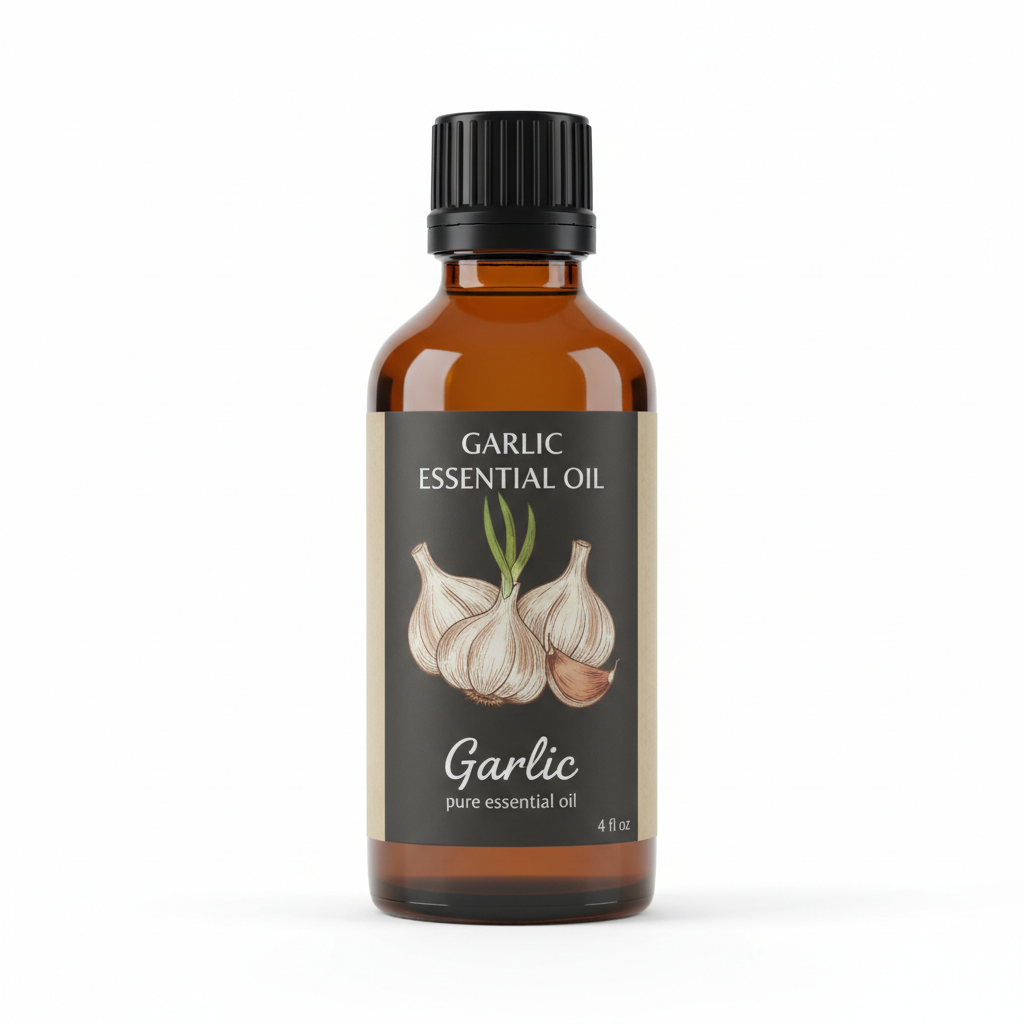
Garlic Essential Oil
Our own Garlic Essential Oil, in sizes from 0.5 oz to bulk.
From $10.99
Shop Now →Why timing matters so much
An intact clove is quiet. Crush, chop or chew it and an enzyme called alliinase is released, which sets off the chemistry that makes garlic smell like garlic, starting with allicin. A 2015 review points out that heat denatures that enzyme (Nicastro, Ross and Milner, 2015). Our reasoning from that: the sharp bite of raw garlic and the mellow warmth of cooked garlic come from different stages of the same chemistry, which is why recipes are so particular about when it goes in.
Frying also quiets the smell molecules themselves. In one headspace study, frying sliced garlic in canola oil at about 125 C cut four key odor compounds by 75% to 99%, though all four stayed above the level a nose can detect (Kaur and Barringer, 2023). That is a useful picture of why cooked garlic is milder than raw, and why it still lingers on your fingers afterward. We have a few ideas for that in our hand and cutting board guide.
The week
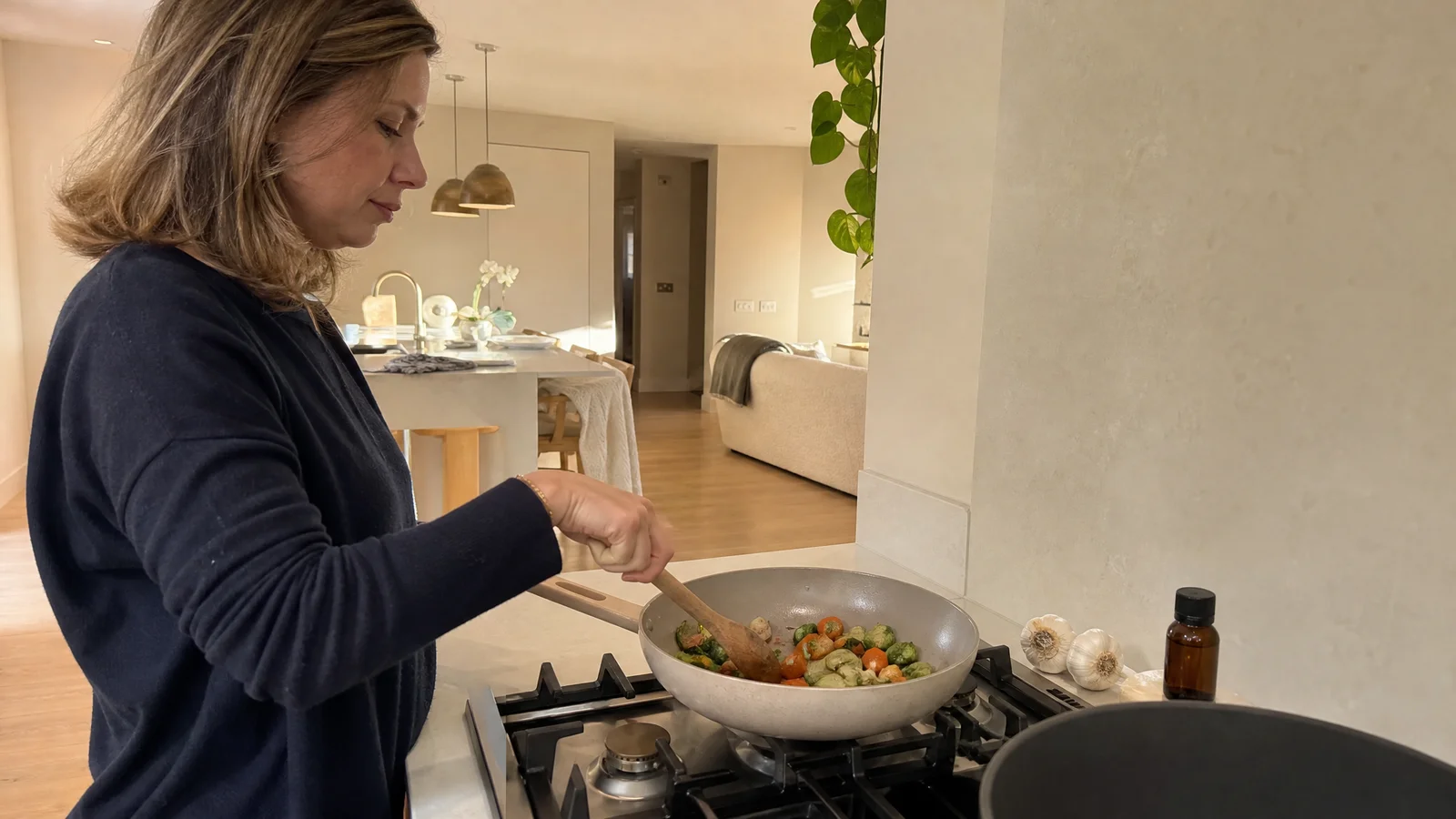
Monday, aglio e olio. Thinly sliced garlic warmed in olive oil until golden, usually two to three minutes in a typical home recipe (Damn Delicious), then tossed with pasta and a little starchy cooking water. Pull the pan early if it turns past gold. We go further in our aglio e olio article.
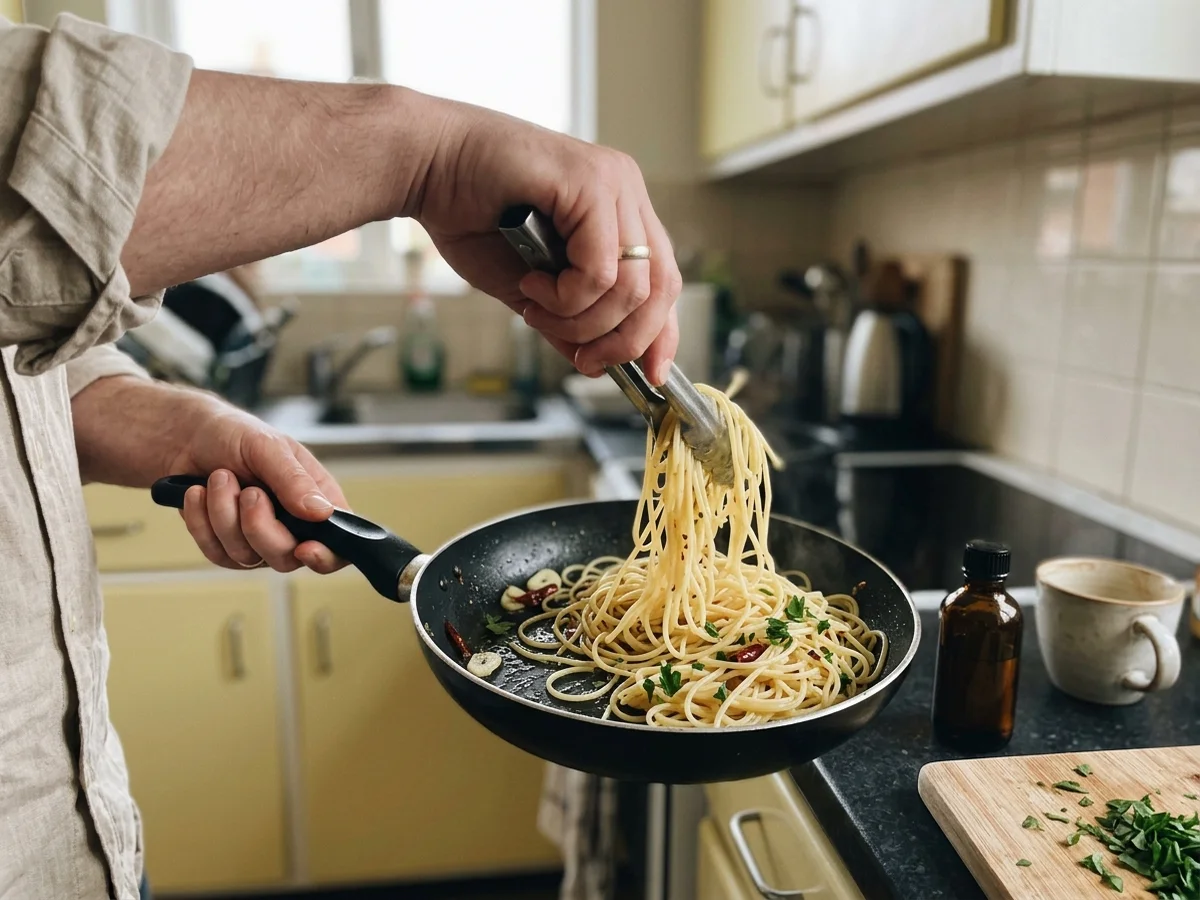
Tuesday, a garlic marinade. Fresh minced cloves, an acid, and an oil, used the same day. Keep raw or marinating meat separate from other food, and cook poultry to 165 F, which is the CDC's figure (CDC, preventing food poisoning).
Wednesday, a stir-fry. Minced garlic goes in late and hot, so some of the raw edge stays. This is a timing choice based on the heat reasoning above.
Thursday, chili crisp. A crunchy topping where the garlic is fried until golden and crisp, not dark (Cooking for Peanuts). Our chili oil article has the storage notes.
Friday, ramen with mayu. A Kumamoto-style version cooks sliced garlic slowly in fat and takes portions out at golden, darker, and just before burning, then grinds them into a black oil (Ramen Kaonashi). Our mayu article goes through it.
Saturday, something grilled. Fresh garlic in a baste or marinade, kept cold until it is used. Our grilling article covers the details.
Sunday, garlic bread. Garlic mixed into butter or oil just before it goes on the bread, and any leftovers refrigerated rather than left on the counter.
Shopping and prepping for the week
Buy two or three firm heads at the start of the week, ones that feel heavy for their size. Then peel and slice each night, so the garlic goes into the pan within minutes of being cut and you are never left with a container of chopped garlic sitting around. It takes a minute or two a night, and it keeps each dinner tasting like itself.
It is also fun to notice how the kitchen smells from night to night. Monday is sweet and nutty, Thursday is toasty and a little smoky, and Friday is deep and almost roasted. The same bulb really does change character with the heat and the timing.
One rule for the whole week
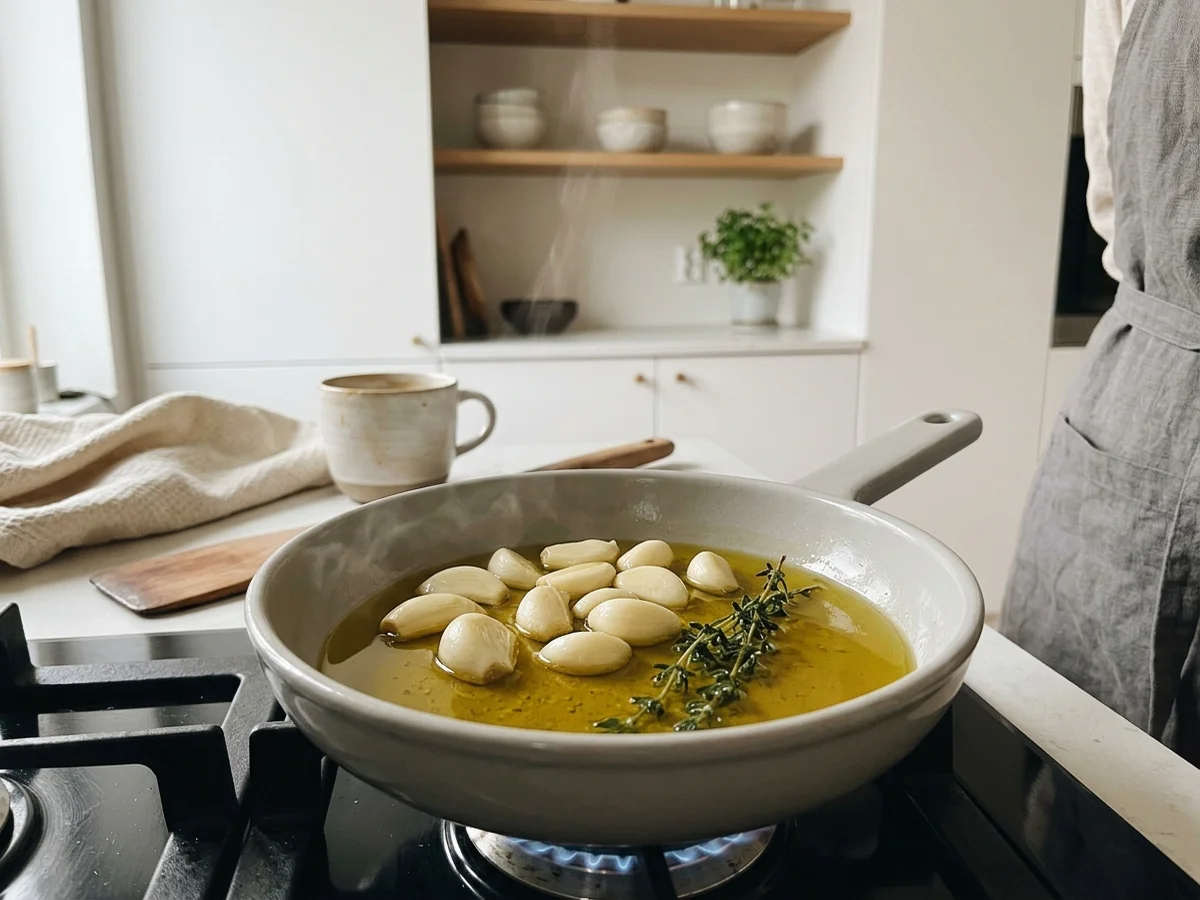
The easiest way to enjoy a week of garlic is to cook it in the pan and serve it, rather than storing garlic in oil. The CDC lists chopped garlic in oil as a source of botulism and says to refrigerate homemade garlic oils and throw them away after 4 days (CDC, Botulism Prevention). If you want a longer-lasting infused oil, Penn State Extension gives a full acidified method (Penn State Extension), and our infused oil article explains it.
Where our bottle fits
We sell a garlic essential oil, an aroma material sold undiluted, and it is not for internal use. The kitchen is the territory of the bulb itself, or a garlic product made and labelled for food. The Poison Center notes that some essential oils are poisonous when swallowed and that they belong locked up away from children and pets (National Capital Poison Center). For any question about swallowing an essential oil, ask a physician or pharmacist. Our flavoring comparison explains how a food ingredient differs from an aroma oil.
Leftovers deserve a word as well. Cooked garlic dishes keep best when they go into the fridge soon after the meal, in a shallow container with a lid, and reheated properly the next day. Lunch the day after a garlic dinner is often a quiet pleasure, with the flavors settled and rounder than the night before.
If you want to go further, pick the night that sounds best and cook it twice, changing only when the garlic goes in. Comparing the two is the quickest way to learn what timing does.
Seven nights, one bulb of garlic, and plenty to talk about at the table.
Garlic Essential Oil
Garlic Essential Oil from our own shop, in sizes from 0.5 oz to bulk.
From $10.99
Shop Now →Sources & Further Reading
- Nicastro HL, Ross SA, Milner JA. Garlic and onions: their cancer prevention properties. Cancer Prev Res 2015;8(3):181-189. pmc.ncbi.nlm.nih.gov/articles/PMC4366009
- Kaur M, Barringer S. Effect of yogurt and its components on the deodorization of raw and fried garlic volatiles. Molecules 2023. pmc.ncbi.nlm.nih.gov/articles/PMC10420880
- Damn Delicious. Spaghetti aglio e olio. damndelicious.net
- Cooking for Peanuts. Easy chili crisp recipe. cookingforpeanuts.com
- Ramen Kaonashi. Black garlic oil tonkotsu ramen, Kumamoto style. ramenkaonashi.com
- CDC. Preventing food poisoning. cdc.gov/food-safety/prevention
- CDC. Botulism prevention. cdc.gov/botulism/prevention
- Penn State Extension. How to safely make infused oils. extension.psu.edu
- National Capital Poison Center. Essential oils. poison.org/articles/essential-oils