Garlic Oil Myths: Seven Things People Get Wrong
Most garlic oil myths start with a single assumption: that a bottle labelled "garlic oil" is one thing. It is at least three. There is the kitchen infusion of cloves in oil, there is a steam-distilled essential oil like the one we sell, and there is a food flavoring made to a food standard. Once you can tell them apart, the rest of the myths tend to sort themselves out.
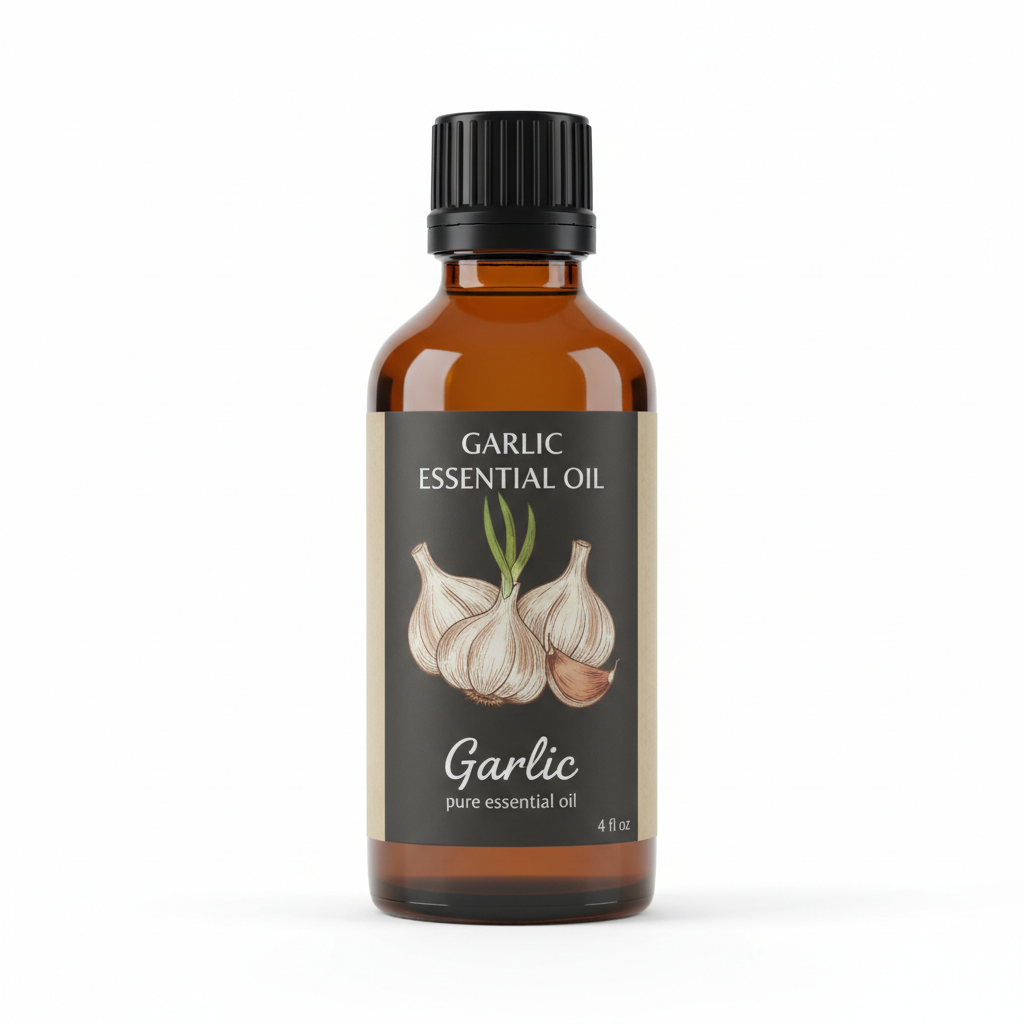
Garlic Essential Oil
Our own Garlic Essential Oil, in sizes from 0.5 oz to bulk.
From $10.99
Shop Now →"Garlic oil" tells you what is in the bottle
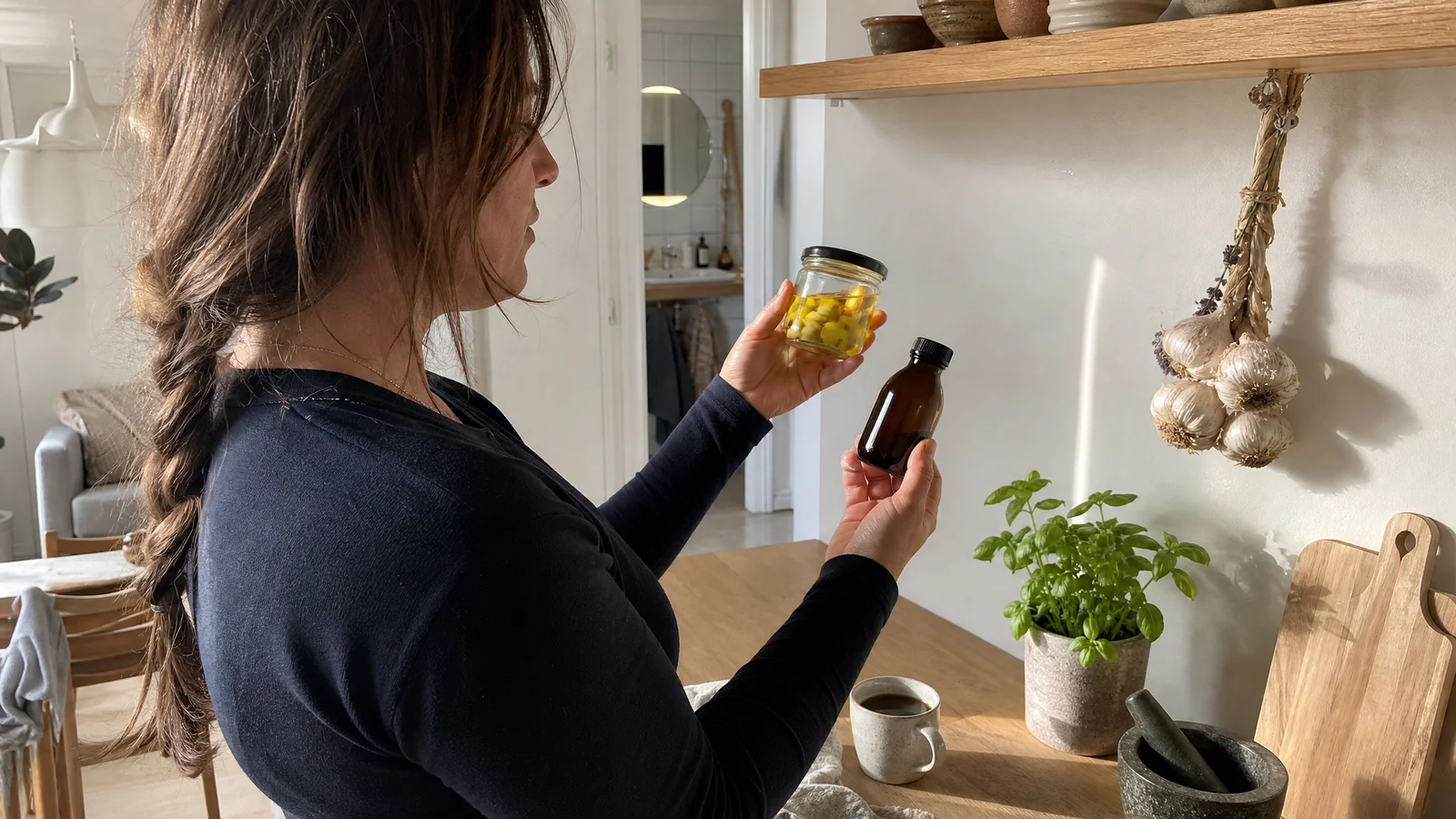
It does not, and the three behave very differently. An infusion is cloves steeped in a carrier oil, which is a food with a food-safety question attached. Our oil is described on our product page as steam-distilled from crushed bulbs and sold undiluted, and we label it not for internal use. A flavoring is an ingredient made for food: 21 CFR 184.1317 lists garlic and its derivatives, including essential oils, as flavoring agents used at good manufacturing practice levels, and says garlic oil should meet the Food Chemicals Codex (21 CFR 184.1317, Garlic and its derivatives). That describes what a food ingredient has to meet. It does not turn an aroma oil into a food. Our infused-oil comparison lines the two up side by side.
Garlic in oil keeps happily on the counter
For homemade oil, this one is false, and it is the myth worth remembering. The CDC says to refrigerate homemade oils made with garlic or herbs and to throw them away after four days (Botulism Prevention, CDC). Penn State Extension explains that garlic is low in acid and can carry botulism spores, and that oil creates the oxygen-free conditions those spores like (How to Safely Make Infused Oils, Penn State Extension). If you want to make it properly, we walk through the methods in our infused olive oil article.
Warming the oil makes it safe to keep
This is a popular idea, and the source we read does not back it up. Penn State mentions heating oil to 140 F for five minutes only to speed flavor infusion, and says higher temperatures can damage flavor. It does not say that heating makes the oil shelf-stable. If a recipe says otherwise, ask for its source.
The essential oil is concentrated garlic juice, full of allicin
It is tempting to picture a distilled oil as garlic juice boiled down, but the chemistry is different. Allicin forms when crushing lets an enzyme act on a garlic precursor, and it is unstable (Garlic and onions: Their cancer prevention properties, Nicastro, Ross and Milner, 2015). In one published comparison of three ways of distilling Spanish garlic bulbs, allicin was only a trace in the two hydrodistilled oils and was not detected in the industrial steam-distilled oil. Its main components were sulfides, led by diallyl disulfide (Satyal et al., Foods, 2017). That is one sample rather than a verdict on every bottle, but it shows that a distillate and a crushed clove are different mixtures. If you want the distillation details, our steam versus CO2 article has them.
A little essential oil in food is harmless
We would not take that bet. The National Capital Poison Center says some essential oils are poisonous when swallowed, and that oil getting into the lungs can cause pneumonia, and it advises locking oils away from children and pets (Essential oils: Poisonous when misused, National Capital Poison Center). If anyone has swallowed essential oil, call 1-800-222-1222. That page does not single out garlic oil, and we are not claiming a garlic-specific figure. Our oil is not for internal use, so for cooking, reach for garlic itself or a food product labelled for the purpose. A physician or pharmacist can answer questions about ingestion.
Cooked garlic is ruined garlic
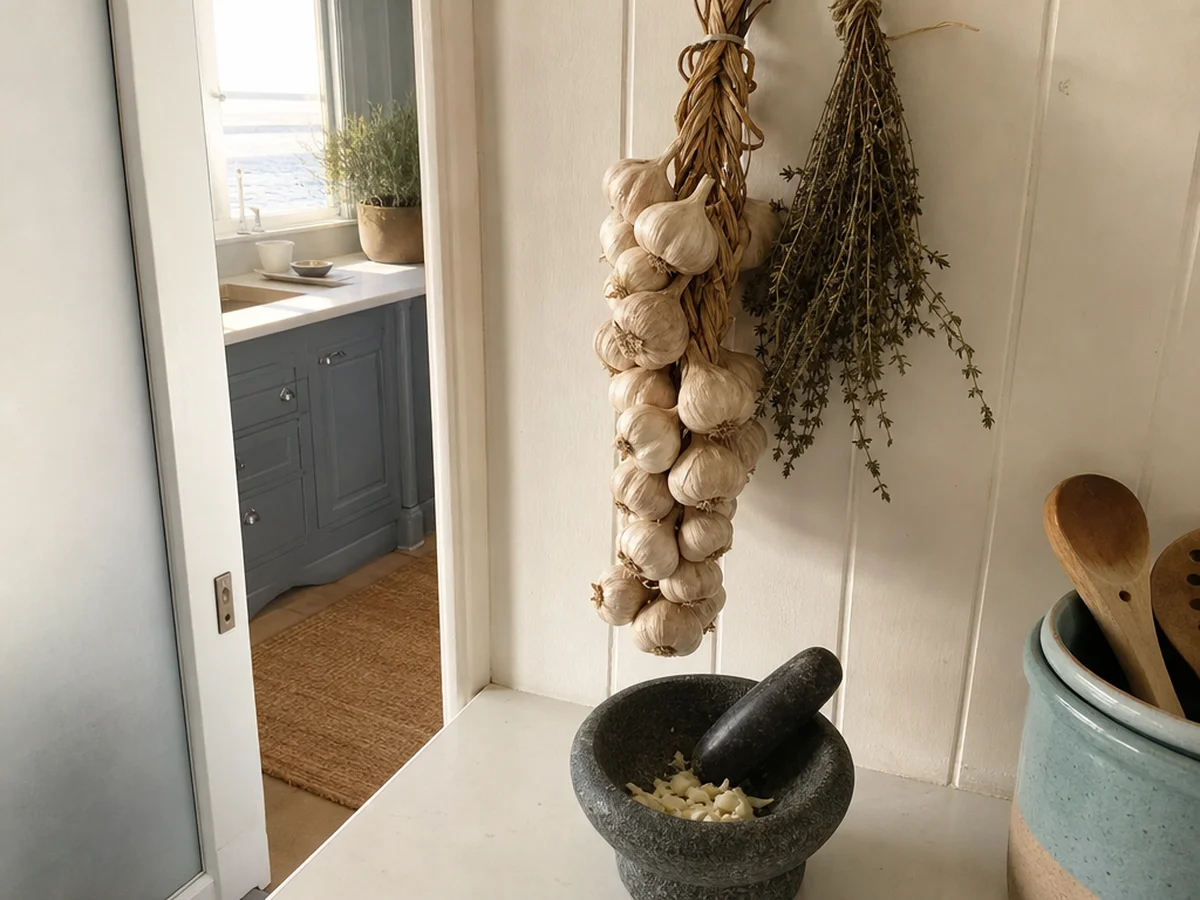
Cooking changes garlic rather than ruining it. The same review notes that heat denatures alliinase, the enzyme that kicks off the allicin chain, which is part of why cooked garlic tastes milder than raw. A cooked clove and a freshly crushed one are simply different ingredients, and different dishes want different ones. Our aglio e olio article shows how much this matters in the pan.
Garlic oil cures everything
We make no health claims for our oil, and we would rather say that clearly than hint. Most studies behind garlic's reputation used garlic extracts, supplements or lab dishes rather than a bottled distillate. If you are curious, our benefits article goes through what the evidence does and does not cover. Anyone with a medical question is best served by a physician rather than a seller.
A strong smell tells you it is garlic, not how it was made
It is tempting to judge an oil by nose, and garlic oil smells enormous whichever route it took. A big aroma tells you there is garlic involved. It does not tell you what else is in the bottle or how it was made. Use your nose for enjoyment, which is a real pleasure with this oil, and use paperwork for decisions.
Reading the label
The practical lesson is to read what a bottle says about itself. A food product will say so in its name and on its label. Ours says what it is, an undiluted distillate described as steam-distilled from crushed bulbs, and it says not for internal use. When anything is unclear, ask in writing before you rely on a claim, which is how we would treat anyone's paperwork. The label-reading article has the checklist.
The real facts turn out to be gentler than the myths: a food-safety clock, a regulatory standard and a chemistry difference. Keep those three in mind and most garlic oil confusion fades.
Garlic Essential Oil
Garlic Essential Oil from our own shop, in sizes from 0.5 oz to bulk.
From $10.99
Shop Now →Sources & Further Reading
- 21 CFR 184.1317, Garlic and its derivatives. law.cornell.edu/cfr/text/21/184.1317
- CDC. Botulism Prevention. cdc.gov/botulism/prevention
- Penn State Extension. How to Safely Make Infused Oils. extension.psu.edu/how-to-safely-make-infused-oils
- Nicastro HL, Ross SA, Milner JA. Garlic and onions: Their cancer prevention properties. Cancer Prevention Research 2015;8(3):181-189. pmc.ncbi.nlm.nih.gov/articles/PMC4366009
- Satyal P, Craft JD, Dosoky NS, Setzer WN. The Chemical Compositions of the Volatile Oils of Garlic (Allium sativum) and Wild Garlic (Allium vineale). Foods 2017;6(8):63. pmc.ncbi.nlm.nih.gov/articles/PMC5575638
- National Capital Poison Center. Essential oils: Poisonous when misused. poison.org/articles/essential-oils